
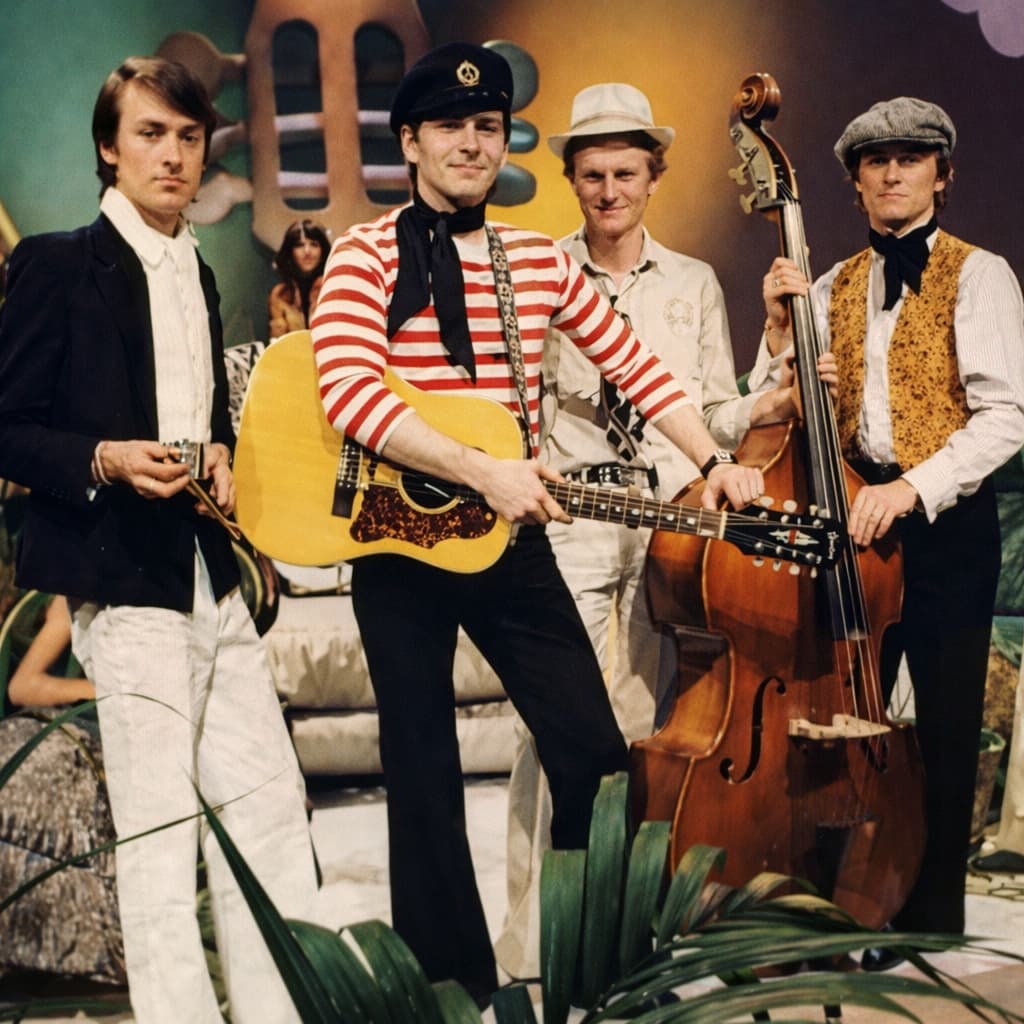
A Playful Celebration of Youthful Romance and Seaside Dreams
When speaking of light-hearted yet irresistibly catchy pop songs of the mid-1970s, few titles evoke as much breezy charm as “Girls, Girls, Girls” by Sailor. Released in 1975 as part of their album “Trouble”, the song quickly sailed into the public consciousness, reaching an impressive No. 7 on the UK Singles Chart and becoming one of the band’s defining hits. In several European countries, particularly the Netherlands, it performed even more strongly, climbing to No. 1, a testament to its universal appeal and infectious melody.
From the very first notes, “Girls, Girls, Girls” feels like a postcard from another time—sunlit, carefree, and touched with a hint of mischief. Built around a jaunty rhythm and driven by the distinctive use of the band’s self-styled “Nickelodeon” instrument, the arrangement carries a theatrical, almost vaudevillian quality. It is this playful musical identity that set Sailor apart from their contemporaries, allowing them to carve out a niche somewhere between pop, cabaret, and nostalgic pastiche.
The story behind the song is as colorful as its melody. Written by band members Georg Kajanus and Henry Marsh, “Girls, Girls, Girls” was inspired by the band’s fascination with continental Europe—particularly the romanticized allure of French seaside towns. The lyrics paint vivid images of strolling along coastal promenades, encountering different women from various walks of life, each representing a fleeting moment of charm and intrigue. There is no heavy drama here, no heartbreak in the traditional sense—only a gentle acknowledgment of life’s passing encounters and the beauty found within them.
Yet beneath its cheerful exterior lies a subtle layer of reflection. The song captures something deeply human: the way memories are often tied to places and faces, to brief connections that linger long after the moment has passed. It speaks to a time when travel felt more romantic, when the world seemed both larger and more intimate, and when such encounters could leave a lasting impression without ever needing to become permanent.
Musically, the track stands as a fine example of mid-70s British pop craftsmanship. The harmonies are warm and inviting, the instrumentation rich without being overwhelming, and the overall production retains a certain analog softness that modern recordings often lack. Listening today, one cannot help but notice how the song manages to feel both whimsical and sincere—a balance that is not easily achieved.
For Sailor, “Girls, Girls, Girls” was more than just a hit; it was a defining statement of their artistic identity. While they would go on to release other notable songs such as “A Glass of Champagne,” this particular track remains their most widely recognized work, encapsulating the spirit of their sound in just a few delightful minutes.
In the broader landscape of 1970s pop music, the song occupies a unique space. It does not aim for the grand emotional sweep of a power ballad, nor does it chase the harder edges of rock. Instead, it offers something gentler—a reminder of simpler pleasures, of melodies that make one smile without demanding too much in return. And perhaps that is precisely why it endures.
Even now, decades later, “Girls, Girls, Girls” continues to evoke a sense of nostalgia that feels both personal and shared. It is the sound of summer evenings, of distant shores, of laughter carried on a warm breeze. More than anything, it is a song that invites the listener to remember—not just the past itself, but the feeling of being present within it.