
A Quiet Tribute to Passion, Perseverance, and the Gentle Poetry of Baseball
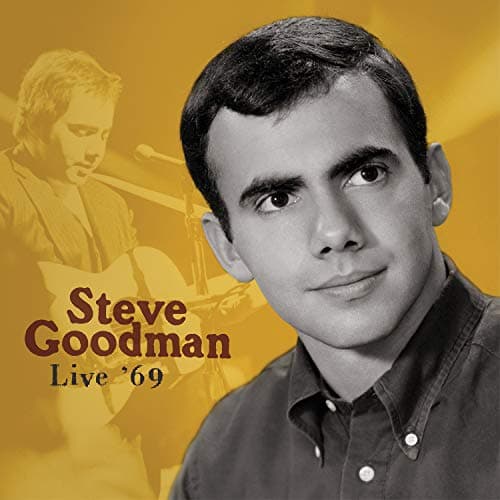
Few songs capture the soul of a pastime as tenderly as “The Loving Of The Game” by Steve Goodman. Released in 1984 as part of the album Affordable Art, this understated gem stands apart not for chart-topping success—indeed, it did not make a significant impact on mainstream charts—but for its enduring emotional resonance among those who understand devotion, both to music and to life itself.
By the time Steve Goodman recorded this song, he had already etched his name into American folk history with classics like “City of New Orleans.” Yet, unlike many artists chasing commercial success, Goodman often wrote from a deeply personal place, drawing from lived experience and quiet observation. “The Loving Of The Game” is perhaps one of his most intimate expressions, written during a period when he was reflecting on his lifelong love for baseball—particularly his loyalty to the Chicago Cubs—and, more poignantly, his own battle with leukemia.
There is no dramatic crescendo here, no grand orchestration demanding attention. Instead, the song unfolds like a conversation remembered over time. The melody is gentle, almost conversational, allowing the lyrics to carry the weight. Goodman sings not of victory or fame, but of persistence—the simple act of showing up, of playing not for applause, but for the love of the game itself. In many ways, baseball becomes a metaphor, a quiet stand-in for life’s enduring struggles and small, meaningful triumphs.
What makes this song especially moving is its context. Goodman was diagnosed with leukemia as a young man and lived with it for years, never allowing it to define him publicly. Yet, in “The Loving Of The Game,” one can sense a deeper layer beneath the surface. The lyrics speak of resilience, of continuing even when the odds are uncertain—echoing the very nature of baseball, a sport defined by failure as much as success. A batter who succeeds three times out of ten is considered excellent; such is the humility of the game. Goodman understood this well, and he translated it into a philosophy that resonates far beyond the ballpark.
The absence of chart success does not diminish the song’s legacy. On the contrary, it reinforces its authenticity. This was never a song crafted for radio play or commercial acclaim. It was a reflection—quiet, honest, and deeply human. Over the years, it has found a home among listeners who appreciate songs that speak softly yet linger long after the final note fades.
Musically, the arrangement is rooted in folk tradition, with subtle country influences that give it warmth and familiarity. Goodman’s voice—never overpowering, always sincere—guides the listener through a landscape of memory and meaning. There is a certain stillness in the recording, as though time itself has slowed down to allow each word to settle gently.
The meaning of “The Loving Of The Game” lies not in grand statements, but in its quiet insistence that what we love—whether a sport, a craft, or a calling—is worth holding onto, regardless of recognition or reward. It reminds us that passion does not require an audience, and that sometimes, the most meaningful victories are the ones unseen.
In retrospect, the song feels almost like a farewell letter, though never explicitly stated. Steve Goodman passed away later in 1984, the same year the album was released. Knowing this adds a layer of poignancy that is impossible to ignore. Yet, the song does not dwell in sorrow. Instead, it offers a gentle kind of acceptance—a recognition that life, like baseball, is played one moment at a time, with grace found in simply continuing.
For those who take the time to listen, “The Loving Of The Game” is more than a song. It is a quiet companion, a reminder of why we hold onto the things we love, even when the world is not watching.