
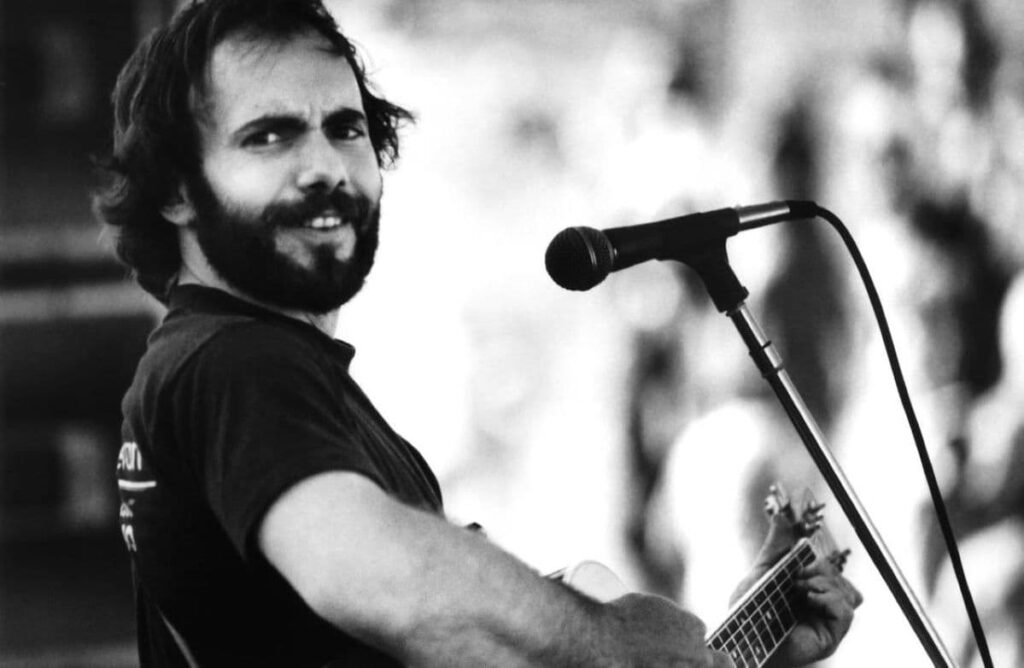
“Lincoln Park Pirates” captures a slice of Chicago life with wry humor and unforgettable melody — a playful lament about parking, city quirks, and the grit under everyday streets.
When we speak of Steve Goodman and the golden thread of storytelling woven through American folk music, we must pause with a grin for “Lincoln Park Pirates.” This track, released in 1972 as part of his album Somebody Else’s Troubles (issued on Buddah Records) stands apart from chart‑toppers of its time — it was never a high‑ranking hit on major pop charts — yet it occupies a special place in the hearts of those who love songs that reflect lived experience rather than just melodies.
There’s an irony in how this gently mocking song has endured, even without the trappings of commercial success. For many listeners of a certain age who remember waiting for a song to come on the radio or waiting for a record to spin on the turntable, “Lincoln Park Pirates” is not about a number on a chart; it’s about a moment in time — the laughter that arises when art reflects the quirks of real life. Stevie Goodman — as friends called him — had that rare gift of turning what might seem like a small, local gripe into something universal.
At its heart, “Lincoln Park Pirates” tells a wonderfully human story — not of swashbuckling buccaneers on the high seas, but of tow‑truck drivers cruising the neighborhood streets of Chicago, rounding up parked cars with a persistence bordering on piratical zeal. The “pirates” in Goodman’s song are a metaphor: characters operating on the edge of civility, unafraid to “tow them away” with an infectious chorus ringing out like a sea shanty for the asphalt age. It’s a surreal scene, sung with playful relish, that turns a civic irritation into a kind of ragtag pride.
Goodman’s songwriting — sometimes deeply poignant, sometimes wickedly humorous — is on full display here. The lyrics are peppered with absurd imagery: imagining boisterous crews hauling boats from Belmont Harbor to the Lincoln Park Lagoon, or towing planes clogging runways at Midway and O’Hare, as though Chicago itself were a far‑flung archipelago of dreams and laughter. Those images, though exaggerated, reveal Goodman’s affection for his hometown: he’s poking fun, but with a songwriter’s deep, affectionate gaze.
This song also subtly captures frustrations many of us carry about bureaucracy and everyday life. Even if you never lived in Chicago, you’ve likely felt the exasperation of city living — too many cars, too few parking spaces, rules that seem unclear, and characters who thrive in the gaps between them. In “Lincoln Park Pirates,” Goodman doesn’t offer solutions; instead, he invites you to laugh at the absurdity and perhaps to see your own everyday troubles reflected in his witty verses.
On the album Somebody Else’s Troubles, the song sits among tracks that showcase Goodman’s range — from tender story songs to playful ditties like this one. It endures because it isn’t polished for mass‑market appeal; it’s honest, direct, and full of personality. And while the song may not have scaled charts like some of its contemporaries, its legacy lies in the way it captures a moment of place and mind with charm and candor.
In looking back now, decades later, “Lincoln Park Pirates” carries a wistful nostalgia: of a time when folk music could make us laugh and think in the same breath, when songwriters were town criers and storytellers all at once. It’s a tune that might make you smile, shake your head, and remember your own city’s peculiar characters — those everyday pirates who tow away more than cars, but a piece of our collective memory too.
If you listen closely, you’ll hear not just the rhythm of a simple folk tune, but the echo of late‑night conversations, smoky barrooms, and sun‑lit streets where stories like this were born. And in that echo lies the enduring magic of Steve Goodman and “Lincoln Park Pirates.”