
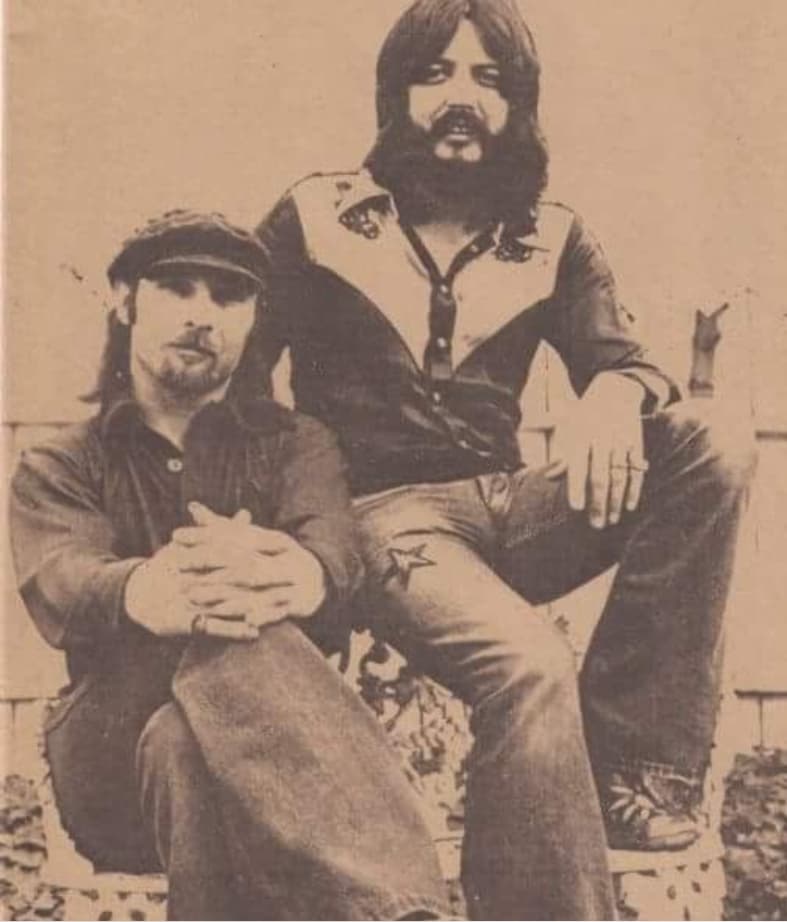
A gentle hymn to love, fragility, and the quiet hope that lingers in fleeting moments
Few songs from the early 1970s capture emotional intimacy as delicately as “Windflowers” by Seals & Crofts. Released in 1974 as part of their album Unborn Child, the track did not achieve major chart success as a standalone single—unlike their more commercially prominent hits such as “Summer Breeze” or “Diamond Girl.” However, its quiet presence within the album—and later its enduring appreciation among listeners—has given it a kind of timeless reverence that charts often fail to measure.
At the time of its release, “Windflowers” was not issued as a major charting single in the United States or the United Kingdom, which perhaps explains why it never secured a notable position on the Billboard Hot 100. Yet, paradoxically, this absence from the charts only deepened its mystique. It became a song discovered rather than consumed, cherished rather than broadcast—a quiet treasure for those willing to listen closely.
The story behind “Windflowers” is inseparable from the spiritual and philosophical outlook of Jim Seals and Dash Crofts. Both artists were deeply influenced by the teachings of the Baháʼí Faith, which often shaped the lyrical themes of their work. In this song, their spirituality is not overtly preached but instead gently woven into imagery and metaphor. The “windflowers” themselves—fragile, transient, swayed by unseen forces—serve as a poetic symbol of human vulnerability and emotional openness.
Listening to “Windflowers”, one is immediately struck by its simplicity. The arrangement is sparse: soft acoustic guitar, subtle harmonies, and a melody that seems to float rather than move. But beneath that simplicity lies a profound emotional depth. The lyrics speak of love not as possession or certainty, but as something delicate, almost ephemeral—something that can be lost if not held with care.
There is a sense, too, of longing in the song—an acknowledgment that even the most sincere emotions can drift away like petals in the wind. And yet, it is not a song of despair. Instead, it carries a quiet acceptance, a belief that even fleeting beauty has its own meaning. In this way, “Windflowers” reflects a broader theme found in much of Seals & Crofts’ work: the idea that life’s most precious moments are often the most fragile.
What makes this song particularly enduring is how it invites reflection. It does not demand attention with dramatic crescendos or elaborate production. Instead, it asks the listener to slow down, to sit with the music, and to remember. For many, it evokes images of a different time—perhaps a quiet evening, a familiar voice, or a moment that seemed insignificant then but feels invaluable now.
In the landscape of 1970s soft rock, where polished hits often dominated the airwaves, “Windflowers” stands apart as something more intimate, almost private. It is a reminder that not all great songs are measured by their chart positions. Some are measured by the memories they carry, the emotions they awaken, and the quiet comfort they provide over the years.
And so, while “Windflowers” may not have climbed the charts upon its release, it has found a lasting place in the hearts of those who have discovered it. Like the flowers it describes, it may seem delicate at first—but its beauty endures, carried gently on the winds of time.