
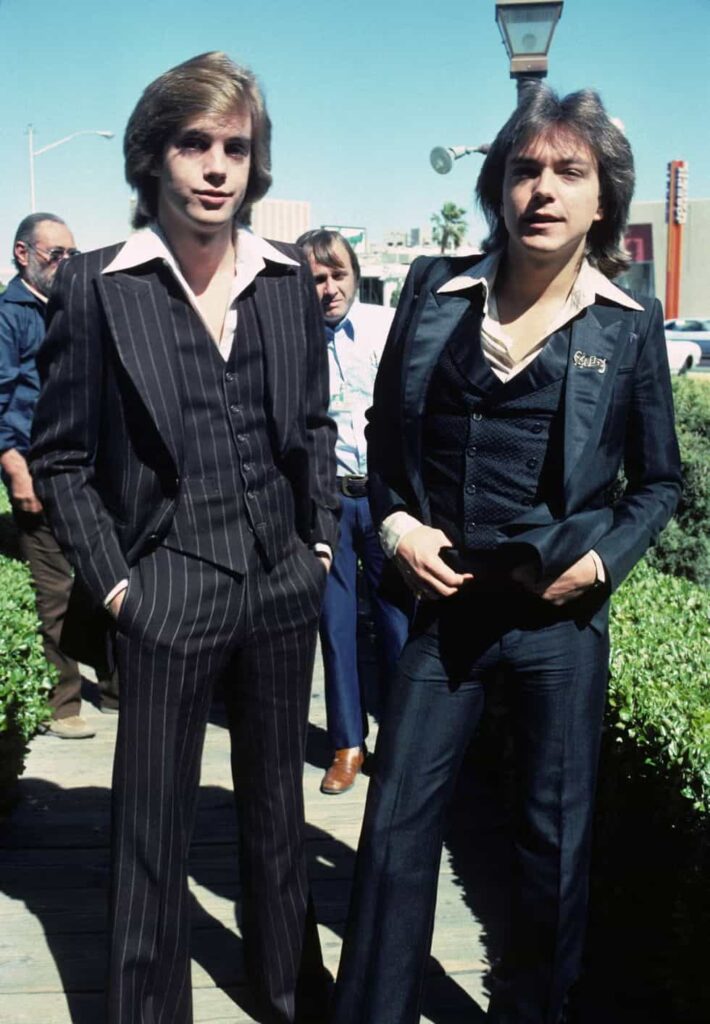
A Rare Family Harmony: David and Shaun Cassidy’s Memorable Television Duet
A treasured television performance featuring brothers David Cassidy and Shaun Cassidy continues to stand as a remarkable chapter in the history of one of America’s most celebrated entertainment families. Appearing together on Live with Regis and Kathie Lee, the brothers performed a song from the stage production Blood Brothers, creating a moment that highlighted both their individual talents and their unique family connection.
The performance is particularly notable because opportunities to hear David and Shaun sing together were rare. Although both built successful careers in music and television, their artistic paths often unfolded separately. This appearance offered a special glimpse of what could happen when their voices met on the same stage.
What makes the duet so compelling is the contrast between the brothers’ vocal styles. David Cassidy, widely known for his charismatic pop success during the 1970s, possessed a distinctive voice marked by warmth and emotional depth. Shaun Cassidy, who also enjoyed major success as a singer and actor, brought a different vocal character that complemented his older brother’s sound. Together, they created a harmony that felt natural and deeply expressive.
The visual resemblance within the Cassidy family also drew attention. Shaun strongly reflected the features of his mother, actress and singer Shirley Jones, while David carried the unmistakable look of his father, the late actor and singer Jack Cassidy. Their appearance on stage together seemed to symbolize the blending of two remarkable artistic legacies within one family.
The performance carries an added emotional significance because Jack Cassidy did not live long enough to witness both of his sons sharing such a powerful musical moment. That fact lends a sense of poignancy to the occasion, turning it into more than a simple television appearance. It becomes a reflection of family heritage, artistic continuity, and the enduring bonds between generations.
Many who remember the Cassidy family often speak of the extraordinary level of talent that ran through it. David Cassidy, Shaun Cassidy, Shirley Jones, and Jack Cassidy each left a lasting mark on the entertainment world through music, television, film, and theater. Their collective achievements reached millions and helped define an era of popular culture.
Seen today, this rare duet remains an inspiring reminder of a gifted family whose influence continues to resonate. It captures not only exceptional musical ability but also the enduring power of family connections expressed through song.