
A Song Born From Loss That Still Echoes Through Country Music History
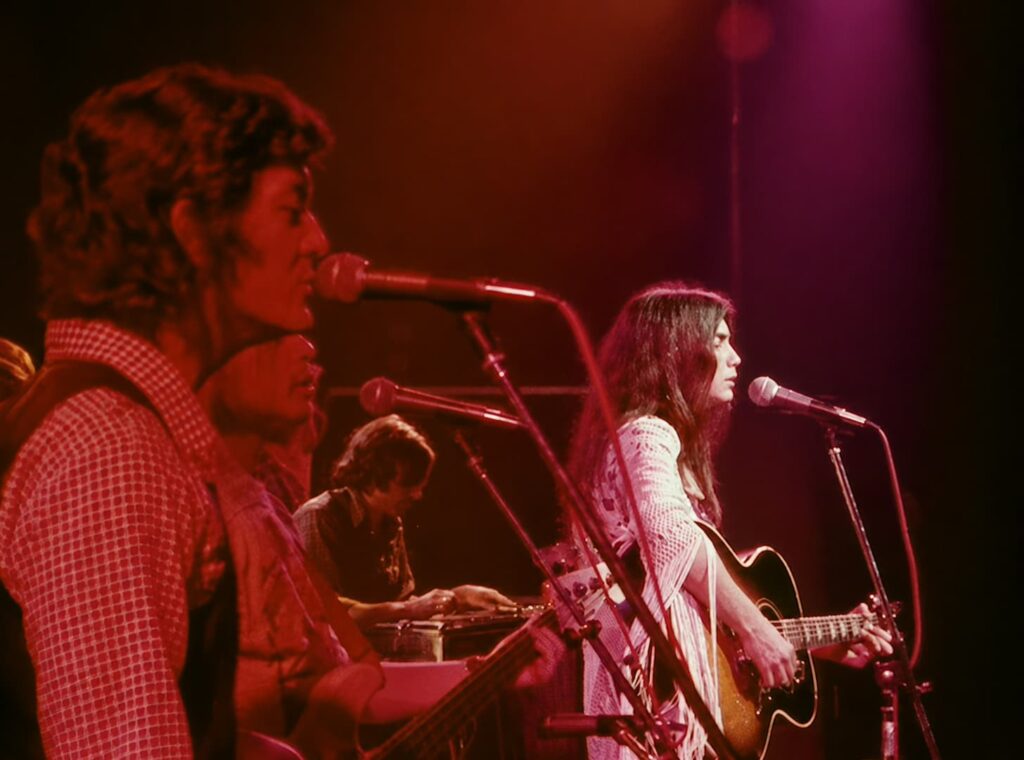
In 1976, Emmylou Harris delivered one of the most emotionally powerful performances of her career with “Boulder To Birmingham,” appearing alongside The Hot Band in footage preserved by the Reelin’ In The Years archive. More than just a live country performance, the song stands as a deeply personal tribute to Gram Parsons, the artist whose influence helped shape Harris’ path into country music before his tragic death in 1973 at only 26 years old.
Written by Harris herself, “Boulder To Birmingham” was created in the aftermath of Parsons’ passing. By that time, the two musicians had already formed a remarkable artistic partnership through albums such as “GP” and “Grievous Angel.” Parsons had introduced Harris to a new understanding of country music, blending emotional honesty with roots traditions in a way that would later define her own career. The pain of losing him became the emotional foundation of this composition.
The 1976 performance captures Harris during the early rise of her solo success, yet there is a visible intimacy in the way she delivers the song. Rather than dramatic gestures, the performance relies on restraint, vulnerability, and musical precision. Backed by The Hot Band, Harris is joined by an extraordinary lineup that includes legendary guitarist James Burton on lead guitar, Glenn D. Hardin on piano, Hank DeVito on pedal steel, Rodney Crowell on electric guitar, Emory Gordy Jr. on bass, and John Ware on drums.
Together, the musicians create a haunting atmosphere that allows Harris’ voice to carry the full emotional weight of the lyrics. The song has often been described as both a love song and a farewell letter, filled with longing, grief, and gratitude. Some listeners have long connected it spiritually to Parsons’ own poetic imagery from “Return of the Grievous Angel,” making Harris’ performance feel almost like a response to a lost companion whose influence never disappeared.
Over the decades, “Boulder To Birmingham” has remained one of the defining recordings of Harris’ career. It is not simply remembered as a country standard, but as a rare example of personal heartbreak transformed into timeless music.