
The Cry for Freedom Behind a Disco Classic: When Love Hurts, Young Hearts Must Learn to Run Free
When Young Hearts Run Free burst onto the airwaves in 1976, it sounded, at first glance, like another bright, irresistible anthem of the disco era. Its sweeping strings, urgent rhythm, and uplifting chorus seemed tailor-made for crowded dance floors and glittering mirror balls. Yet beneath that shimmering surface lived a far deeper story—one shaped by heartbreak, survival, and the quiet wisdom earned from painful love.
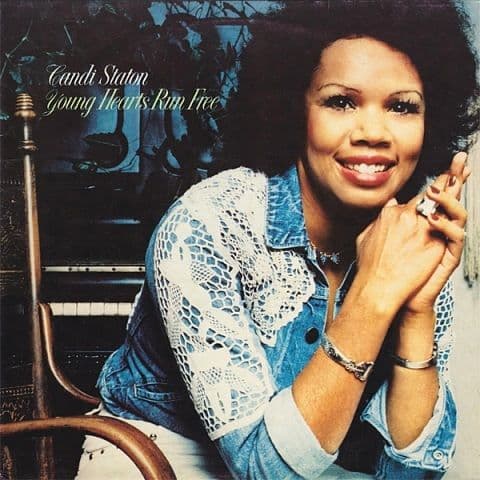
Performed by the remarkable Candi Staton, the song became the centerpiece of her 1976 album Young Hearts Run Free. Upon its release, the single climbed to No. 1 on the Billboard R&B chart, reached No. 20 on the Billboard Hot 100, and soared to No. 2 on the UK Singles Chart, where it became one of the defining transatlantic soul-disco hits of the decade. Those chart numbers alone tell part of the story: this was not merely a hit—it was a song that spoke directly to listeners who understood the complicated terrain of love.
But to truly understand the emotional power of “Young Hearts Run Free,” one must look behind the recording studio door.
The song was written and produced by Dave Crawford, a gifted craftsman who had a rare ability to blend social truth with irresistible melody. According to Staton’s own recollections, the inspiration came from a deeply personal conversation she shared with Crawford. During a late-night discussion, she confided in him about the abusive marriage she had endured years earlier—an experience that left emotional scars but also hard-won clarity about love and self-worth.
Crawford listened carefully. Rather than writing a sorrowful ballad about pain, he did something unexpected. He transformed that painful confession into a message of warning—and liberation.
The lyrics he created were not about bitterness. They were about awakening.
“What’s the sense in sharing this one and only life
Ending up just another lost and lonely wife…”
Lines like these carried a quiet gravity rarely heard in disco music. While the rhythm urged people to dance, the words gently urged them to think—to pause before surrendering their hearts too easily, to recognize the value of freedom and self-respect.
In the studio, Candi Staton delivered the message with extraordinary emotional balance. She didn’t sing with anger or resentment. Instead, her voice carried a tone of reflective wisdom, as though speaking from experience rather than accusation. It was the sound of someone who had walked through fire and emerged with insight.
That combination—danceable optimism wrapped around hard truth—became the song’s magic.
Musically, “Young Hearts Run Free” sits at the crossroads between classic Southern soul and the rising disco movement of the mid-1970s. The arrangement features sweeping orchestral strings, a propulsive bassline, crisp rhythm guitar, and elegant backing vocals that lift the chorus into something almost celebratory. Yet Staton’s voice remains the emotional anchor, earthy and sincere.
The result was a song that could fill a dance floor while quietly delivering life advice.
Over the decades, the record has proven remarkably durable. It has appeared in numerous films, television shows, and retrospectives celebrating the golden age of disco and soul. New generations have discovered it through soundtracks and cover versions, but the original recording retains a particular warmth that later interpretations rarely capture.
Perhaps that is because the song carries real life within it.
Not every love story is meant to be endured forever. Some lessons arrive through pain, and some freedom comes only after difficult choices. “Young Hearts Run Free” doesn’t preach cynicism—it offers perspective. It reminds listeners that love should never demand the loss of one’s dignity or spirit.
And that message, delivered through Candi Staton’s soulful voice and Dave Crawford’s thoughtful songwriting, continues to resonate long after the disco lights faded.
More than a dance hit, “Young Hearts Run Free” stands as a gentle but powerful reminder: sometimes the bravest thing a heart can do… is learn when to run free.