
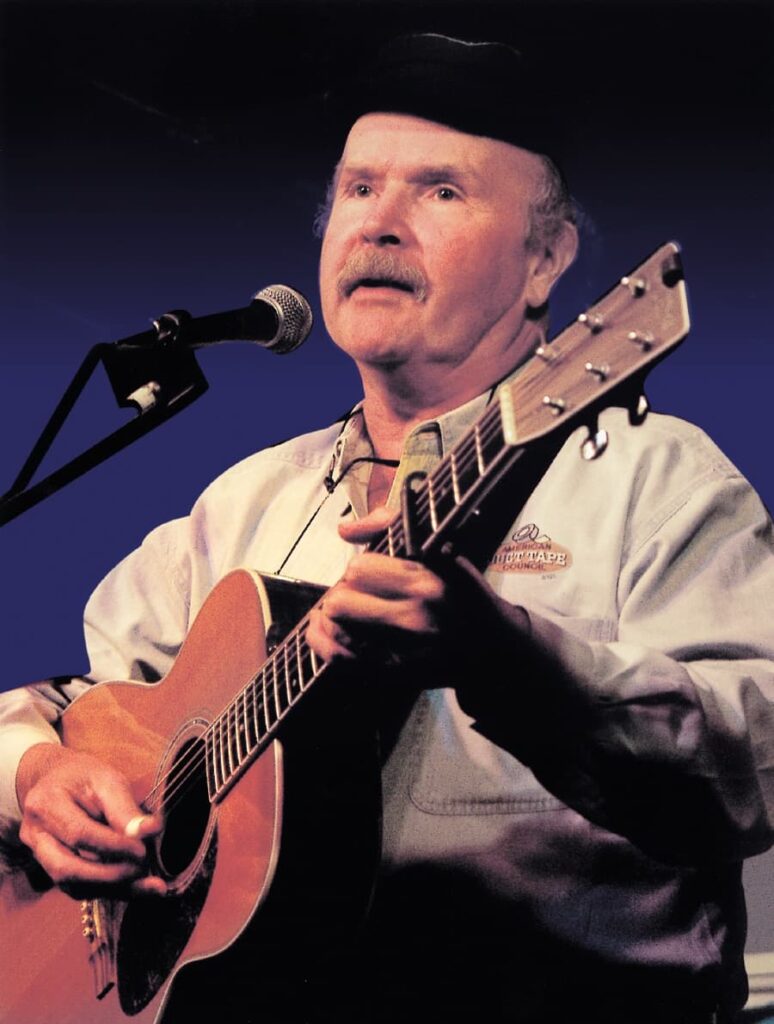
When a Folk Song Becomes a Witness to History: “Lyndon Johnson Told the Nation” and the Quiet Courage of Tom Paxton
In 1965, at the height of America’s deepening involvement in the Vietnam War, the folk singer and songwriter Tom Paxton released one of the most quietly powerful protest songs of the decade: “Lyndon Johnson Told the Nation.” Appearing on his album Ain’t That News! (1965), the song did not storm the commercial charts, nor was it designed to. Instead, it entered the bloodstream of the American folk movement, where songs traveled by word of mouth, coffeehouse performances, and the steady conviction of artists who believed music could speak truth to power.
Unlike the pop hits of the era that climbed the Billboard Hot 100, “Lyndon Johnson Told the Nation” never became a chart-ranking single. Its impact was felt elsewhere—in the folk circuit, on college campuses, and in gatherings where listeners sat close enough to hear the creak of a guitar chair and the careful weight of each lyric. In those rooms, the song carried more authority than many chart-toppers.
The title itself refers directly to a pivotal political moment. On July 28, 1965, U.S. President Lyndon B. Johnson announced a major escalation of the Vietnam War, increasing American troop levels dramatically. That televised address, delivered with the calm assurance of presidential authority, was meant to steady the nation. Yet for many Americans—especially younger voices within the growing folk revival—it stirred unease, doubt, and ultimately protest.
Tom Paxton, already emerging as one of the most thoughtful songwriters in the Greenwich Village folk scene, responded not with anger or shouting, but with something more unsettling: simplicity.
The lyrics of “Lyndon Johnson Told the Nation” unfold like a plainspoken conversation. There is no ornate poetry, no elaborate storytelling. Instead, Paxton uses repetition and understated irony to expose the widening gap between political promises and the grim reality unfolding in Southeast Asia. Each line echoes the language of official statements—measured, confident, reassuring—while the subtext reveals growing skepticism.
That quiet restraint is precisely what gives the song its power.
At the time, the folk world was alive with political expression. Artists such as Bob Dylan, Phil Ochs, and Joan Baez were shaping a musical language that could question authority without abandoning melody. Paxton’s contribution was distinctive: where Ochs often sounded fiery and confrontational, Paxton preferred a tone of reflective observation, almost as if he were documenting history as it happened.
In “Lyndon Johnson Told the Nation,” he becomes less a protestor and more a chronicler—someone standing at the edge of a turning point and simply writing down what he hears.
Musically, the song is spare. A gentle folk arrangement—primarily acoustic guitar—keeps the focus squarely on the words. That minimalism was typical of the 1960s folk revival, where authenticity mattered more than production polish. The absence of musical ornamentation allows the listener to feel the weight of every phrase, much the way a newspaper headline might linger in the mind long after the paper has been folded away.
The album Ain’t That News!, which introduced the song, became one of Paxton’s most respected early works. Though it did not produce mainstream chart hits, it solidified his reputation as a songwriter capable of capturing the social mood of his time. Songs from the record circulated widely among folk performers, and Paxton himself became a regular presence at festivals and concert halls where audiences valued songs that spoke directly to contemporary realities.
Looking back now, decades later, “Lyndon Johnson Told the Nation” feels less like a protest anthem and more like a historical artifact—an intimate snapshot of a nation wrestling with its conscience. The song reminds us that music does not always have to shout to be heard. Sometimes the most enduring statements are delivered quietly, with a guitar in hand and a voice that sounds more like a witness than a performer.
That is the enduring gift of Tom Paxton. His songs rarely chase grandeur. Instead, they capture moments—fragile, uncertain, deeply human moments—and preserve them in melody.
And in the case of “Lyndon Johnson Told the Nation,” he preserved the sound of a country listening to its leaders… and slowly beginning to question what it was being told.