
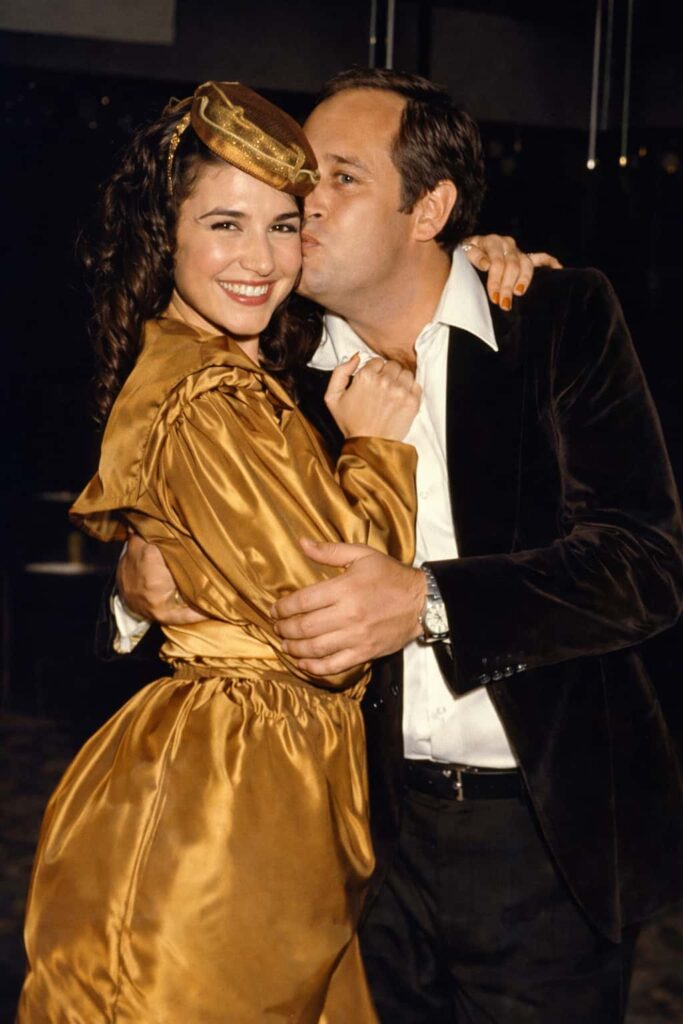
A Father and Daughter Revisit a Soul Classic — “Your Precious Love” Becomes a Tender Dialogue Across Generations
When Your Precious Love was first heard on the radio in 1967, it carried the warm pulse of Motown and the irresistible chemistry between Marvin Gaye and Tammi Terrell. Their original recording climbed to No. 5 on the Billboard Hot 100 and No. 2 on the Billboard R&B chart, becoming one of the most beloved duets of the Motown era. Written by the legendary songwriting team Nickolas Ashford and Valerie Simpson, the song was a declaration of devotion—simple, sincere, and filled with the emotional warmth that defined late-1960s soul.
More than a decade later, the melody found new life in a very different setting. This time the voices belonged not to Motown partners but to a father and his daughter: Neil Sedaka and Dara Sedaka. Their duet version of “Your Precious Love” did not arrive with the chart-shaking impact of the original, yet it carried something equally meaningful—a quiet emotional resonance rooted in family, memory, and musical heritage.
By the time this recording appeared in the late 1970s and early 1980s, Neil Sedaka had already lived several musical lives. He had been a teenage pop sensation of the early 1960s with hits like “Calendar Girl” and “Breaking Up Is Hard to Do,” then endured the changing tides of rock and pop in the late sixties before staging a remarkable comeback in the mid-1970s. His voice, unmistakably gentle yet confident, had always carried a sense of sincerity. Pairing it with his daughter’s voice transformed “Your Precious Love” into something more intimate than the Motown classic.
The original version was about romantic devotion between two lovers. The Sedaka interpretation, however, subtly reshaped the emotional landscape. Sung by Neil and Dara, the lyrics felt almost like a musical conversation between generations—an affectionate exchange that reflected both admiration and familial warmth. Dara’s youthful tone brought brightness and innocence, while Neil’s seasoned voice added depth and reassurance. Together, they created a version that felt less like a performance and more like a shared moment.
Listening to their rendition, one notices how gently the arrangement supports the voices. Unlike the vibrant Motown orchestration that propelled the Marvin Gaye and Tammi Terrell recording, the Sedaka duet leans toward a softer, more reflective pop style. The tempo remains relaxed, allowing every lyric to breathe. The result is a rendition that invites the listener to slow down and appreciate the sentiment behind the words.
And those words, written by Ashford & Simpson, remain timeless. At its heart, “Your Precious Love” is about gratitude—the realization that love can transform ordinary life into something meaningful. Lines that once celebrated romantic devotion now echo with broader meaning. Love here is not just passion; it is companionship, loyalty, and the quiet miracle of having someone stand beside you through the years.
There is also something deeply symbolic about Neil Sedaka recording this song with his daughter. Throughout the history of popular music, family collaborations have often revealed a different side of artists—one less concerned with chart performance and more focused on connection. In this case, the duet felt like a bridge between past and future. Neil represented a generation that helped shape early rock and pop, while Dara represented the continuation of that musical spirit.
Although the Sedaka version of “Your Precious Love” did not become a major chart success like the 1967 Motown recording, it remains a touching entry in Neil Sedaka’s later career. For listeners who had followed him from the Brill Building era through his 1970s resurgence, the duet carried a quiet emotional weight. It was not simply another cover—it was a reminder that songs can grow and change as life moves forward.
Music often serves as a time capsule, preserving moments that might otherwise fade. The original Marvin Gaye–Tammi Terrell recording captures the optimism and elegance of 1960s soul. The Neil and Dara Sedaka duet, on the other hand, captures something softer and more reflective: the gentle warmth of family, the passing of musical traditions, and the enduring power of a melody that refuses to grow old.
In the end, that may be the true meaning of “Your Precious Love.” It is not just a love song. It is a reminder that the most meaningful music often lives in the spaces between generations—carried forward by voices that remember, reinterpret, and keep the feeling alive.