
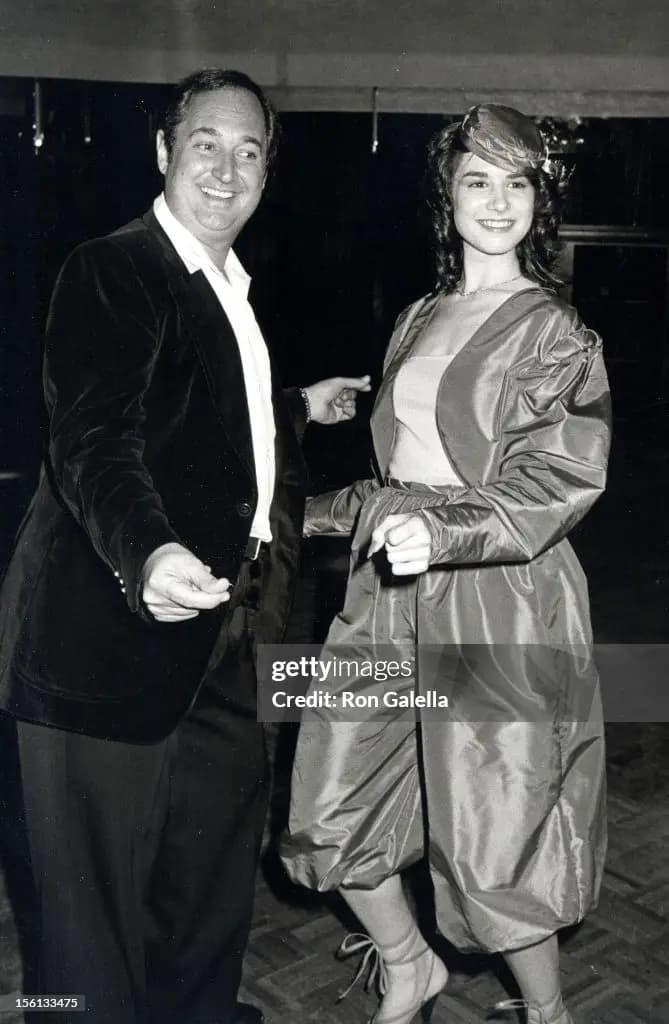
A Tender Father-Daughter Echo of a Soul Classic — How “Your Precious Love” Became a Quiet Bridge Between Generations
Among the many love duets that shaped the golden age of popular music, few carry the gentle emotional weight of “Your Precious Love.” When Neil Sedaka later performed the song with his daughter Dara Sedaka, the moment took on a meaning far beyond its original recording. What had once been a soulful declaration between lovers became something more intimate: a musical conversation between generations.
The song itself was first introduced to the world in 1967 by Marvin Gaye and Tammi Terrell, two of the most beloved voices of the Motown era. Their original recording of Your Precious Love was released by Motown’s Tamla label in late 1967 and quickly climbed the charts, reaching No. 5 on the Billboard Hot 100 and No. 2 on the Billboard R&B chart. The single later appeared on their 1968 album You’re All I Need, a record that would become one of the defining duet collections of the soul era.
From the very first notes, the song carries a warmth that feels timeless. Written by Nickolas Ashford and Valerie Simpson, two of Motown’s most gifted songwriters, “Your Precious Love” was designed to highlight the chemistry between Gaye and Terrell. Their voices intertwine with effortless grace, creating a feeling of devotion that is both simple and deeply sincere. Unlike the dramatic heartbreak ballads that filled the radio waves in the late 1960s, this song celebrates gratitude—love not as tragedy, but as quiet blessing.
Yet the history behind the original recording carries a shadow. During the period when the song was released, Tammi Terrell was already battling the illness that would tragically end her life only a few years later in 1970. Knowing this today lends the recording an even deeper emotional resonance. When Terrell sings of the strength she finds in love, the words feel almost prophetic, as if music itself were offering comfort during a difficult time.
Years later, the song found a very different kind of life through Neil Sedaka, a songwriter and performer whose career had already spanned several musical eras. Sedaka, who rose to fame in the early 1960s with classics such as “Breaking Up Is Hard to Do” and “Calendar Girl,” had always possessed a remarkable instinct for melody and sentiment. By the time he performed “Your Precious Love” with Dara Sedaka, the context had completely transformed.
Instead of two Motown lovers sharing a romantic promise, the duet became something more tender: a father sharing the stage with his daughter. The emotional tone shifted from romance to affection, yet the song’s message remained intact. The lyrics about appreciation and devotion suddenly sounded like a quiet expression of familial pride and gratitude.
There is something uniquely moving about hearing a seasoned performer sing alongside the next generation of his own family. Neil Sedaka’s voice, seasoned by decades of songwriting and performance, carries a reflective warmth. Dara Sedaka’s voice, youthful and clear, brings freshness to the melody. Together, they create a balance that mirrors the song’s original spirit of harmony.
Musically, the arrangement in their performances often leans toward a softer pop style rather than the lush orchestral soul production of Motown. The focus shifts toward the vocal exchange itself. Every line feels like a shared moment rather than a staged performance.
What makes “Your Precious Love” endure across decades is its simplicity. The song does not rely on elaborate storytelling or dramatic twists. Instead, it expresses a universal truth: sometimes love reveals itself not in grand gestures but in the steady presence of someone who believes in us.
In the hands of Marvin Gaye and Tammi Terrell, the song captured the glowing optimism of late-1960s soul music. In the hands of Neil and Dara Sedaka, it became a reflection on legacy—how music, like love, travels gently from one generation to the next.
And perhaps that is the quiet miracle of this song. Long after its chart success in 1967, long after the Motown era that gave it birth, “Your Precious Love” still feels alive whenever two voices meet in harmony. Some melodies simply refuse to fade. They linger, waiting patiently for new voices—and new memories—to carry them forward.