
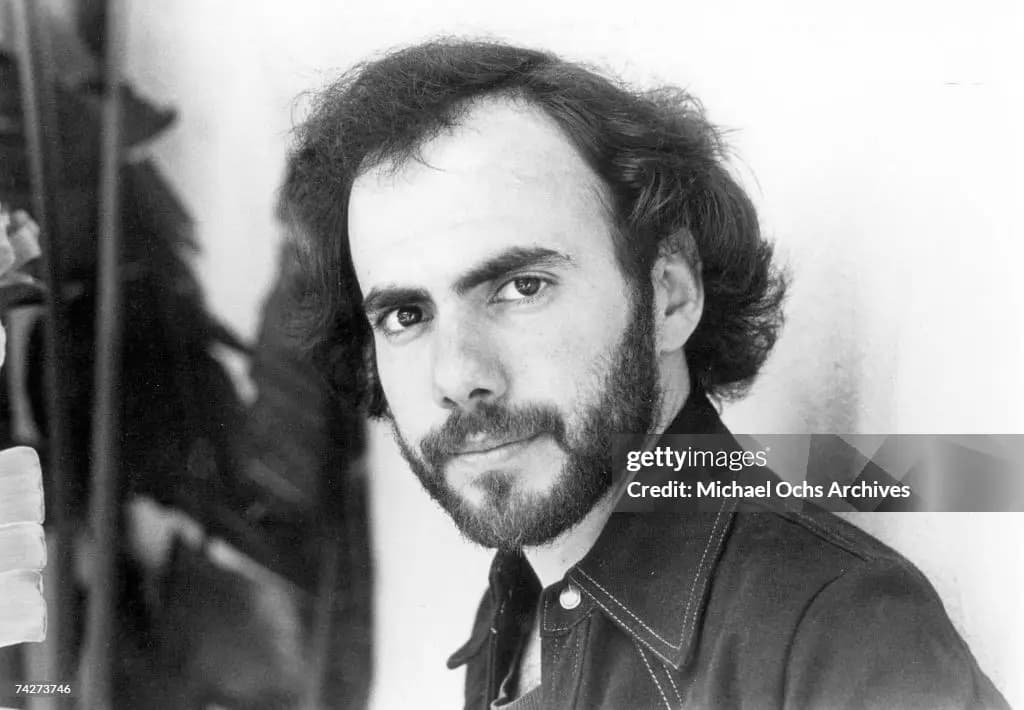
A Tender Farewell Wrapped in Baseball, Humor, and Mortal Grace
When “A Dying Cubs Fan’s Last Request” was released in 1984 on the album Affordable Art, it quickly became far more than a novelty song. It rose to No. 3 on the Billboard Bubbling Under Hot 100 chart—an extraordinary achievement for a satirical folk tune about baseball and death. Yet to describe it merely as a humorous baseball song would be to miss its deeper resonance. In the hands of Steve Goodman, it became a meditation on loyalty, mortality, and the bittersweet poetry of loving something that never quite loves you back.
By the time Goodman recorded this piece, he was already revered in American songwriting circles. Known for classics like “City of New Orleans” (later made famous by Arlo Guthrie and Willie Nelson), Goodman possessed that rare ability to blend wit and wisdom in equal measure. But “A Dying Cubs Fan’s Last Request” carried a sharper edge because it was personal. Goodman had battled leukemia for years. He understood fragility. He understood time running short. And he understood devotion—particularly the kind reserved for the long-suffering Chicago Cubs.
The story behind the song is steeped in that peculiar, almost sacred loyalty that Cubs fans carried before the team’s long-awaited championship decades later. In 1984—the year of the song’s release—the Cubs were enjoying one of their strongest seasons in years, winning the National League East division. Hope flickered brightly at Wrigley Field. But heartbreak followed swiftly in the National League Championship Series against the San Diego Padres. For fans, the familiar ache returned. For Goodman, whose health was deteriorating, the timing was almost unbearably symbolic.
The song itself is framed as the mock-solemn plea of a man on his deathbed asking that his ashes be scattered at Wrigley Field—“so the Cubs can let me down one last time.” On the surface, it is comic exaggeration. Yet listen closely, and you hear something gentler beneath the humor: acceptance. The singer knows he will not live to see the Cubs win a World Series (a victory that, poignantly, would not arrive until 2016). Instead of bitterness, he offers affection. Instead of anger, he gives a wink and a sigh.
Musically, the arrangement is simple and communal—almost like a sing-along in the bleachers. Goodman’s voice carries warmth and irony in equal measure. The melody does not strive for grandeur; it invites camaraderie. There is something profoundly American about the structure: a folk ballad dressed in baseball lore, anchored in storytelling rather than spectacle. It belongs to that tradition where songs are passed from hand to hand, voice to voice, becoming shared memories rather than commercial products.
What gives “A Dying Cubs Fan’s Last Request” its enduring power is its emotional layering. It is about baseball, yes. It is about fandom, certainly. But more deeply, it is about the human habit of believing in tomorrow—even when tomorrow has disappointed us for decades. It is about loving a team that loses, loving a life that ends, loving a dream that remains just out of reach. In that sense, the Cubs are a metaphor for all the unfinished hopes we carry.
There is also something profoundly dignified in Goodman’s approach to mortality. He does not rage against fate. He crafts a joke. He turns his illness into art, and art into community. Listeners who came of age in an era when folk music was a vehicle for truth-telling will recognize the courage embedded in that humor. It is the same quiet bravery that shaped the work of John Prine and other master storytellers of that generation.
Goodman passed away in September 1984, just weeks before the Cubs’ postseason collapse. The timing adds an almost mythic dimension to the song. It feels like a letter sealed and delivered to the future—a future that, decades later, would finally see the Cubs lift the World Series trophy. And when that moment arrived in 2016, countless fans thought of Goodman. His “last request” had, in spirit, been fulfilled.
Listening now, the song carries the gentle weight of memory. It reminds us of transistor radios on summer afternoons, of scoreboards glowing under fading sunlight, of friendships forged in shared disappointment. It reminds us that humor can coexist with heartbreak, and that devotion—no matter how irrational—can be a beautiful thing.
In the end, Steve Goodman did not merely write a baseball song. He wrote a farewell disguised as a grin. And in doing so, he gave the world a small, enduring anthem for anyone who has ever loved something imperfect, and loved it all the more because of that imperfection.