
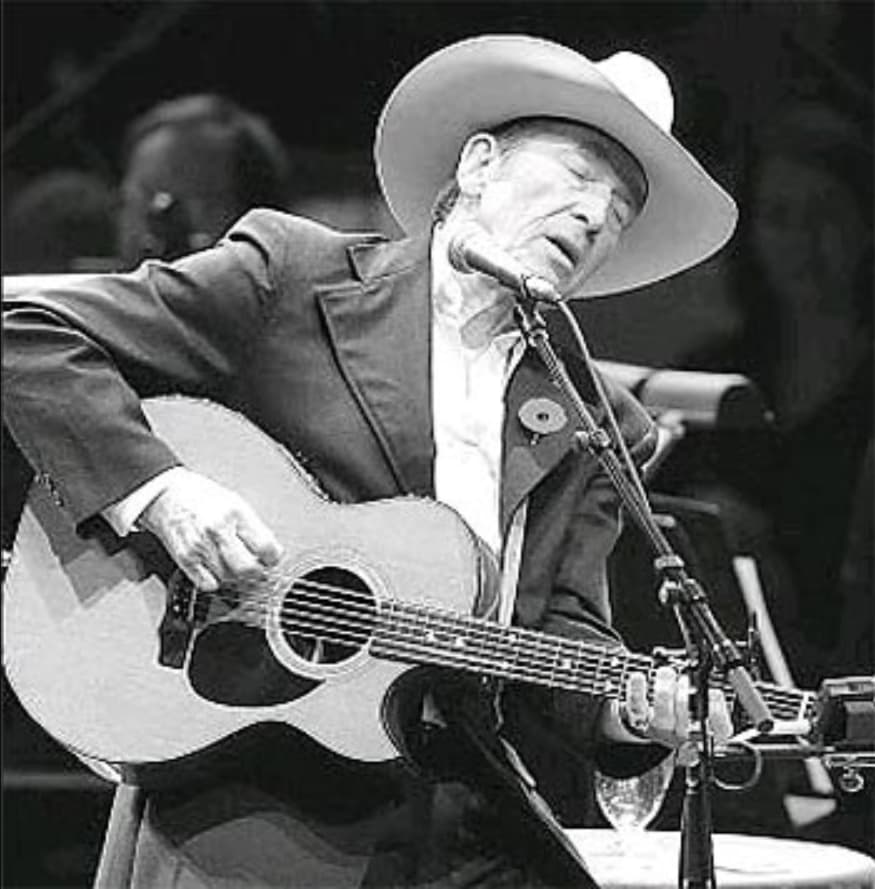
“M.C. Horses” – A Quiet Portrait of Ranch Life, Memory, and the Enduring Spirit of the Western Range
A reflective piece by Ian Tyson, capturing the texture of working horses and cowboy heritage with understated emotional depth.
In the long and winding legacy of Western folk and country music, few voices carry the weight of lived experience quite like Ian Tyson. Once half of the influential duo Ian & Sylvia, Tyson later turned inward toward the land that shaped him—ranch country in Alberta, Canada—and from that world emerged some of the most authentic cowboy songwriting of the late 20th century. Among these works, “M.C. Horses”, featured on his acclaimed 1986 album Cowboyography, stands as a quietly powerful meditation on working horses, memory, and the unspoken language between man and animal.
Unlike commercial country singles designed for radio dominance, “M.C. Horses” was never a chart-chasing release. It did not enter major Billboard rankings at the time of its release, nor was it positioned as a mainstream hit. Instead, it lived—and continues to live—within a more intimate space: the listening rooms of folk enthusiasts, ranch-country traditionalists, and those who understand that some songs are not built for charts, but for endurance. Its value lies not in numerical success, but in cultural permanence.
The song itself reflects Tyson’s deep familiarity with ranch life. “M.C.” is widely interpreted within the context of ranching and horse breeding culture, often associated with lineage, branding, and the identity of working horses that carry generations of purpose in their bloodlines. Tyson does not over-explain this world. He simply presents it. A horse is not just an animal here—it is labor, history, and trust given physical form.
What makes “M.C. Horses” especially compelling is its restraint. Tyson’s songwriting never leans toward excess. Instead, he writes like someone who has spent long winters observing more than speaking. His voice, weathered and unhurried, allows space between lines—space where listeners can feel the wind across open plains or imagine the creak of saddle leather at dawn. There is a kind of emotional intelligence in that restraint, a recognition that the cowboy life is not romantic in a theatrical sense, but deeply human in its simplicity and hardship.
The broader album, “Cowboyography”, from which the song comes, marked a turning point in Tyson’s career. By the mid-1980s, he had fully embraced the role of musical chronicler of the Western ranching tradition. While popular music was increasingly polished and synthesized during that era, Tyson’s work stood almost defiantly organic. Acoustic textures, storytelling lyrics, and field-born imagery replaced studio gloss. Within that landscape, “M.C. Horses” feels like a photograph left out in the sun—faded at the edges, but still unmistakably alive.
There is also something quietly philosophical running through the song. Horses in Tyson’s world are not romanticized symbols; they are partners in survival. They endure weather, distance, and labor alongside humans. And yet, there is an unspoken emotional bond that transcends utility. That duality—use and affection, labor and companionship—forms the emotional core of the song’s meaning.
For listeners who return to “M.C. Horses” today, the experience is often less about discovery and more about remembrance. It recalls a time when music did not always need to declare itself loudly to be heard. Instead, it spoke in measured tones, trusting the listener to lean in. In that sense, the song remains timeless—not because it changed with the world, but because it refused to.
In the broader canon of Ian Tyson, “M.C. Horses” may not be the most widely recognized composition, but it is one of the most honest. It carries the quiet authority of someone who has lived the subject he writes about. And in that honesty, it preserves something increasingly rare in modern music: the sense that a song can be both ordinary in subject and extraordinary in truth.
Even now, decades after its release, it remains less a performance than a memory set to music—unfolding slowly, like dusk settling over open land.