
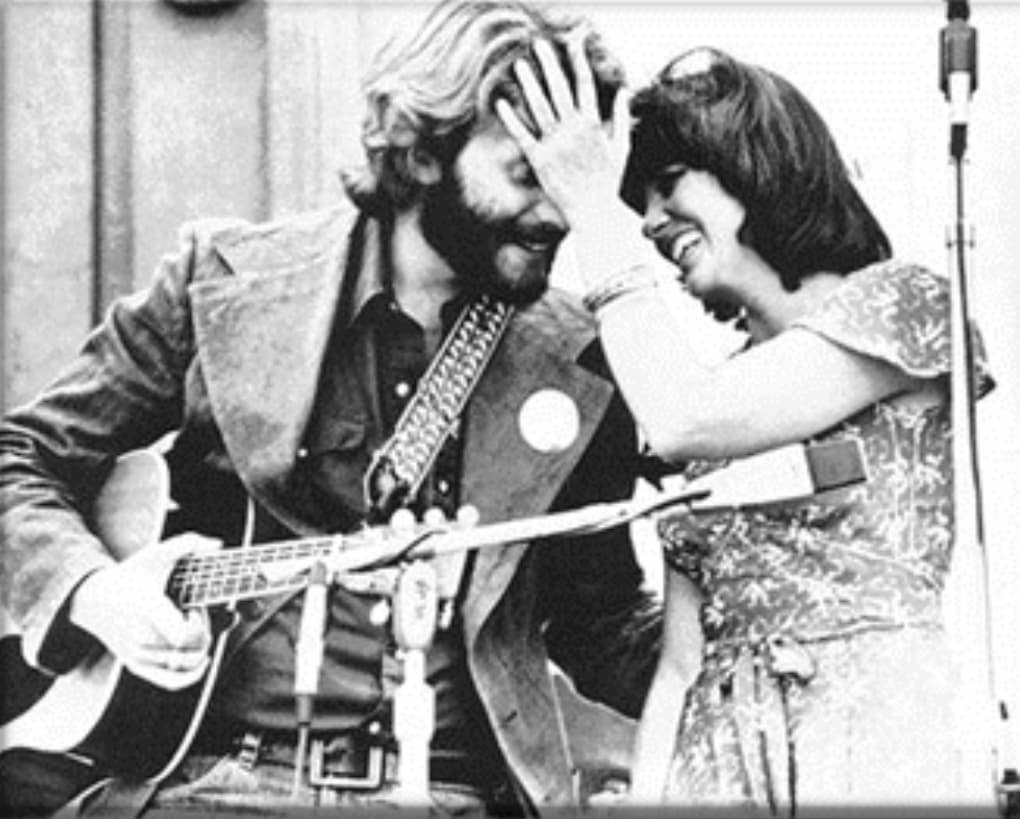
A song about growing up alone, finding one’s own voice, and learning—quietly, bravely—to stand in the world.
When “Lonely Boy” by Andrew Gold first appeared in 1976, it arrived not with spectacle, but with a gentle emotional honesty that felt instantly familiar. Released as the lead single from his second album What’s Wrong with This Picture?, the song climbed steadily up the charts, eventually reaching No. 7 on the Billboard Hot 100 in the United States. It also found a strong audience overseas, peaking at No. 11 on the UK Singles Chart, confirming that its story—deeply personal as it was—spoke a universal language.
What made “Lonely Boy” resonate so powerfully was not just its bright, radio-friendly melody, but the quiet truth beating at its center. On the surface, the song sounds almost cheerful, wrapped in warm harmonies and a breezy West Coast pop arrangement. Yet beneath that polished exterior lies a reflection on emotional neglect, childhood solitude, and the slow realization that independence is sometimes born not from choice, but from absence.
Andrew Gold, already a respected musician in Los Angeles circles, was no newcomer when he recorded this song. By the mid-1970s, he had worked closely with Linda Ronstadt, both as a guitarist and songwriter, and was widely admired for his melodic instincts. But “Lonely Boy” marked a turning point: it was his most autobiographical work to date. The song draws directly from his own upbringing—being raised in a musical household, yet feeling emotionally distant from parents consumed by their careers. Gold’s father, Ernest Gold, was an Academy Award-winning film composer, and his mother, Marni Nixon, famously lent her voice to classic Hollywood musicals. Surrounded by sound, young Andrew nonetheless felt unseen.
The opening lines are deceptively simple, but devastating in implication. The narrator recalls being left alone, not through cruelty, but through quiet neglect. There is no anger here, no accusation—only acceptance. This restraint is one of the song’s greatest strengths. “Lonely Boy” does not demand sympathy; it invites recognition. Many listeners, especially those who grew up in an era when emotional distance was rarely discussed, heard their own stories reflected back to them for the first time.
Musically, the song is a masterclass in contrast. The upbeat tempo and layered vocal harmonies—often compared to The Beach Boys or Paul McCartney’s solo work—create a sense of optimism that gently counters the sadness of the lyrics. This balance is intentional. Gold understood that memory itself works this way: pain softened by time, loneliness reframed as resilience. By the final verse, the “lonely boy” has learned to rely on himself, to build a life from what he was not given. There is quiet pride in that realization.
Within the album What’s Wrong with This Picture?, “Lonely Boy” sets the emotional tone. While other tracks explore love, doubt, and self-reflection, this song feels like the emotional foundation upon which the rest is built. It explains the voice behind the music. Critics at the time praised Gold’s craftsmanship, noting his ability to marry confessional songwriting with mainstream appeal—a rare balance in the mid-1970s pop landscape.
Over the decades, “Lonely Boy” has endured not as a nostalgia piece alone, but as a companion song—one that seems to age alongside its listeners. What once felt like a story about childhood becomes, later, a meditation on memory itself. It reminds us that growing up often means learning to live with what was missing, and finding strength not in bitterness, but in understanding.
In the end, Andrew Gold’s “Lonely Boy” is not a song about sadness. It is a song about survival, told with grace, melody, and a deep respect for the quiet emotional lives we all carry. That is why, nearly fifty years on, it still feels close—like an old photograph you didn’t know you needed to look at again.