
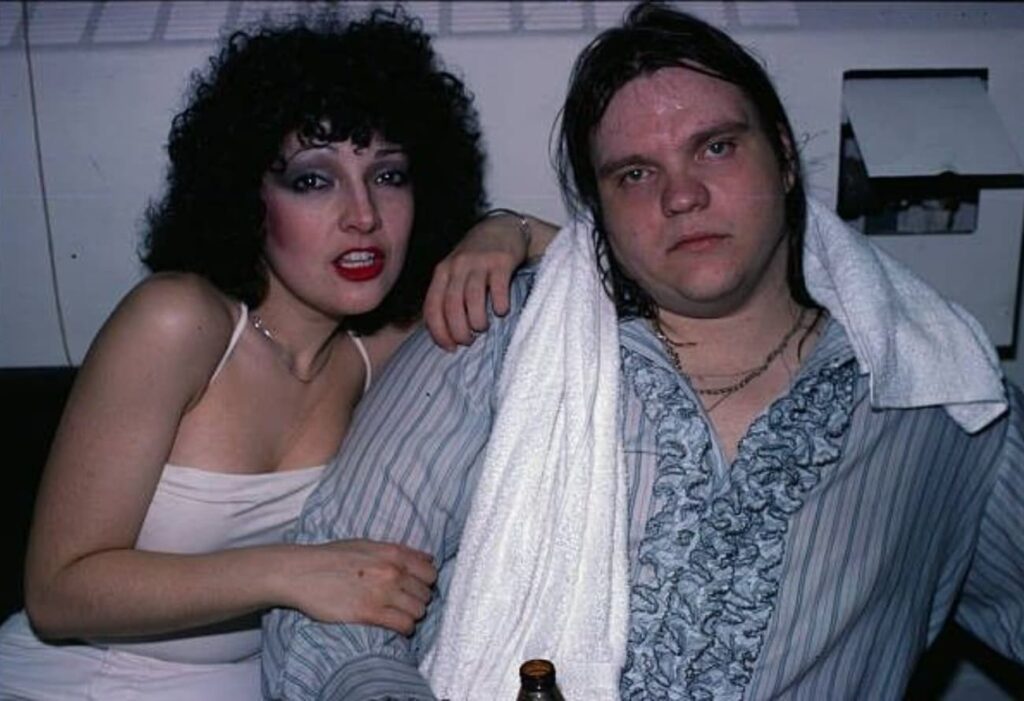
A breathless rush of youth, desire, and consequence—“Paradise by the Dashboard Light” captures the moment when passion outruns wisdom, and time delivers the bill.
Few songs in rock history feel as cinematic, as reckless, or as uncomfortably honest as “Paradise by the Dashboard Light” by Meat Loaf. Released in 1977 as part of the landmark album Bat Out of Hell, the song arrived like a thunderclap—too long for radio conventions, too dramatic for easy categorization, and yet impossible to forget once heard. At its debut, the single reached No. 39 on the Billboard Hot 100 in the United States in 1978, a modest chart position that hardly foretold its enduring cultural impact. In the United Kingdom, it climbed higher, peaking at No. 15 on the UK Singles Chart, where its theatrical sweep found a particularly receptive audience.
What charts could not measure was the song’s emotional velocity. Clocking in at over eight minutes, “Paradise by the Dashboard Light” unfolds like a short film—three acts bound together by youthful urgency and adult reckoning. Written by Jim Steinman, the composer behind much of Meat Loaf’s grandiose mythology, the song is built on excess by design. Steinman once described his writing as “Wagnerian rock,” and nowhere is that ambition clearer than here.
The opening section throws us into a car on a summer night, where anticipation hangs thick in the air. The metaphor of “paradise by the dashboard light” evokes more than a physical place—it suggests a fleeting sanctuary, illuminated briefly before darkness returns. The voices of Meat Loaf and Ellen Foley circle each other with nervous intensity, capturing that moment when desire feels urgent, absolute, and eternal. There is innocence here, but it is already cracking under pressure.
Then comes the most unexpected—and now legendary—interruption: a baseball play-by-play delivered by Phil Rizzuto, the famed New York Yankees broadcaster. This mid-song commentary, borrowed from a real broadcast, mirrors the escalating tension of the encounter. Each base advanced feels like a point of no return. It is playful, absurd, and brilliant, grounding the song in a distinctly American soundscape while amplifying its suspense.
The final act shifts the emotional ground entirely. Years have passed. Passion has cooled into routine, and the promises made in haste now feel like chains. When Meat Loaf roars, “I’m praying for the end of time,” it is not rebellion—it is exhaustion. The song refuses to romanticize regret, yet it never mocks the choices made. Instead, it acknowledges a universal truth: that the intensity of youth often demands vows it cannot possibly understand.
Musically, the track is a masterclass in controlled chaos. Producer Todd Rundgren sculpted Steinman’s maximalist vision into something coherent without sanding down its rough edges. The shifts in tempo, the swelling harmonies, the sudden silences—all serve the narrative. This is storytelling through sound, where every crescendo carries emotional weight.
Over time, “Paradise by the Dashboard Light” has grown far beyond its original chart life. It became a staple of classic rock radio, a centerpiece of live performances, and a song that listeners return to at different stages of life—each time hearing something new, something closer. What once sounded like teenage drama slowly reveals itself as a meditation on time, choice, and the distance between who we were and who we become.
In the end, Meat Loaf did not give us a love song or an anti-love song. He gave us a mirror. And like all honest reflections, it is thrilling, uncomfortable, and impossible to turn away from.