
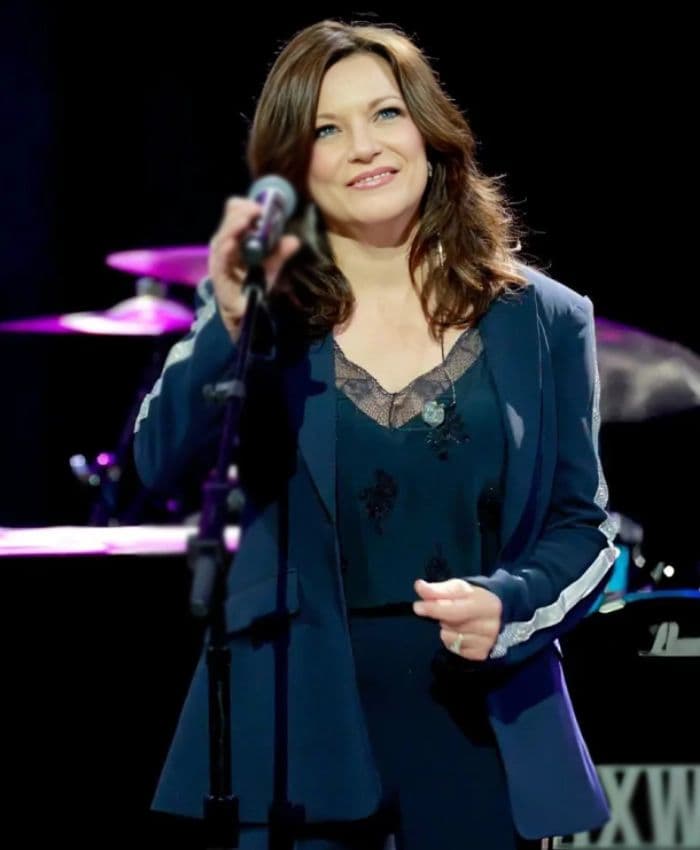
Independence Day — when freedom is no longer a celebration, but an act of survival
Released in 1994, “Independence Day” by Martina McBride is one of those rare songs that feels less like a recording and more like a reckoning. From the very beginning, it announces itself not as a patriotic anthem, but as a deeply human story — one that uses the symbolism of freedom to speak about pain, courage, and the cost of silence. Appearing on her breakthrough album The Way That I Am (1993), the song reached No. 12 on the Billboard Hot Country Singles & Tracks chart, a remarkable achievement for a track that challenged both radio comfort and audience expectations at the time.
Written by Gretchen Peters, “Independence Day” was never intended to be an easy listen. Peters herself has often spoken about the song as a narrative, not a slogan — a short story set to music. It tells the story through the eyes of a child, recalling a Fourth of July long ago, when a mother finally broke free from an abusive marriage by setting the house on fire, killing both herself and her husband. The fire becomes both literal and symbolic: destruction, yes — but also release.
When Martina McBride chose to record the song, she took a significant risk. In the early 1990s, country radio was not known for embracing songs that dealt so directly with domestic violence. Many stations were hesitant; some even refused to play it, arguing that the song seemed to justify violence. Yet McBride understood something essential: this song was not about revenge. It was about desperation. About what happens when there are no doors left to walk through.
That understanding is what elevates the performance. Martina does not sing “Independence Day” with anger or melodrama. Her voice is steady, controlled, almost restrained — which makes the emotional weight even heavier. She sounds like a witness, not a judge. Someone telling a story that still burns quietly inside her.
The brilliance of the song lies in its contrast. Fireworks explode in the distance, neighbors celebrate freedom, and flags wave proudly — while inside one home, freedom is something far more complicated, far more costly. The line “Some folks wrap themselves around the flag” is not dismissive; it is reflective. It asks the listener to consider whose freedom is being celebrated, and whose is still out of reach.
The album The Way That I Am marked a turning point in McBride’s career. While earlier releases had shown promise, this record established her as a voice of emotional authority in country music — someone unafraid to tackle hard truths. “Independence Day” became the album’s defining moment, not because it was radio-friendly, but because it was unforgettable.
Over time, the song’s meaning has only deepened. Listeners who return to it years later often hear something new — not just the tragedy, but the quiet plea beneath it. The song does not offer solutions. It offers recognition. It says: this happened. This pain existed. This silence mattered.
For those who have lived long enough to understand how complicated freedom can be, “Independence Day” resonates on a level far beyond its chart position. It reminds us that independence is not always declared with fireworks and parades. Sometimes it comes in the dark, in moments of unbearable choice, when survival becomes the only remaining form of courage.
In the long arc of Martina McBride’s career, this song stands as a moral landmark. Not loud, not triumphant — but brave. And for listeners who carry their own memories of quiet battles and hard-won freedom, “Independence Day” remains what it has always been: a song that does not celebrate escape, but honors the truth of what it cost.