
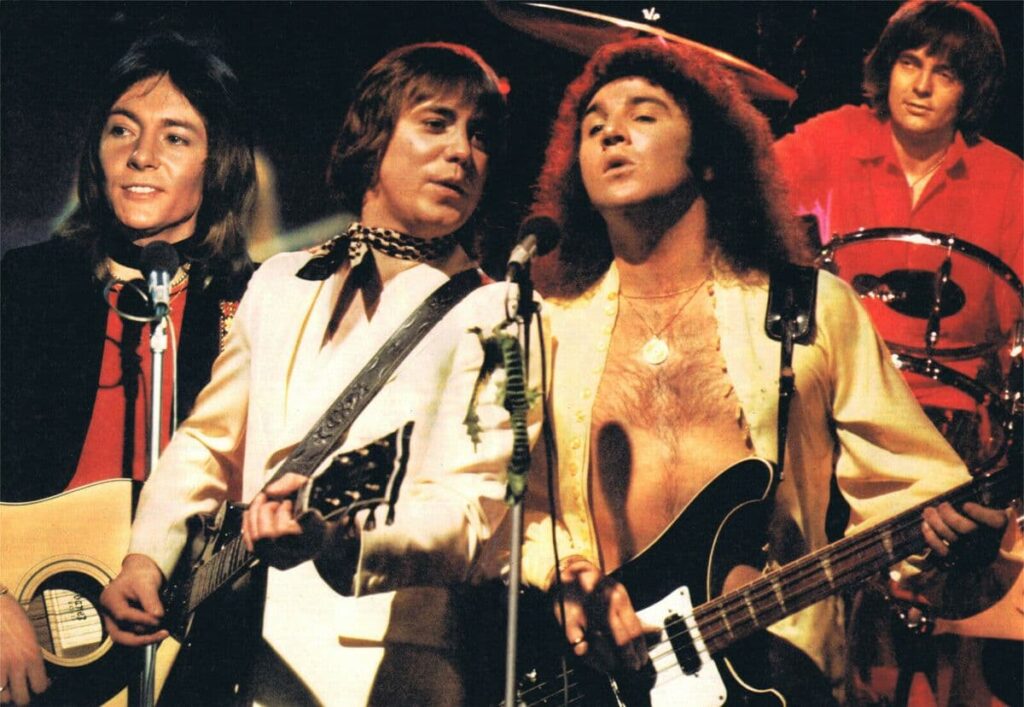
What If Smokie Had Turned Up the Volume and Become the AC/DC of Soft Rock?
In the mid-1970s, Smokie carved out a distinctive place in popular music with their smooth blend of soft rock, melodic hooks, and emotional storytelling. Fronted by the unmistakable voice of Chris Norman, the band became synonymous with warmth and accessibility. But imagine an alternate reality—one where Smokie abandoned their gentle sound and instead embraced the raw, electrifying energy of hard rock, following a path closer to AC/DC. The result would not just be a change in sound, but a complete reinvention of identity.
Musically, the transformation would begin with intensity. Smokie’s signature acoustic textures and soft harmonies would give way to distorted guitar riffs, pounding drums, and faster tempos. Songs like Living Next Door to Alice, known for their bittersweet charm, might instead be reimagined as driving anthems filled with grit and aggression. The emotional core would remain, but it would be expressed through power rather than subtlety—turning introspective storytelling into something more explosive and confrontational.
At the center of this shift would be Chris Norman’s voice. His naturally raspy tone already hinted at a harder edge, and in a hard rock setting, it could have evolved into a defining force. Instead of delivering tenderness, his vocals might channel urgency and rebellion, aligning more with the high-voltage style of hard rock frontmen. This could have elevated him into a different category altogether—not just a beloved singer, but a commanding rock figure capable of energizing massive crowds.
Visually and culturally, Smokie’s image would also undergo a dramatic evolution. The approachable, almost understated aesthetic of the band would likely be replaced by something darker and more rebellious. Leather, louder stage presence, and a stronger emphasis on performance spectacle would redefine how audiences perceived them. Their concerts would shift from intimate sing-alongs to high-energy experiences driven by volume and adrenaline.
However, such a transformation would come with trade-offs. Smokie’s greatest strength lay in their ability to connect emotionally with a wide audience. Their music crossed borders and generations because of its simplicity and sincerity. By moving into hard rock, they might have gained a more intense but narrower fanbase. The universal appeal of their melodies could be overshadowed by the genre’s emphasis on power and attitude, potentially limiting their reach outside core rock audiences.
Commercially, the outcome would be uncertain. Hard rock in the 1970s was a crowded and competitive field. While Smokie might have stood out thanks to Norman’s voice, they would face direct comparison with established acts like AC/DC. Success would depend on their ability to innovate within the genre rather than simply follow it. They might have achieved cult status as a powerful live band, but perhaps without the same level of mainstream recognition they enjoyed in reality.
Ultimately, imagining Smokie as a hard rock band reveals how deeply genre shapes legacy. Their actual path secured them a lasting place in music history as masters of melodic rock. Yet in another world, they might be remembered for thunderous riffs and electrifying performances instead of heartfelt ballads. To truly appreciate the contrast, just listen to their original style in Living Next Door to Alice and imagine it transformed into a roaring hard rock anthem.