
“I Wanna Rock”: A Anthem of Adolescent Rebellion and Defiance
In the annals of 1980s hard rock, few songs are as immediately recognizable and potent as Twisted Sister’s “I Wanna Rock.” This isn’t just a song; it’s a defiant roar, a battle cry for every kid who ever felt misunderstood, every teenager who felt their parents just didn’t get it. Released in 1984 on their seminal album Stay Hungry, “I Wanna Rock” wasn’t just a track—it was a cultural moment, a symbol of a generation’s burgeoning desire for freedom, self-expression, and a healthy dose of pure, unadulterated noise.
The song’s commercial performance was a testament to its widespread appeal. While it didn’t top the charts, its presence was undeniable. It peaked at No. 68 on the Billboard Hot 100, a respectable showing for a hard rock track at a time when pop was king. More importantly, its cultural footprint far exceeded its chart position. The song became a fixture on MTV, thanks in large part to its legendary music video. In an era when music videos were becoming a powerful new medium, Twisted Sister and director Marty Callner crafted a cinematic short that was both hilarious and deeply resonant with its young audience.
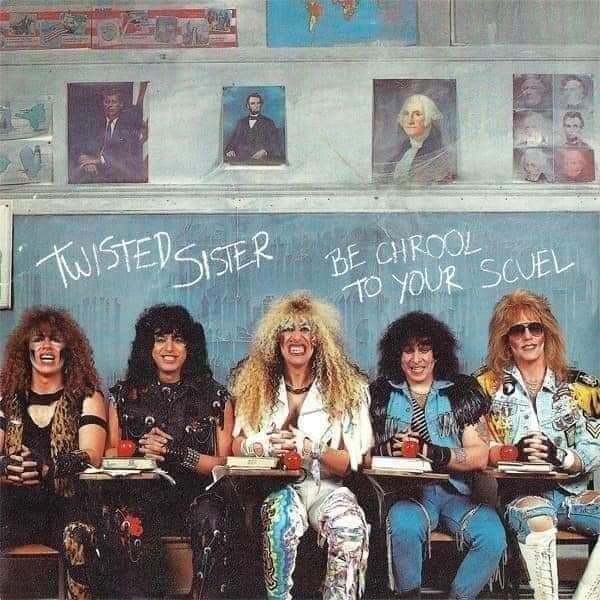
The video, a continuation of the narrative from their previous hit, “We’re Not Gonna Take It,” stars actor Mark Metcalf as the stern, authoritarian parent figure. He’s the personification of every adult who ever said, “Turn that noise down!” The video’s plot is simple yet brilliant: a young boy, tormented by his disapproving father, is transported into a world where his favorite band, Twisted Sister, empowers him to stand up for himself. The band, with their flamboyant makeup and larger-than-life presence, becomes the champions of the oppressed youth. They are the voice of a rebellion, telling a generation that it’s okay to be loud, it’s okay to be different, and it’s okay to just want to rock. This visual narrative cemented the song’s meaning: it’s an anthem of adolescent rebellion, a celebration of the freedom found in music, and a direct challenge to authority.
The story behind the song is one of pure, unadulterated passion and a clear understanding of their audience. Written by frontman Dee Snider, the lyrics are simple, direct, and incredibly effective. There are no hidden metaphors or complex poeticisms. The message is as clear as a bell: “I wanna rock!” It’s a primal scream of joy and frustration, a simple statement of intent. The song’s structure is classic hard rock, built on a driving guitar riff, a thunderous drum beat, and a chorus that is impossible not to shout along to. This isn’t a song for quiet contemplation; it’s a song for cranking the volume to eleven, for air-guitaring in your bedroom, for feeling the raw, untamed power of rock and roll coursing through your veins.
Thinking back to that time, it’s easy to get lost in the nostalgia. For those of us who grew up with it, “I Wanna Rock” is more than just a song; it’s a time machine. It takes us back to a time of big hair, denim jackets, and a world where rock and roll was our escape. It was the soundtrack to late-night drives, rebellious moments, and the simple joy of being young and alive. The song perfectly encapsulates the spirit of the 80s hard rock scene: loud, proud, and unapologetically ourselves. It’s a reminder that sometimes, the most profound statements are the simplest ones. And for a generation that just wanted to rock, Twisted Sister gave them the perfect anthem. It’s a piece of our history, a part of our youth, and a reminder that the spirit of rock and roll is, and always will be, about one thing: the freedom to be who you are, and to be loud about it.