
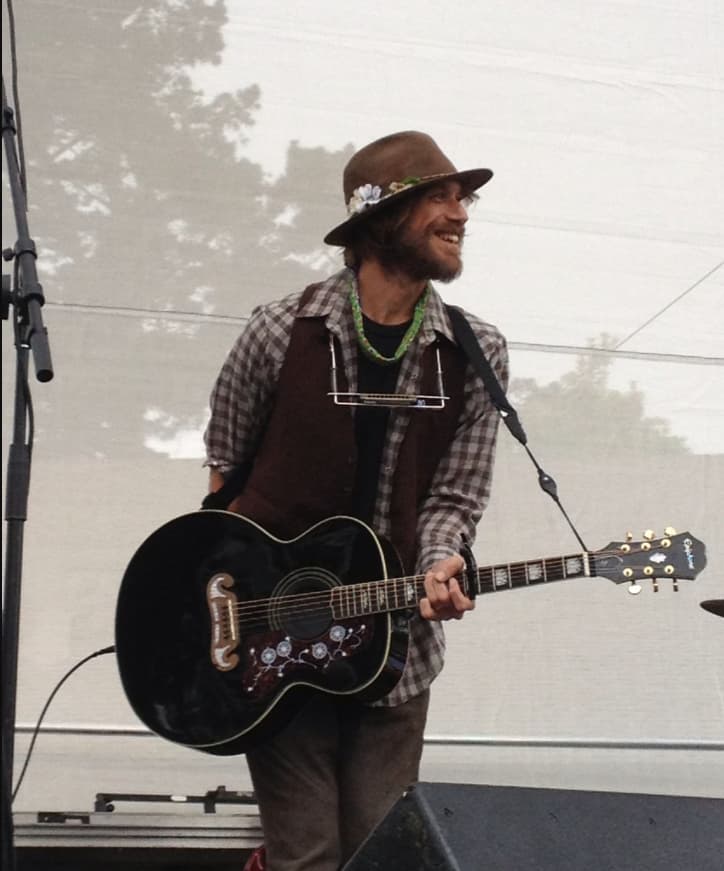
The ultimate folk sermon on life’s beautiful, baffling contradictions.
Ah, to listen to a new song from Todd Snider is to settle in for a long, rambling conversation with the wisest, weariest guy at the back of the bar, the one who’s seen it all and still hasn’t got a clue—and that’s precisely the point. His latest offering, “THE HUMAN CONDITION,” is no exception, serving as the deceptively simple, blues-infused mission statement that opens his 2025 album, High, Lonesome And Then Some. Unlike some of his earlier hits which graced the lower rungs of the charts (such as the minor radio hit “Talking Seattle Grunge Rock Blues,” which peaked at No. 31 on the Billboard Album Rock Tracks chart in 1994), “THE HUMAN CONDITION” seems less concerned with climbing the charts and more interested in burrowing deep into the soul. It functions as a welcoming hand into a record that is as much a personal confession as it is a public lament for a world that seems to be shedding its heroes and its certainties.
The song’s story isn’t one of a sudden epiphany, but rather the culmination of a life spent observing the absurdities and heartbreaks that define our time on Earth. Snider, the quintessential troubadour who learned his craft idolizing masters like John Prine and Jerry Jeff Walker—both figures whose passing have heavily influenced his recent work—channels their spirit in this track. The song’s genesis is rooted in the very period that birthed the album, a time marked by personal health battles (like his spinal stenosis), the loss of mentors, and the general chaotic wonder of aging. The lyric, “I was born in the human condition, facing the great unknown / I have to wonder what we’re doing here together, even though I know I’m leaving here alone,” is not just a catchy opening line; it’s the profound, contradictory thesis of a lifetime of wandering. It captures the bittersweet truth that we are social creatures navigating an utterly solitary fate.
For listeners of a certain vintage, those of us who have lived through enough great unknowns to fill a few scrapbooks, the song hits with a profound, resonant ache. It’s the sound of a man who has made peace with his own beautifully flawed journey. In the smoky, relaxed cadence of his voice, you can almost smell the tequila on his breath, the faint haze of a recently-smoked joint—elements that critics noted perfectly frame the song’s blues shuffle delivery. The song and the album it anchors are essentially Snider’s response to a period of overwhelming loss and hardship. In the broader context of High, Lonesome And Then Some, the track introduces a cycle of songs that grapple with love’s effect on this “human condition,” navigating failed relationships and lingering questions. It’s an honest, unvarnished look at a life in perpetual motion, one that continually seeks “soul, soul mate, maker, making out and mercy.”
The true meaning of “THE HUMAN CONDITION” lies in its defiant acceptance of uncertainty. It’s a shrug and a smile in the face of the void. Where younger artists might rage against the dying of the light, Snider simply invites the listener to sit down, pour a drink, and share a story about how baffling, brutal, and occasionally brilliant it all is. It’s a classic folk song structure delivering a universal truth: we’re all just trying to figure out what the hell we’re doing here, and the best we can hope for is good company and a solid melody while we do it. This song is a warm, fuzzy blanket of existential dread, delivered with a wink.