
Nostalgia and hope wrapped in a blanket of snow.
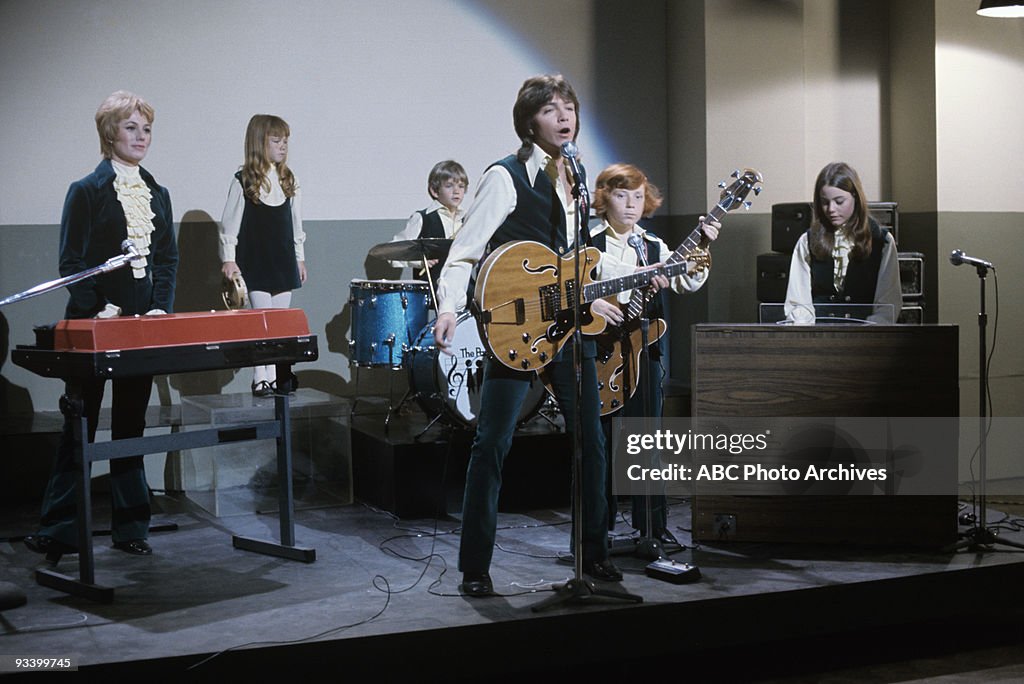
The 1970s ushered in a golden age of family-friendly television, and few programs captured the hearts and minds of viewers quite like The Partridge Family. The fictional musical family, with the ever-charming Shirley Jones and teen idol David Cassidy, became a cultural phenomenon, quickly translating their on-screen success into actual chart-topping records. Their interpretation of Irving Berlin’s timeless classic, “White Christmas,” released on the 1971 album A Partridge Family Christmas Card, serves as a poignant, reflective artifact of that era, a time when the world still looked to simpler pleasures for comfort.
While “White Christmas” itself, thanks to Bing Crosby’s seminal 1942 recording, is globally recognized as the best-selling single of all time, the Partridge Family’s version is intrinsically linked to the immense popularity of their television show. It was a highlight on their first holiday album, which itself performed remarkably well, soaring to the Number 1 position on the Billboard Christmas Albums chart in 1971, capitalizing on the peak popularity of the group that year. The album’s chart success underscored the public’s deep emotional investment in the musical family, proving that their appeal extended far beyond the small screen. Though the original song was not released as a standalone single in the U.S. at the time, its presence on a chart-topping seasonal album cemented its place in the holiday listening rotation for millions of families. In the UK, however, “White Christmas” was pulled from the album, along with “Winter Wonderland,” and released as an EP in 1972, featuring David Cassidy’s image—a testament to his star power.
The story behind the original “White Christmas” is one of profound meaning, and the Partridge Family channeled that inherited pathos. Irving Berlin, a Jewish immigrant, wrote the song during the early years of World War II, a yearning for an idealized, tranquil past. The core meaning of the song is a wistful, melancholic longing for a picture-perfect, old-fashioned Christmas, “just like the ones I used to know.” When Bing Crosby first introduced the song on his radio show shortly after the attack on Pearl Harbor, the lyrics resonated deeply with American servicemen stationed far from home, transforming the song into an anthem of hope and nostalgia for home and family. The Partridge Family—an idealized American family traveling together, spreading music and happiness—added another layer to this meaning. Their version, sung in the warm, inviting tone of the on-screen family, felt less like a distant dream of the past and more like an attainable, domestic comfort—the perfect soundtrack to the quiet, glowing intimacy of a 1970s Christmas. The track is simple, clean, and full of that wholesome, gentle spirit that defined the show, serving as a nostalgic portal for those of us who remember gathering around the television, captivated by the bus-riding, bell-bottom-wearing musical clan. It’s a beautifully preserved memory of a time when pop culture and holiday tradition merged into something wonderfully innocent.