
A Wild Cry From the Volcano — How “Voodoo Child (Slight Return)” Became Jimi Hendrix’s Final Lightning Strike on Film
There are performances that entertain, performances that impress, and then there are performances that seem to come from somewhere beyond ordinary music altogether. “Voodoo Child (Slight Return)” by The Jimi Hendrix Experience belongs to that last category — especially the haunting, windswept version captured during the 1970 Maui performance, one of the final filmed documents of Jimi Hendrix before his death later that same year.
Originally released in 1968 on the landmark album Electric Ladyland, the studio version of “Voodoo Child (Slight Return)” became one of Hendrix’s signature recordings. Although it was never released as a major U.S. chart single during its original era, the song reached No. 1 in the United Kingdom when issued there in 1970 after Hendrix’s passing — a bittersweet reminder of how deeply his music continued to resonate after he was gone. By then, Hendrix had already transformed the electric guitar forever.
But the Maui performance is something else entirely.
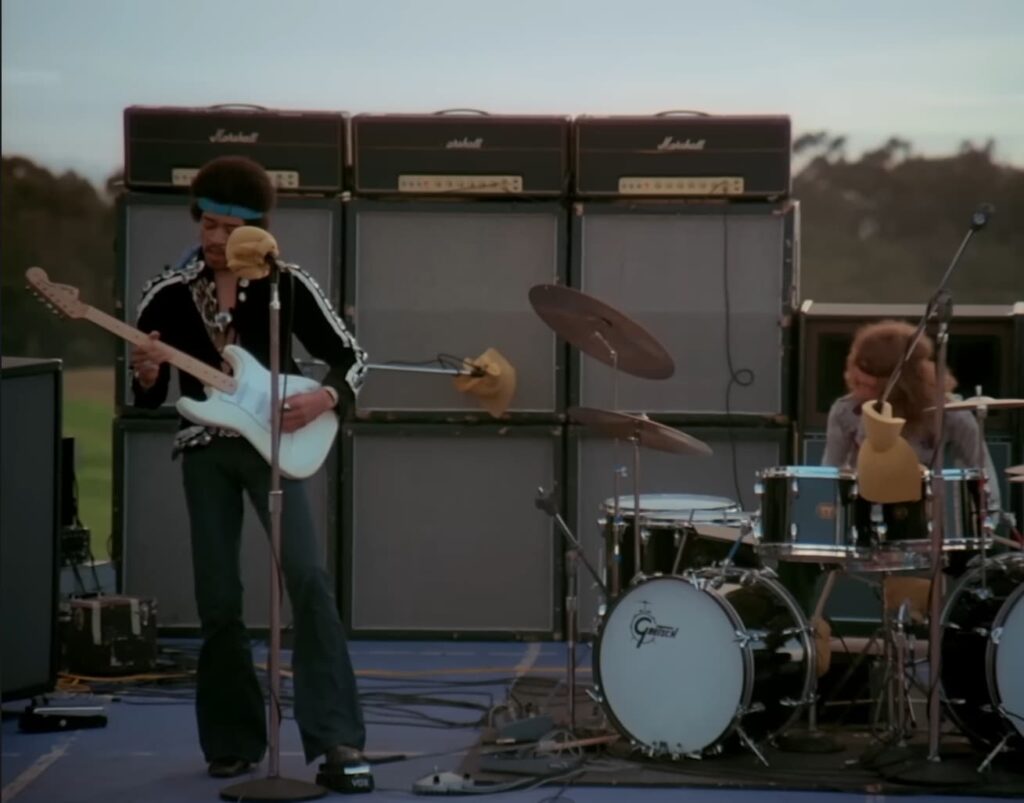
Filmed on the slopes of the Haleakalā volcano in Hawaii for the experimental movie Rainbow Bridge, the setting itself feels unreal — black volcanic earth, restless clouds, the Pacific wind whipping through amplifiers and hair alike. It looked less like a concert and more like a ritual. Hendrix stood there in bright clothing against the dark landscape, playing as though he were trying to summon something ancient from the earth beneath him.
And perhaps that is why “Voodoo Child (Slight Return)” remains so enduring. It was never simply a blues-rock song. It was Hendrix turning mythology into sound.
The track grew out of late-night studio improvisations during the Electric Ladyland sessions. The longer blues jam “Voodoo Chile” came first, featuring musicians like Steve Winwood and Jack Casady. The following day, Hendrix reshaped parts of that improvisation into the tighter, more explosive “Voodoo Child (Slight Return)”. The wah-wah guitar introduction alone became one of the most recognizable openings in rock history — not merely played, but spoken through the amplifier like a human voice.
Lyrically, the song is filled with mysticism and swagger:
“Well, I stand up next to a mountain…”
In another artist’s hands, lines like these might have sounded theatrical or exaggerated. Hendrix made them believable because he delivered them with complete conviction. The “voodoo child” character was not about dark magic in the literal sense. It was a symbol of spiritual freedom, power, individuality, and transformation. Hendrix often blended blues traditions with cosmic imagery, African American folklore, psychedelic consciousness, and raw emotional instinct. His music seemed to exist somewhere between Delta blues and outer space.
What makes the Maui version especially moving is the timing.
By 1970, Hendrix was exhausted by fame, legal pressures, endless touring, and artistic expectations. The original Jimi Hendrix Experience with Noel Redding and Mitch Mitchell had already dissolved. His newer band lineups reflected an artist still searching for the next phase of his sound. Yet onstage in Maui, there are moments where Hendrix appears completely free again — almost disconnected from the chaos surrounding his life.
The performance of “Voodoo Child (Slight Return)” captures that freedom in its purest form. The guitar screams, bends, whispers, and crashes like ocean waves against volcanic rock. Hendrix attacks the instrument, then suddenly pulls back into delicate phrases that feel almost fragile. Few guitarists have ever balanced aggression and vulnerability so naturally.
Watching the footage today carries an ache that is difficult to describe. Hendrix died only weeks later, in September 1970, at the age of 27. Knowing that fact changes everything about the Maui film. Every glance upward, every sustained note, every moment of improvisation feels suspended in time. It is no longer just a rock performance — it becomes a farewell without intending to be one.
Over the decades, countless guitarists have tried to recreate “Voodoo Child (Slight Return)”, from arena-rock virtuosos to blues traditionalists. Yet most eventually discover the same truth: the song cannot really be separated from Hendrix himself. The technical elements can be copied, but the spirit behind it cannot. Hendrix played with the urgency of someone trying to communicate emotions too large for ordinary language.
That may be why this performance continues to speak so deeply across generations. Not because it is polished or perfect, but because it feels alive. Dangerous. Human.
And somewhere in that Hawaiian wind, with the amplifiers humming against the volcanic silence, Jimi Hendrix gave the world one final glimpse of what music could become when fear, imagination, blues, pain, and freedom all collided at once.