
An Enduring Synth-Pop Ghost Story, Echoing the Melancholy of the Early Eighties.
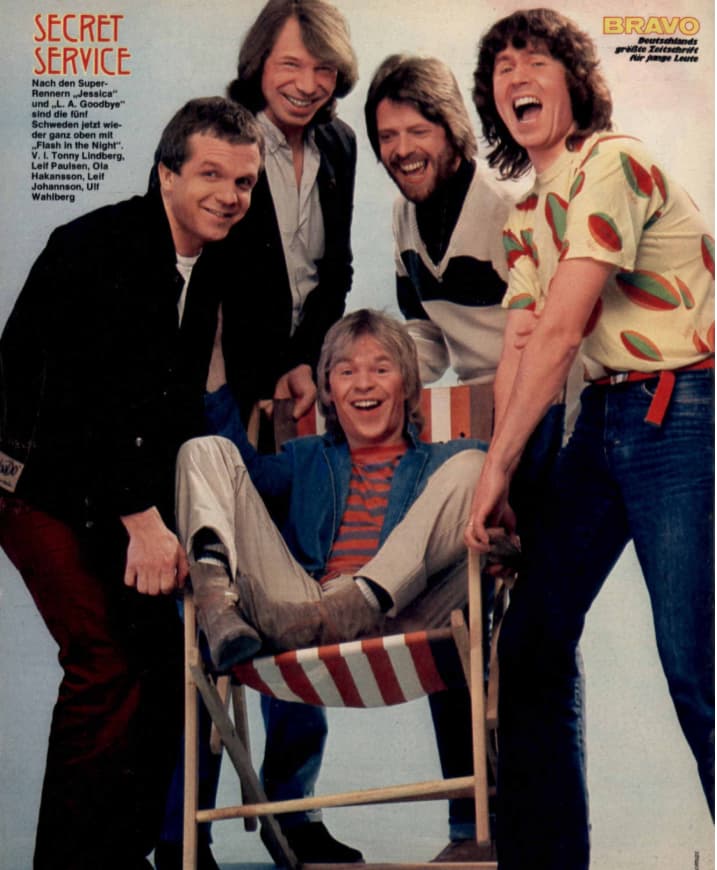
Ah, “Flash In The Night.” Just the name itself, with its metallic echo and urgent rhythm, instantly transports those of us who came of age in the 1980s back to the decade of synthesized dreams and existential melancholy. This wasn’t just a song; it was the soundtrack to a thousand silent discos across continental Europe, a sonic signature for the Swedish band Secret Service that proved Scandinavia offered more to the world than just ABBA.
Released in December 1981, this defining single was the lead track from their third studio album, Cutting Corners (1982). While Secret Service had already established themselves with hits like “Oh Susie” and “Ten O’Clock Postman,” those tracks still carried a lighter, more traditional pop feel. “Flash In The Night,” however, was a profound and masterful pivot into the nascent world of Synthpop and New Wave.
Chart Performance and The Continental Hit
In a fascinating contrast to many acts of the era, Secret Service enjoyed their greatest success outside of the major Anglo-American markets. “Flash In The Night” was a colossal hit, particularly across continental Europe and Scandinavia.
- In Norway (VG-lista), the single peaked at a remarkable No. 6.
- In France (IFOP), it climbed all the way to No. 6, becoming one of their most popular records there.
- In Switzerland (Schweizer Hitparade), it secured a spot in the Top Ten, peaking at No. 9.
- It also charted strongly in other vital territories, reaching No. 17 in Belgium and No. 23 in Germany. Even in their home country of Sweden, it reached No. 12.
This widespread success in multiple non-English-speaking markets cemented “Flash In The Night” as one of the essential pan-European electronic anthems of the early 80s, a testament to the power of its universally understood atmosphere, even when the specific lyrics might have been a “flash” of English in a foreign land.
The Heart of The Song: Atmosphere and Meaning
The genius of “Flash In The Night” lies in the brilliant musical collaboration between composer Tim Norell and lyricist Björn Håkanson. The song is a shimmering, yet deeply haunting piece of electronica, built around a relentlessly driving tempo. The band was fortunate enough to get their hands on one of the very first LinnDrum machine to arrive in Sweden, and the precise, revolutionary sound of that instrument is one of the track’s most defining elements, contrasting sharply with the warm, melancholy tones of the synthesizers.
Lyrically, the song is not a simple love story. It’s an evocative, cinematic poem, full of twilight imagery, regret, and fleeting memory. Lines like:
- “As a break of dawn came closer, All my hopes seemed so forlorn”
- “The misty signs of laughter and the light eluded all”
- “The scar once healed forever, Dissolving in the rain”
These lines paint a picture of ephemeral beauty and profound loss. It speaks to the feeling of having an essential moment—a connection, a revelation, a chance—that appears and vanishes just as quickly as a flash of light in the darkness. For those of us who remember the intense, fleeting passions of youth, or the quick changes in the world around us during the uncertain years of the Cold War and the energy crisis, this feeling of impermanence resonated deeply.
It’s a reflection on missed opportunities and the fragile nature of memory. The “flash in the night” is that phantom image, that face “just barely true,” which you strain to recall but which slips away with the rising sun. It taps into a sophisticated kind of sorrow, one that acknowledges that the past is gone, but its beautiful, brief moment of light can never be truly extinguished from the heart.
This blend of cold, high-tech electronic sounds and warm, human melancholy is what defined the very best of 80s synth-pop, making “Flash In The Night” a timeless piece that, even decades later, can still give you a chill and make you ponder the beautiful ghosts of your own personal past. It is, quite simply, a masterpiece of atmosphere that endures long after the decade itself became a memory.