
A song about the impending arrival of a superior human race.
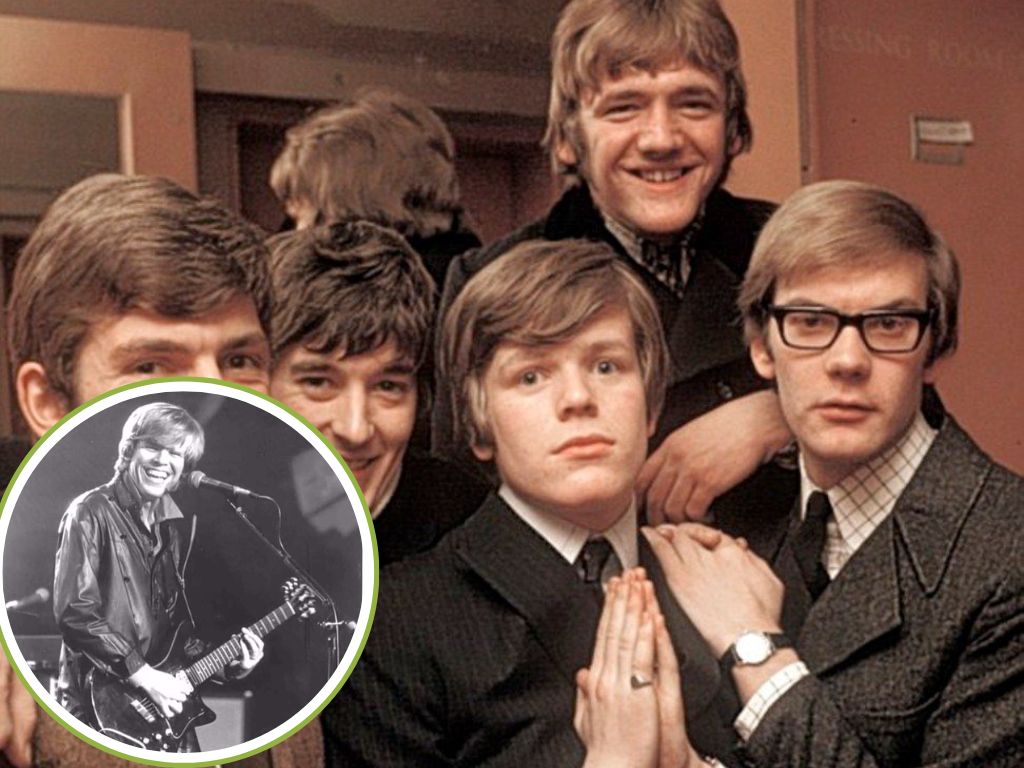
Remember a time when the world was changing so fast it felt like the future was knocking on the door? The 1970s, a decade of transition, of bell-bottoms and glam rock, of one era fading and another beginning. It was in the midst of this cultural shift that Peter Noone, the beloved frontman of Herman’s Hermits, stepped out on his own. His debut solo single, “Oh You Pretty Things,” was a song that perfectly captured the feeling of that moment. Released in April 1971 on RAK Records, the song became a notable hit, reaching No. 12 on the UK Singles Chart and staying on the chart for nine weeks. It was a solid start for Noone’s solo career, but what makes this song so fascinating is not just its chart position, but the surprising story and depth behind it.
The song was not a Noone original. It was penned by a then-struggling songwriter named David Bowie. Yes, that David Bowie, the same artist who would soon become a global superstar with his album The Rise and Fall of Ziggy Stardust and the Spiders from Mars. At the time, however, Bowie was still building his career, and his manager, Tony Defries, was actively seeking to place his songs with established artists. Defries saw Noone’s producer, Mickie Most, as a key ally and was able to get him a demo of “Oh You Pretty Things.” Most was immediately impressed, proclaiming it a future number one hit for Noone. The fact that an artist of Noone’s stature would record one of his songs was a major turning point for Bowie, boosting his profile and providing a much-needed financial injection. In a testament to their collaboration, Bowie not only wrote the song, but he also played piano on the track and even appeared with Noone to perform it on the television show Top of the Pops.
But what does it all mean? The song’s lyrics are a captivating and somewhat bewildering blend of everyday life and cosmic prophecy. It begins with mundane observations about making coffee and the morning sun, but quickly shifts into a much grander, more unsettling narrative. Bowie, who was at the time heavily influenced by the German philosopher Friedrich Nietzsche and the occultist Aleister Crowley, was exploring the concept of the “Übermensch” or “Homo Superior”—a superior being that would eventually replace humanity. The lyrics speak of a “crack in the sky” and a hand reaching down, and the impending arrival of a new, glorious race. Noone’s cheery, pop-infused delivery, so characteristic of his Hermits days, creates a wonderfully strange tension with the song’s serious, almost apocalyptic themes. It’s the sound of a beautiful melody telling a story of human obsolescence, a gentle farewell to the world as we know it. For a generation caught between the idealism of the 60s and the coming cynicism of the 70s, the song’s theme of a new kind of person arriving to take over was perhaps a more subtle metaphor for the generational and cultural shift that was already underway. It’s a piece of musical history that connects two iconic artists at a pivotal moment, a song that’s both a reflection of its time and a glimpse into a future that never quite arrived, but whose promise still echoes in our memories.