
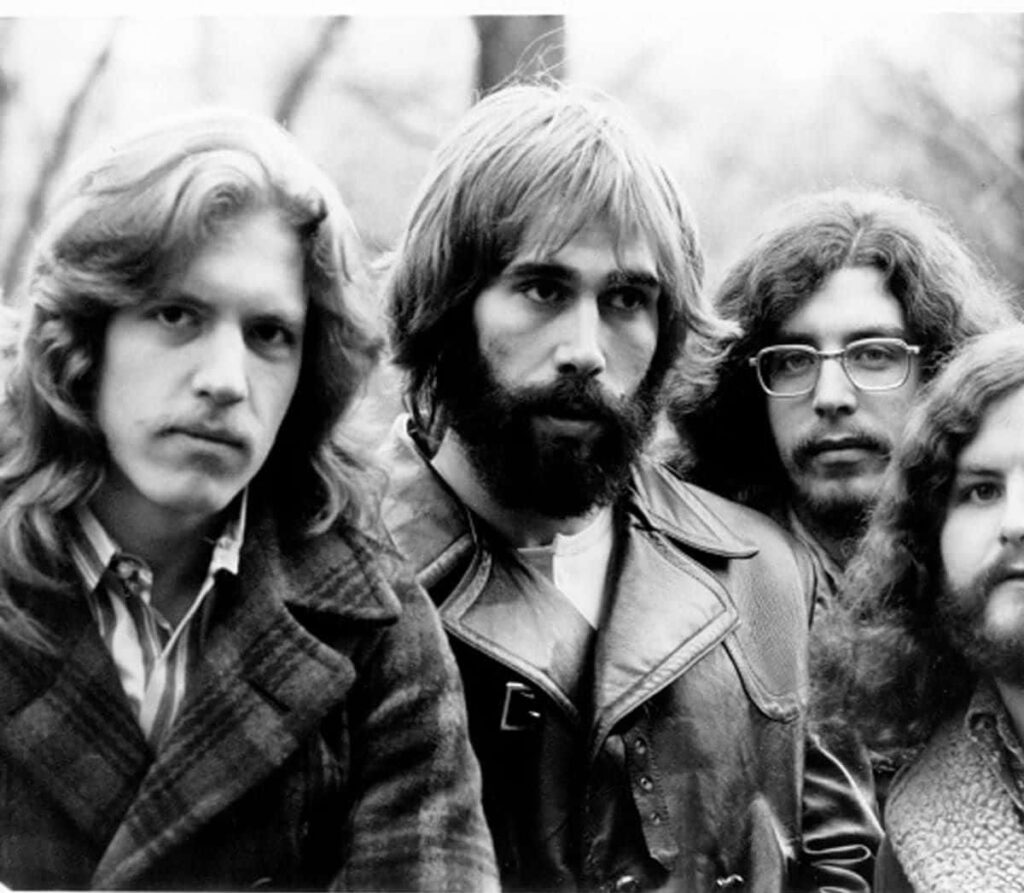
A gentle invitation to slow down, hold someone close, and remember how love once moved to a softer rhythm
Released in the autumn of 1975, “Dance with Me” by Orleans stands as one of the most tender and enduring love songs of the 1970s—an era when popular music still believed in patience, melody, and emotional restraint. Appearing on the band’s breakthrough album Let There Be Music (1975), the song quickly became their signature ballad, a quiet counterbalance to the louder, more rhythm-driven trends of the decade. Upon its release, “Dance with Me” rose to No. 6 on the Billboard Hot 100 in early 1976 and reached No. 1 on Billboard’s Adult Contemporary chart, confirming its deep resonance with listeners who valued intimacy over spectacle.
At first listen, “Dance with Me” feels almost disarmingly simple. There is no dramatic declaration, no soaring climax designed to overwhelm. Instead, the song opens a door and gently asks: Will you dance with me? In that question lies its emotional power. Written by Johanna Hall and John Hall, the song was born not from grand romance but from the everyday vulnerability of connection—the quiet courage it takes to reach out to another person without knowing the answer in advance. That sense of emotional risk, expressed with remarkable restraint, is what gives the song its lasting gravity.
Orleans, formed in Woodstock, New York, were often associated with sunny harmonies and radio-friendly soft rock, but “Dance with Me” revealed a deeper emotional intelligence beneath their polished sound. The arrangement is spare and elegant: a steady, almost heartbeat-like rhythm, warm acoustic textures, and harmonies that feel conversational rather than showy. John Hall’s lead vocal is calm, earnest, and unforced, as if he is speaking directly to one person rather than performing for an audience. This intimacy is crucial; the song does not ask to be admired—it asks to be shared.
Lyrically, “Dance with Me” is rich in implication. The act of dancing becomes a metaphor for emotional trust, for moving in step with another person’s uncertainties and hopes. Lines like “I want to be your partner, can’t you see” suggest not fleeting desire but companionship—love understood as a shared journey rather than a momentary thrill. In an age when many love songs leaned toward either youthful infatuation or dramatic heartbreak, “Dance with Me” occupied a quieter, more reflective space. It spoke to those who had already learned that love is not about conquest, but about consent, patience, and presence.
The success of Let There Be Music marked a turning point for Orleans, but “Dance with Me” would ultimately outgrow the band’s chart history and settle into something more enduring: memory. Over the decades, it has become a staple of “slow dances,” weddings, anniversaries, and late-night radio—moments when time seems to pause and life feels briefly manageable again. Its Adult Contemporary chart success was no accident; the song carried a maturity that appealed to listeners who had lived enough to understand the weight of a simple promise.
What makes “Dance with Me” especially poignant today is how gently it reminds us of a different emotional tempo. There is no urgency in the song, no pressure to hurry toward an outcome. It honors the space between two people—the silence, the hesitation, the possibility. In that way, it feels less like a product of the music industry and more like a personal letter that somehow found its way onto the radio.
Nearly half a century later, “Dance with Me” still sounds like an open hand extended in trust. It does not age because it does not chase trends; it simply waits. And for those who hear it now, perhaps later in life, it carries an added layer of meaning—a reminder of dances already taken, chances once offered, and the quiet beauty of asking, even now, for one more song.