
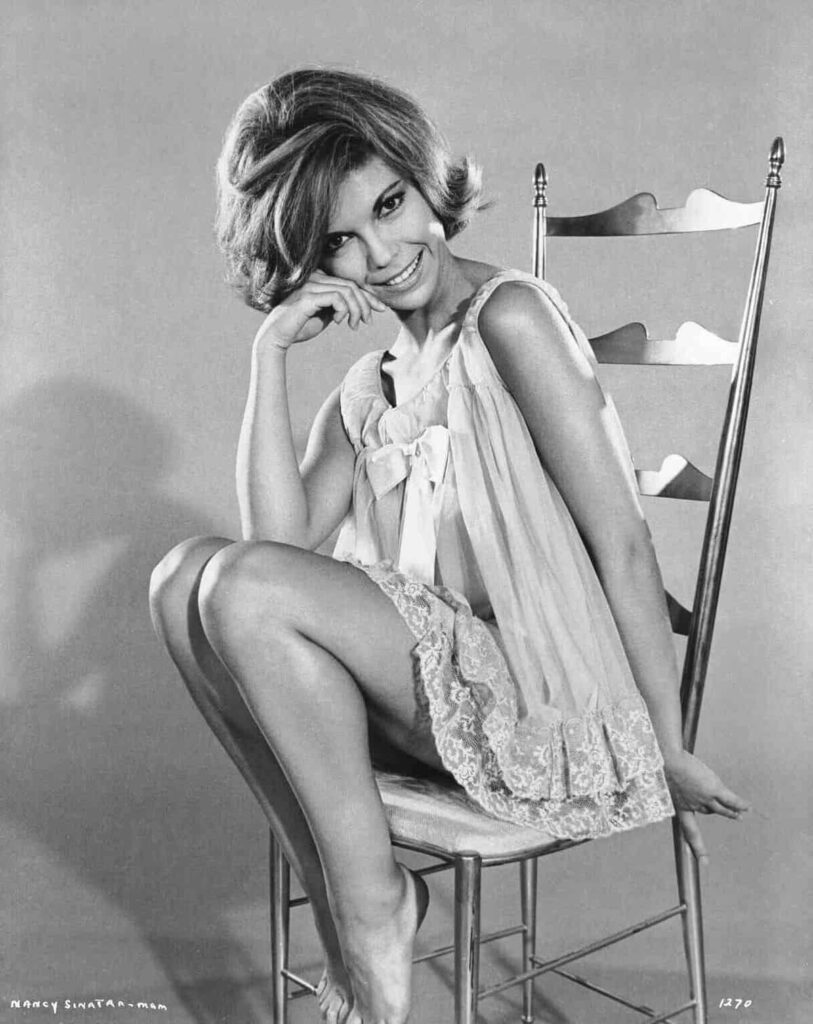
These Boots Are Made for Walkin’ — a bold, swinging stride that changed the sound of independence forever
When “These Boots Are Made for Walkin’” first slid onto the airwaves in early 1966, it didn’t just make a splash — it marched straight to the top. Sung by Nancy Sinatra and written by songwriter-producer Lee Hazlewood, the single hit No. 1 on the Billboard Hot 100 in the United States and No. 1 on the UK Singles Chart, instantly becoming one of the defining anthems of the 1960s. From the first plucked bass notes to Nancy’s cool, unbothered delivery, the song carried a confidence that felt startlingly fresh at the time — especially coming from a woman front and center, not as an ingénue, but as someone in total control.
Behind the song’s swagger lies an unexpectedly rich story. Originally, Hazlewood intended to sing it himself, imagining a gruff male narrator warning an unfaithful lover. But Nancy insisted the song would bite harder coming from a woman — one who wasn’t pleading, apologizing, or asking permission. Hazlewood agreed, but told her to deliver it with a sharper edge, something tougher than her earlier, softer recordings. When she stepped up to the microphone, something clicked: a voice that was soft but stern, playful yet commanding, a voice that understood the power of letting go.
The recording session itself became the stuff of legend. The musicians behind it — members of the famed Los Angeles session group later nicknamed The Wrecking Crew — crafted that unforgettable opening riff, the heavy, steady bass line, and the crisp snap of the drums. Together, they built a sound that walked the line between pop and something grittier, a sound that felt like it was strutting right past whatever — or whoever — had held it down.
And at the center of it all: Nancy, with her unmistakable attitude. There is a coolness in her voice, but also a quiet certainty — the kind that only grows after you’ve been disappointed, hurt, maybe betrayed, and finally decide you’ve had enough. She doesn’t scream. She doesn’t sulk. She simply states the truth:
“One of these days these boots are gonna walk all over you.”
It was more than a lyric — it was a cultural moment. At a time when pop music often boxed women into sweetness or sorrow, Nancy stood there with her chin lifted and her boots on, singing about strength, self-worth, and the end of patience. The song resonated not because it was angry, but because it was liberating. It carried the feeling of waking up one day and realizing you don’t need to wait for anyone’s approval to walk away.
For many listeners — especially those who remember the 1960s vividly — the song is wrapped not only in its bold attitude but also in warm nostalgia: television sets glowing in black-and-white, the shock of seeing Nancy’s famous go-go boots on screen, and that irresistible rhythm pulsing like a heartbeat ready to start anew. It became a soundtrack for moments of small rebellions and quiet awakenings, something you could hum softly or shout proudly, depending on the day.
With time, “These Boots Are Made for Walkin’” earned its place as more than a hit. It became a symbol — of independence, of saying “enough,” of reclaiming one’s power with elegance and style. And even now, decades later, the song hasn’t lost an ounce of its strut.
There’s a reason that first bass line still lifts the spirits, still sparks a smile, still brings back the memory of a world changing — and of a young woman who decided to step forward with confidence, and invited the rest of us to do the same.