
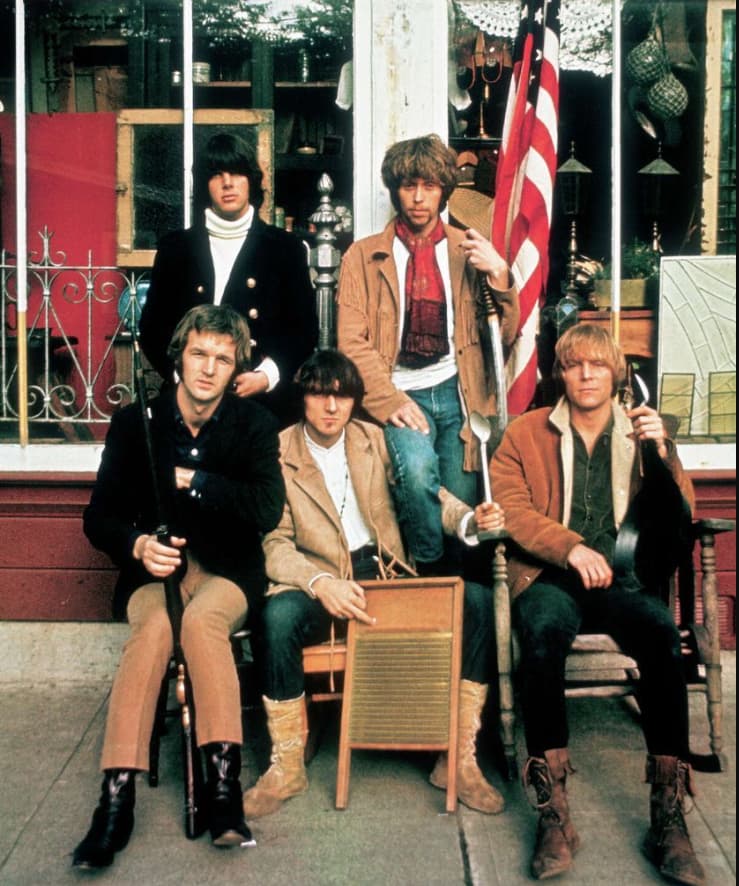
A Quiet Surrender Wrapped in One of Moby Grape’s Most Tender Performances
The aching beauty of “I Am Not Willing” by Moby Grape captures a kind of quiet surrender that only comes after years of trying, forgiving, and finally accepting what cannot be changed. It is one of the band’s most intimate moments — a soft confession delivered at a time when both the group and the era around them were beginning to fray.
When the song appeared on the album Moby Grape ’69, the record reached #113 on the Billboard chart, a modest showing that reflected the band’s difficult circumstances more than the quality of the music. After the turbulence surrounding their earlier years — creative tensions, management troubles, and especially the psychological decline and eventual departure of Skip Spence — the group was rebuilding itself. Into that fragile atmosphere, Peter Lewis offered “I Am Not Willing,” a song that felt less like a composition and more like a sigh from the heart.
From the very first lines, the song carries the weight of emotional exhaustion. Lewis’s vocal doesn’t plead, doesn’t fight — it admits. He sounds like a man who has endured enough disappointments to know that sometimes the bravest thing is to step back, to say, I can’t keep pushing against this anymore. The lyrics are unusually clear and direct compared to some of Moby Grape’s more psychedelic leanings. They read almost like a private conversation overheard, or a final letter never sent.
Musically, the arrangement is stripped of excess. The gentle guitar work and the warm, weary tone of Lewis’s voice bring the listener close, as though he’s singing in the corner of a dim room late at night. Nothing distracts from the emotional core. Its restraint is its power. That quiet honesty has made the song a favorite among longtime listeners — the kind who have lived enough years to understand that not every ending is dramatic; many are simply accepted.
For older fans who grew up in the late ’60s or discovered the band later in life, “I Am Not Willing” often resonates in a deeply personal way. It evokes memories of crossroads long since passed: relationships that faded despite best intentions, decisions made after countless sleepless nights, moments when one finally understood that letting go is a form of grace. The song’s gentle melancholy doesn’t scold or wallow; it understands.
Though never released as a hit single, the track became one of the most admired pieces in the group’s catalog. Its reputation grew quietly over the years, carried by devoted fans, critics who recognized its emotional depth, and later artists — including Lloyd Cole, who recorded a thoughtful cover decades later.