
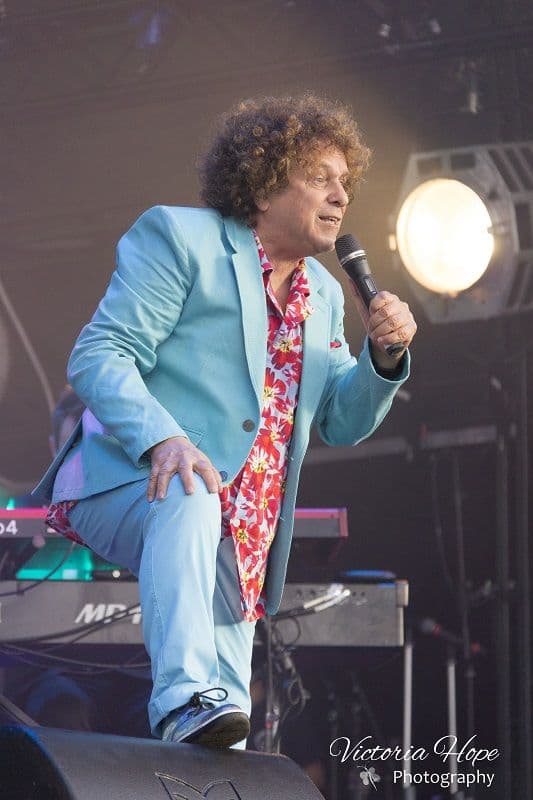
More Than I Can Say — when simple words carry a lifetime of devotion
There are songs that impress through complexity, and then there are songs that endure because they speak plainly, honestly, and straight to the heart. “More Than I Can Say”, as recorded by Leo Sayer, belongs firmly to the second kind. Released in 1980 as part of the album Living in a Fantasy, the song became one of the defining moments of Sayer’s career, reaching No. 2 on the Billboard Hot 100, No. 1 on the U.S. Adult Contemporary chart, and No. 2 on the UK Singles Chart shortly after its release. These were not just numbers on a page — they were proof that a quiet declaration of love could still move millions in an era increasingly drawn to bigger sounds and faster rhythms.
The song itself, however, did not begin with Leo Sayer. “More Than I Can Say” was originally written by Sonny Curtis and Jerry Allison and first recorded by Bobby Vee in 1961. That early version carried the innocence of young love, shaped by the clean harmonies and gentle optimism of the early 1960s. Nearly two decades later, Leo Sayer returned to the song and transformed it — not by rewriting it, but by living inside it. What had once sounded hopeful now sounded reflective, as though love had been tested by time and distance, yet remained unshaken.
By 1980, Leo Sayer was no newcomer. He had already experienced success, reinvention, and the inevitable pressures of fame. With Living in a Fantasy, he sought balance — blending contemporary pop polish with emotional sincerity. Choosing to record “More Than I Can Say” was a deliberate artistic decision. It allowed him to strip away excess and focus on feeling. The arrangement is understated, the tempo unhurried, giving space for the words to breathe. Every pause feels intentional, every note carefully placed.
Lyrically, the song is almost disarmingly simple. There are no grand metaphors, no dramatic turns of phrase. Instead, it circles one idea again and again: loving someone so deeply that language falls short. “I love you more than I can say” becomes both a confession and a limitation — an admission that even the most honest words can never fully contain what the heart feels. This restraint is precisely what gives the song its strength. It trusts the listener to bring their own memories, their own longings, into the spaces between the lines.
Leo Sayer’s vocal performance is the emotional center of the recording. His voice — slightly fragile, gently soaring — carries the weight of someone who understands what it means to risk vulnerability. There is no bravado here, no attempt to impress. Instead, he sings as though he is speaking directly to one person, quietly, sincerely, perhaps late at night when the world has grown still. It is this intimacy that made the song resonate so strongly with adult listeners, particularly those who recognized the truth in loving without guarantees.
When “More Than I Can Say” climbed the charts, it did so not because it followed trends, but because it resisted them. In a musical landscape filled with bold statements and dramatic gestures, this song reminded audiences that devotion does not need to shout. Sometimes, love endures simply by staying.
Over time, the song has taken on a life beyond its chart success. It has become a companion to memories — first dances, quiet drives, moments of reflection when words feel insufficient. For listeners who have lived long enough to understand love’s complexity, the song speaks with particular clarity. It acknowledges that love is not always loud, nor is it always certain. Yet it remains, steady and unresolved, much like the melody that lingers after the final note fades.
In the legacy of Leo Sayer, “More Than I Can Say” stands as a reminder of his rare ability to combine emotional honesty with musical restraint. It is not just a hit from 1980; it is a gentle affirmation that sometimes the truest feelings are the ones we struggle to express — and that, perhaps, is what makes them real.