
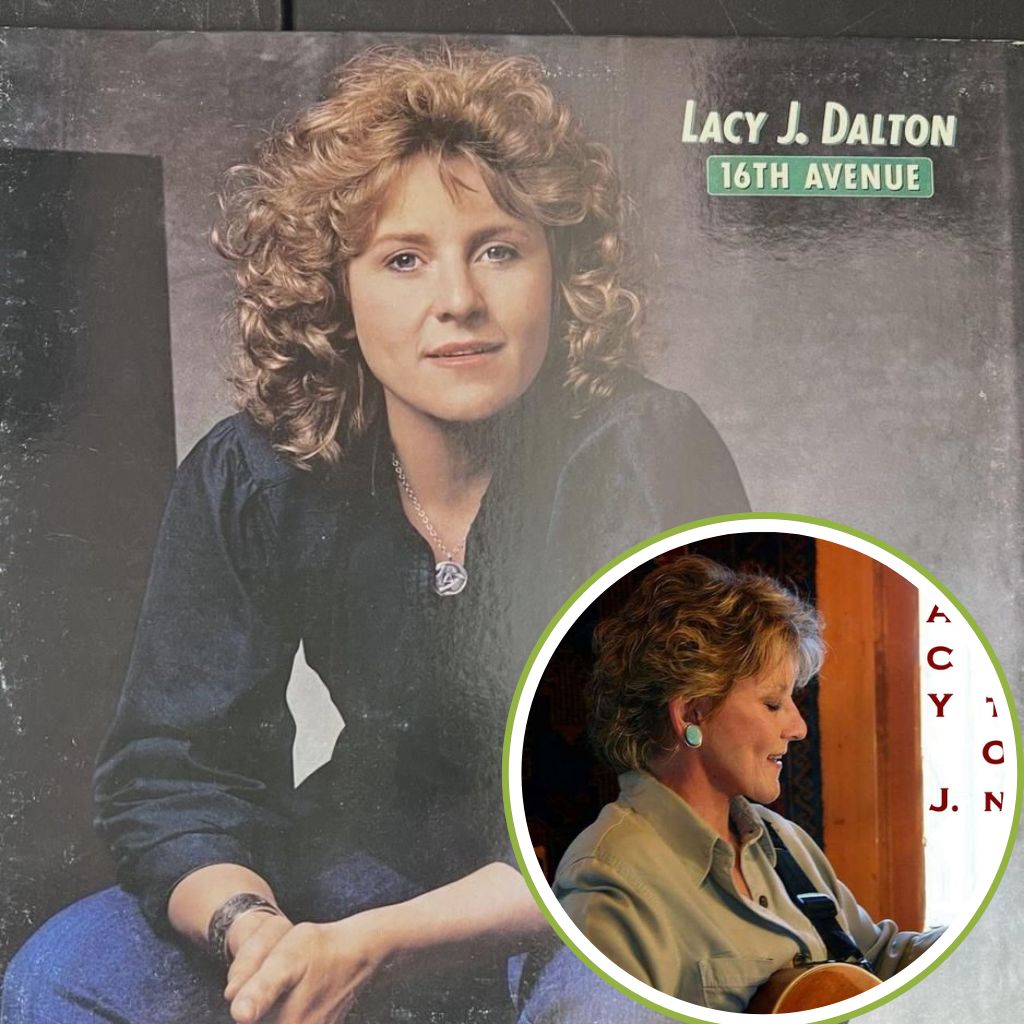
“16th Avenue”: A Poignant Ode to the Unsung Heroes of Nashville’s Music Dreams
As the twilight years descend upon us, painting our memories with hues of amber and sepia, certain melodies possess an uncanny ability to transport us back to simpler times, to moments of youthful ambition and bittersweet longing. For many who came of age amidst the twang of steel guitars and the earnest strumming of acoustic instruments, Lacy J. Dalton’s classic, “16th Avenue,” remains one such powerful conduit to the past. Released in 1982, this evocative anthem struck a chord deep within the hearts of aspiring musicians and music lovers alike, climbing to a respectable number 7 on the Billboard Hot Country Singles chart. While not a chart-topper in the vein of some of her contemporaries, its enduring resonance speaks volumes about its profound impact, far beyond mere commercial success.
“16th Avenue” isn’t just a song; it’s a meticulously crafted narrative, a vivid snapshot of a specific time and place—the bustling, dream-fueled thoroughfare in Nashville, Tennessee, where countless musical journeys began and, for many, quietly ended. It’s a lament, a celebration, and a stark dose of reality all rolled into one. The song paints a poignant picture of the hopeful, often naive, young artists who flocked to Music City, armed with little more than a guitar, a voice, and an unshakeable belief in their own talent. They arrived on buses, in beat-up cars, or hitchhiked, their eyes alight with the promise of stardom, their minds filled with melodies waiting to be heard.
The story behind “16th Avenue” is as authentic as the struggles it portrays. Written by the immensely talented Thom Schuyler, the song was reportedly inspired by his own experiences and observations during his early days in Nashville. Schuyler, like so many others, lived the dream – or rather, the pursuit of it – that he so eloquently captured. He witnessed firsthand the relentless dedication, the countless rejections, the fleeting triumphs, and the quiet despair that characterized the lives of these musical hopefuls. He saw them playing in smoky bars for meager tips, tirelessly honing their craft, sharing cheap meals, and clinging to every word of encouragement, however slight. He understood the profound difference between the glittering facade of country music superstardom and the gritty, often heartbreaking, reality of trying to make it in the industry.
The meaning of “16th Avenue” transcends its specific setting, resonating with anyone who has ever chased a dream against formidable odds. It speaks to the universal themes of ambition, perseverance, sacrifice, and the often-unacknowledged toll that such pursuits can take. The lyrics are replete with vivid imagery: “They come to town with a guitar and a dream / They leave with a suitcase and a faded memory.” This line, in particular, encapsulates the bittersweet truth at the heart of the song. It acknowledges the legions of talented individuals who poured their hearts and souls into their music, only to find that Nashville’s avenues, while paved with dreams, are also littered with shattered aspirations.
Yet, despite its melancholic undertones, “16th Avenue” is not a song of despair. Instead, it’s a testament to the enduring human spirit, to the unwavering passion that compels artists to create, even in the face of overwhelming odds. It’s a song of respect for those who dared to dream, regardless of the outcome. Lacy J. Dalton’s distinctive, gravelly voice lent an unparalleled authenticity and emotional depth to the lyrics. Her delivery conveyed a sense of empathy and understanding, as if she herself had walked those very streets, witnessed those same struggles, and shared in those quiet moments of both hope and heartbreak. The song, featured on her 1982 album ’16th Avenue,’ became an instant classic, a staple on country radio, and a beloved anthem for anyone who understood the hidden struggles behind the bright lights of fame. It serves as a timeless reminder that while only a few may reach the pinnacle of success, the journey itself, with all its trials and tribulations, holds its own profound significance. For those of us who remember those days, who perhaps even harbored similar dreams, “16th Avenue” remains a cherished melody, a nostalgic whisper of a time when the pursuit of a song was, for many, the very essence of life.