
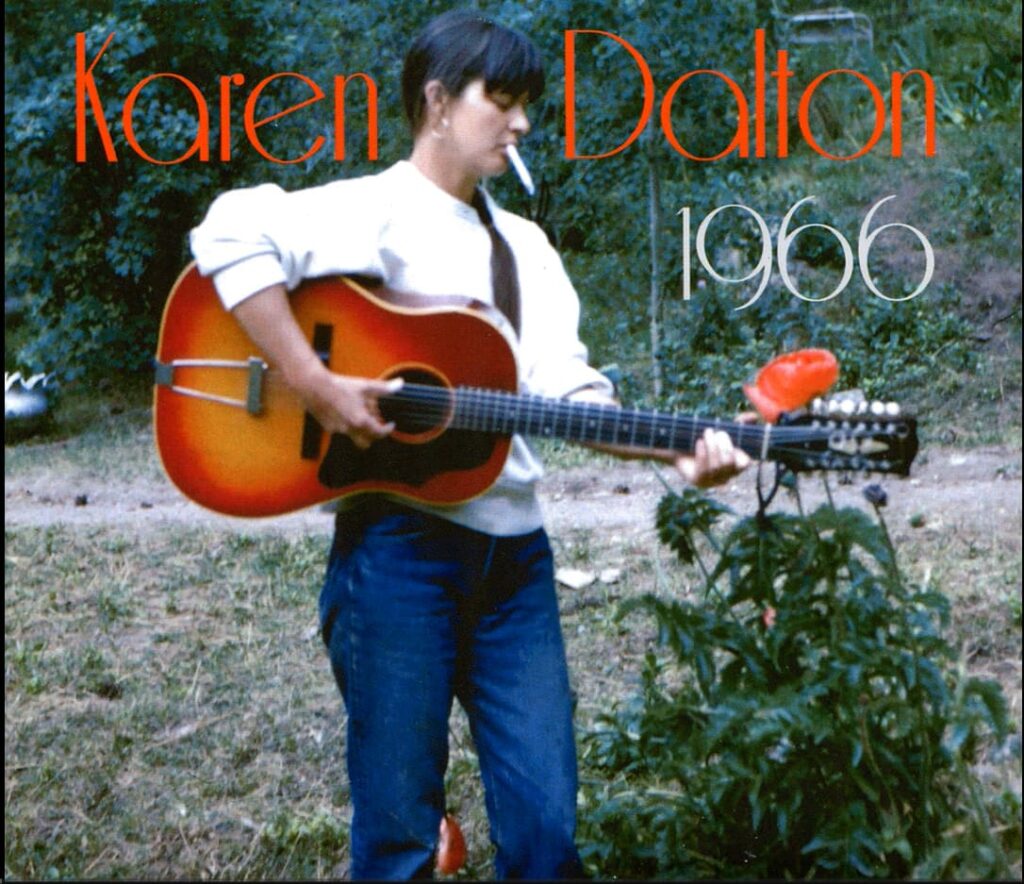
A fragile soul singing about faith when life had already taught her how easily faith can disappear
There are songs that sound polished, rehearsed, and perfectly placed for radio. And then there are songs like “Reason to Believe” by Karen Dalton — recordings that feel less like performances and more like private confessions accidentally left behind for the world to hear.
Originally written by Tim Hardin in the mid-1960s, “Reason to Believe” had already become something of a modern folk standard before Karen Dalton recorded her unforgettable version for the 1971 album In My Own Time. The song itself had seen commercial success through other artists, particularly Rod Stewart, whose version reached No. 62 on the Billboard Hot 100 in 1971 as the B-side of “Maggie May,” eventually becoming famous alongside it. Earlier versions by The Carpenters and Glen Campbell had also helped spread the song into the mainstream consciousness. Yet despite never becoming a charting hit herself, Karen Dalton somehow recorded the version that many listeners quietly carried closest to their hearts.
That is one of the strange truths of music history: the deepest interpretations are not always the most commercially successful ones.
When Karen Dalton sings “Reason to Believe,” she does not sound like someone trying to convince another person to stay. She sounds like someone standing in the ruins after disappointment, still searching for a small emotional thread to hold onto. That difference changes the entire meaning of the song.
The lyrics themselves are deceptively simple. A lover lies, leaves, disappoints, and still somehow remains impossible to give up completely. In another singer’s hands, the song can sound romantic. In Dalton’s voice, it sounds exhausted — but not bitter. There is resignation there, but also tenderness. The song becomes less about naïve hope and more about the painful human instinct to keep believing in people even after experience tells us not to.
And perhaps no singer of her era understood that emotional contradiction better than Karen Dalton.
Born in Oklahoma and later becoming part of the Greenwich Village folk scene of the 1960s, Dalton was admired intensely by fellow musicians. Bob Dylan once famously said that her voice reminded him of Billie Holiday, and many artists who encountered her considered her one of the great hidden talents of American folk music. Yet commercial fame always seemed to move around her rather than toward her.
Part of that was her own restless nature. Dalton disliked the machinery of fame, resisted commercial expectations, and often seemed uncomfortable with the attention that other performers chased so desperately. Her singing carried a haunting vulnerability that could not easily be packaged for mainstream radio. In an era increasingly moving toward polished production and marketable personalities, Karen Dalton remained stubbornly raw, unpredictable, and emotionally exposed.
That is exactly why her music still feels alive decades later.
Listening to “Reason to Believe” today is like opening an old letter found inside a forgotten drawer. The recording breathes. Nothing feels artificial. The slight cracks in her voice, the weary phrasing, the almost conversational sadness — all of it creates the feeling that she is singing from somewhere very deep inside herself rather than merely interpreting lyrics written by someone else.
The arrangement on In My Own Time also deserves attention. Unlike many stripped-down folk recordings of the era, the production surrounding Dalton here carries subtle touches of soul, country, and blues. The instrumentation drifts gently behind her voice rather than overpowering it. Everything seems designed to protect the emotional fragility at the center of the performance.
And perhaps that fragility is why the song endures.
There are certain recordings that become more meaningful as listeners grow older. Not because the songs change, but because life slowly teaches the listener what the singer already understood when the record was made. “Reason to Believe” belongs in that rare category. It speaks quietly to anyone who has loved imperfectly, forgiven too many times, or continued hoping long after certainty disappeared.
Unlike louder heartbreak songs filled with anger or dramatic revenge, Dalton’s interpretation understands that sorrow is often much quieter than that. Sometimes heartbreak arrives not with shouting, but with acceptance. Sometimes the deepest sadness comes from still caring after every reason not to.
That emotional honesty has helped transform Karen Dalton from a largely overlooked cult artist into a deeply revered figure among later generations of musicians and listeners. Artists across folk, indie, and alternative music continue discovering her work decades after her passing in 1993. And many of them return first to songs like “Reason to Believe,” because within that recording exists something timeless: the sound of a human being trying to protect hope while already knowing how fragile hope truly is.
In the end, perhaps that is why the song remains unforgettable.
Not because it promises happiness.
But because it understands how difficult — and how necessary — it can be to keep believing anyway.