
A Quiet Portrait of Love, Memory, and the Grace of Growing Old
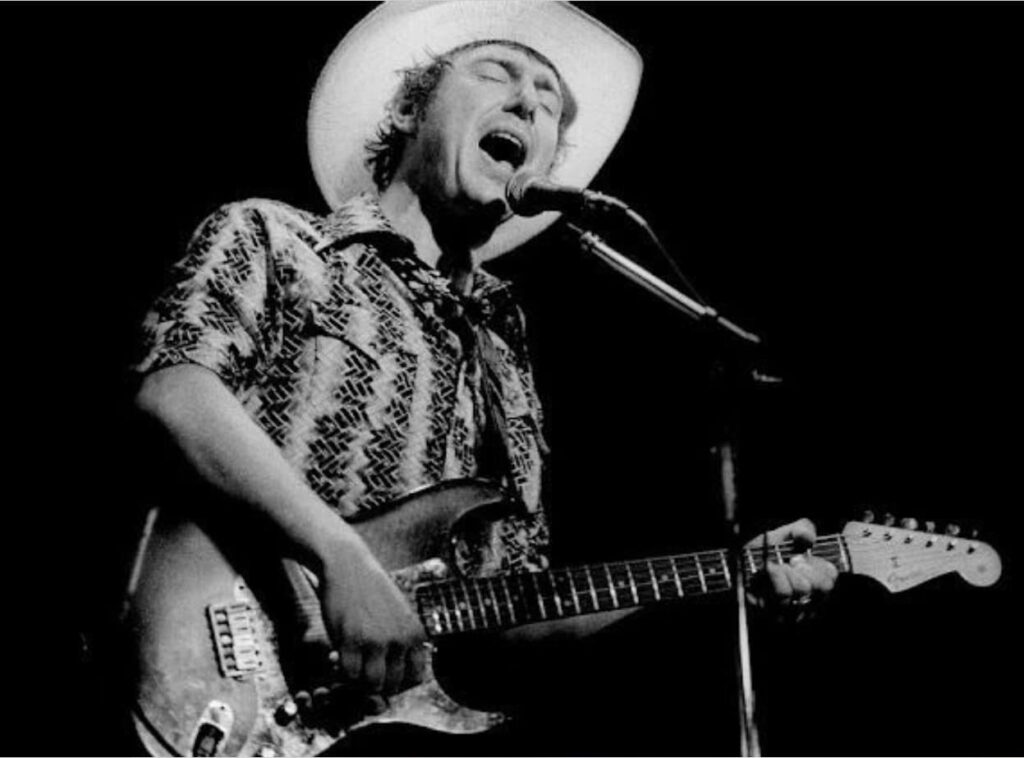
When “The Dutchman” found its way into the voice of Jerry Jeff Walker, it wasn’t merely recorded—it was lived. Though the song was originally written by Michael Peter Smith in the late 1960s, Walker’s interpretation gave it a warmth and earthiness that made it resonate deeply within the folk and country traditions. Released as part of his 1972 album Jerry Jeff Walker, the song did not storm the commercial charts in the way pop hits often do. It never claimed a prominent position on the Billboard Hot 100, but that absence of chart success feels almost beside the point. “The Dutchman” belongs to a different kind of legacy—one measured not in numbers, but in the quiet persistence of memory and emotional truth.
At its heart, “The Dutchman” tells a deeply human story about aging, devotion, and the fragile dignity of a man slipping away from himself. The Dutchman, as depicted in the song, is an elderly man suffering from what we might now recognize as dementia. His world is shrinking, his memories are fading, and yet, in the midst of that loss, there remains one constant: Margaret, his wife. Through her eyes—and through Walker’s tender delivery—we witness a love that does not falter even as identity itself begins to dissolve.
The song’s narrative is deceptively simple. It describes small, everyday moments: the Dutchman pretending to tend to his imaginary tulip garden, Margaret gently humoring him, helping him hold onto fragments of a life that once was. But within these modest scenes lies something profound. This is not a story about tragedy in the grand sense; it is about the slow, almost invisible erosion of time, and the quiet heroism required to endure it. Margaret’s love is not dramatic or showy—it is patient, steadfast, and unyielding.
What makes Jerry Jeff Walker’s rendition so affecting is his ability to inhabit the emotional space of the song without overstatement. His voice carries a lived-in quality, as though he understands these characters not as distant figures, but as reflections of real lives he has encountered. There is a subtle ache in his phrasing, a gentleness that allows the listener to step into Margaret’s world and feel both her sorrow and her strength.
Interestingly, Michael Peter Smith himself once remarked that the song was inspired by stories he had heard about elderly couples, particularly those dealing with memory loss. Yet in Walker’s hands, the song transcends its origins. It becomes universal. One does not need to have lived this exact story to recognize its truth. The themes of devotion, aging, and the passage of time are woven into the fabric of human experience.
Over the decades, “The Dutchman” has been covered by numerous artists, including Steve Goodman, whose version is also widely admired. Each interpretation brings its own nuance, but Walker’s remains particularly grounded, perhaps because of his deep connection to the storytelling traditions of American folk and country music.
Listening to “The Dutchman” today feels like opening an old photograph album—one filled not with grand events, but with quiet, intimate moments that define a life. It reminds us that love is not only found in beginnings, but in endurance. That there is a kind of beauty in staying, in remembering for someone who can no longer remember for themselves.
In a musical era often driven by immediacy and spectacle, songs like “The Dutchman” stand apart. They ask for patience. They ask for reflection. And in return, they offer something rare: a glimpse into the enduring power of human connection, even as time gently, inevitably, takes its toll.