
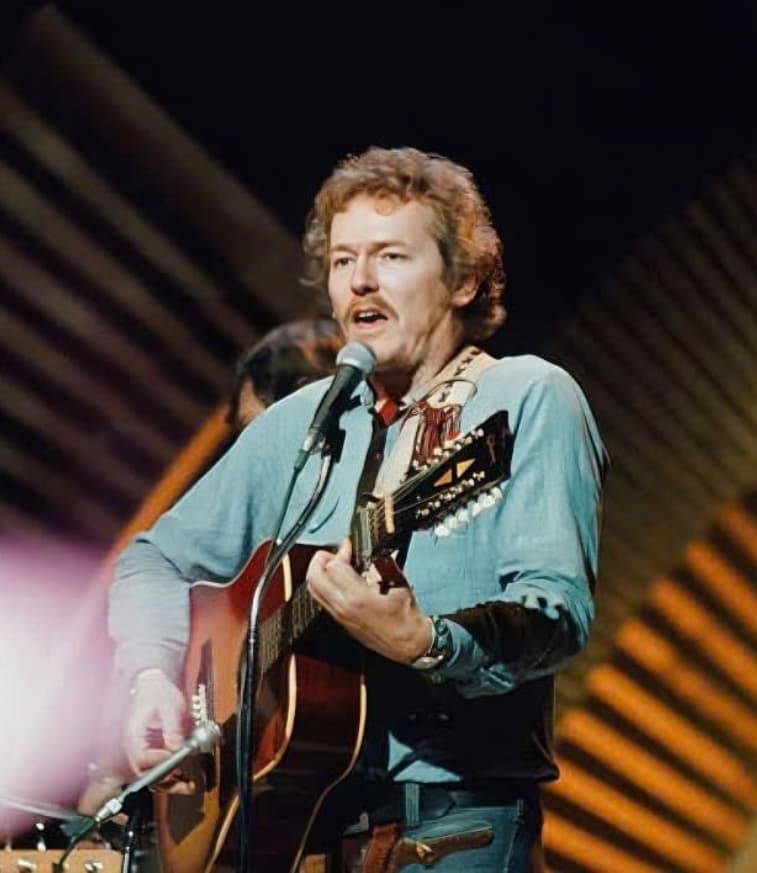
The Haunting Ballad of a Second Chance Lost on the Tracks of Misfortune
Ah, the late great Gordon Lightfoot. The mere mention of his name conjures up the rich, clear tones of a voice that chronicled the vastness of the Canadian landscape and the intimate turmoil of the human heart. Among the treasures in his early songbook, few resonate with such a clear-eyed sense of hope and inevitable tragedy as “Steel Rail Blues.”
This masterful folk tune was a key track on Lightfoot‘s seminal debut album, Lightfoot!, which was recorded in late 1964 and released in January 1966 on the United Artists label. While “Steel Rail Blues” didn’t chart as a major commercial single internationally upon its release, it quickly became a fan favorite and a staple of his live performances. Its enduring power lies not in fleeting chart success, but in its narrative brilliance, cementing Lightfoot‘s reputation within the North American folk scene as a songwriter of exceptional caliber, alongside compositions like “Early Morning Rain” from the same era. Its popularity in Canada was further recognized when the Canadian National Railway (CNR) licensed the song for a promotional film about its freight service, confirming its cultural relevance to the railways that crisscross the nation.
The Story Behind the Song
The true magic of “Steel Rail Blues” is woven into its deeply poignant and relatable story. It is a classic folk narrative of a young, lonesome boy, stranded far from home in a strange town after striking out on his own. He is broke, down on his luck, and his car—the symbol of his youthful freedom—has broken down, leaving him marooned. As the lyrics unfold, the emotional stakes are immediately set high: he receives a letter from the girl back home, a sweetheart who still cares enough to send him a lifeline—a railroad ticket, his one-way pass back to her “loving arms.” The initial verses are filled with a bright, almost palpable sense of relief and optimism, with the refrain, “And the big steel rail gonna carry me home to the one I love,” sounding like a promise of redemption.
However, the redemption is short-lived. In a cruel twist of fate, the night before he is due to leave, the protagonist succumbs to one last temptation: he gambles the precious ticket away. This devastating act of self-sabotage transforms a tale of rescue into a stark, painful reckoning. The final verse finds him not on the train, but “walkin’ along the highway” with a backpack, knowing he has nobody but himself to blame. It is a classic O. Henry-style ending, but instead of surprise, it delivers a punch of quiet despair.
The Meaning and Resonance
The song is a masterful exploration of self-sabotage, the yearning for home, and the irresistible, often destructive, pull of a gambler’s compulsion. The “steel rail” is more than just a means of transport; it’s a powerful metaphor for a second chance, a fixed path toward comfort, love, and stability that the protagonist is simply unable to take. It speaks volumes about the human condition—the tendency to ruin our own best prospects, even when salvation is placed directly into our hands.
For older readers, the reflective, acoustic pulse of the track evokes memories of youth—the recklessness, the feeling of being utterly broke and lost in an unfamiliar place, and the bittersweet recollection of loves left behind. It’s an emotional echo of a time when the world seemed bigger, and a train ticket felt like a monumental gift. Lightfoot‘s evocative finger-picked guitar style, often a variation of the Travis pick, mimics the steady, insistent pounding of the train wheels, underscoring the narrative with a sense of urgent, rhythmic motion—motion that the unfortunate protagonist ultimately misses. The song’s enduring charm is how it manages to tell a universal story of human failing with empathy, capturing the romanticized, yet often brutal, reality of life on the road.