
A Gentle Reimagining of Longing and Quiet Rebellion, Where “Sweet Jane” Becomes a Whisper of Memory Rather Than a Cry
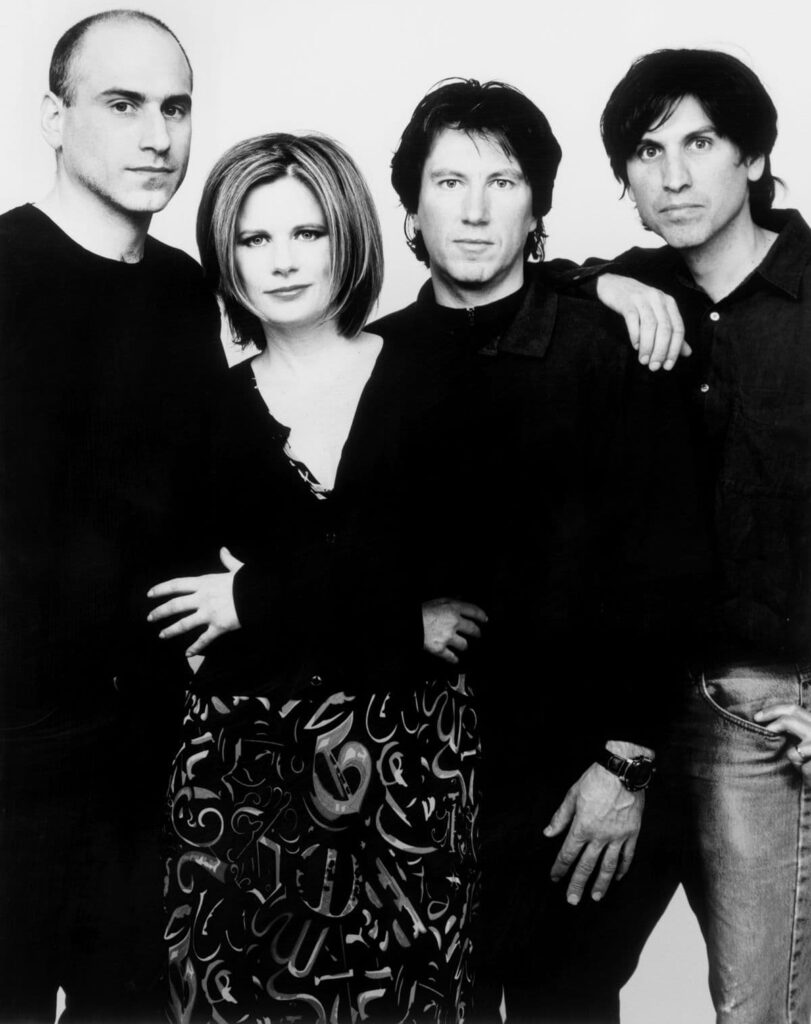
When Cowboy Junkies released their haunting rendition of “Sweet Jane” in 1988, featured on the remarkable album The Trinity Session, few could have predicted how deeply this understated interpretation would resonate across generations. Originally written by Lou Reed and performed by The Velvet Underground in 1970, the song had already earned its place in the canon of rock music. Yet, it was through the slow-burning, almost sacred atmosphere crafted by Margo Timmins and her bandmates that “Sweet Jane” found a new life—quieter, more reflective, and perhaps more enduring.
Unlike chart-topping singles that dominate radio waves, Cowboy Junkies’ “Sweet Jane” did not achieve high positions on mainstream charts upon its release. The Trinity Session itself reached No. 18 on the Billboard Top Country Albums chart and climbed to No. 5 on the UK Indie Chart, but the song’s success was never meant to be measured purely in numbers. Instead, it spread slowly, almost like a well-kept secret, passed from one listener to another, becoming a cherished piece among those who valued subtlety over spectacle.
The story behind this recording is as compelling as the song itself. The Trinity Session was recorded inside the Church of the Holy Trinity in Toronto, using a single ambisonic microphone. The band performed live, gathered closely together, allowing the natural acoustics of the space to shape the sound. There were no elaborate studio tricks—only the raw intimacy of musicians sharing a moment in time. This method gave “Sweet Jane” its signature atmosphere: spacious, echoing, and deeply human. One can almost hear the silence between the notes, the breath before each line, the quiet understanding among the players.
In contrast to Lou Reed’s original—edgier, more urban, tinged with the restless spirit of late-1960s New York—Cowboy Junkies approached the song with restraint and tenderness. Margo Timmins’ voice does not demand attention; it invites it. She sings as if confiding in an old friend, her tone soft yet unwavering. The familiar lines—“Anyone who’s ever had a heart…”—take on a different weight here. They no longer feel like declarations, but reflections, as though shaped by years of lived experience.
The meaning of “Sweet Jane” has always been open to interpretation. In Lou Reed’s hands, it was a portrait of ordinary people seeking meaning and connection amid the chaos of modern life. There was irony, even a hint of detachment. But in this 1988 version, the song feels more like a meditation on endurance—on love that persists quietly, without fanfare, and on the small, often unnoticed moments that define a life. It is less about rebellion and more about reconciliation.
There is also something profoundly nostalgic in the way Cowboy Junkies allow the song to unfold. The slow tempo, the gentle guitar lines, and the subtle bass create a sense of time suspended. Listening to it, one might recall a dimly lit room, a late evening conversation, or a memory that returns unannounced yet warmly familiar. It does not rush; it lingers, much like the memories it evokes.
Over the years, “Sweet Jane” by Cowboy Junkies has appeared in films and television, further cementing its cultural presence. Perhaps most notably, it was featured in the 1994 film Natural Born Killers, introducing it to a new audience and reinforcing its emotional impact. Yet even outside such contexts, the song remains deeply personal, its meaning shaped by each listener’s own experiences.
In the end, what makes this version of “Sweet Jane” so remarkable is not its commercial success, but its emotional truth. It reminds us that sometimes the most powerful interpretations are not the loudest, but the quietest—the ones that speak softly, yet stay with us the longest.