
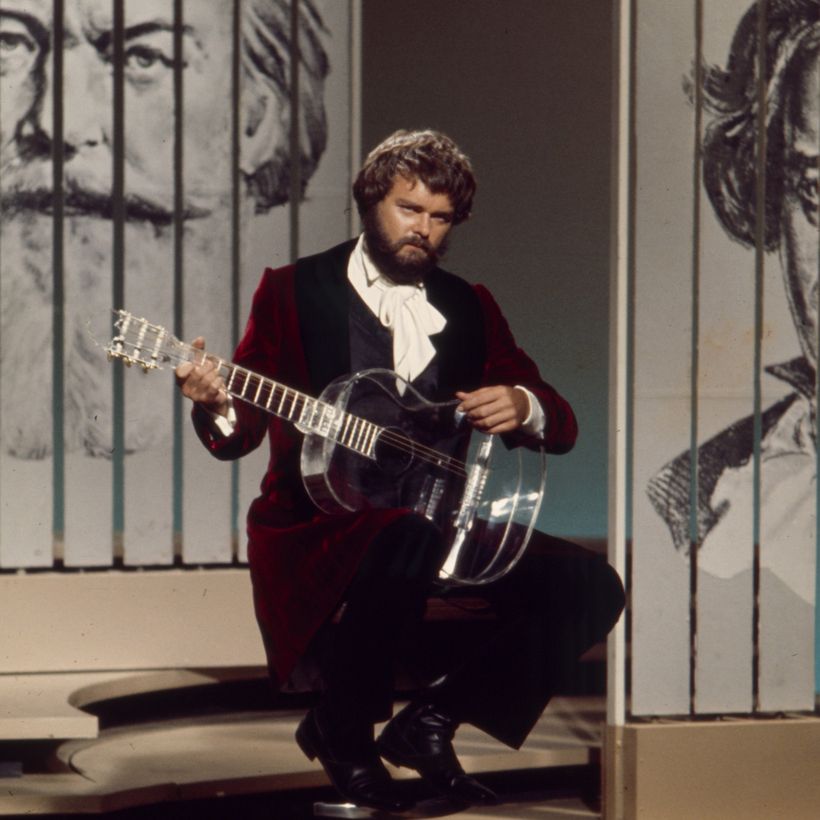
Long Time Blues — a quiet, lingering ache carried on a gentle country-folk breeze
There is a tender heaviness that settles in as “Long Time Blues” begins — the kind of heaviness that doesn’t overwhelm, but slowly wraps itself around the listener like the memory of a long-ago sorrow. Sung and written by Mason Williams, the song first appeared in 1968 as the B-side to his famous hit “Classical Gas,” and later on his album The Mason Williams Phonograph Record. Though overshadowed by the brilliance of that instrumental masterpiece, “Long Time Blues” has quietly endured as one of his most soulful and introspective pieces. It never climbed the charts, never sought the glare of commercial success, yet it carries a sincerity that time has only deepened.
What makes this song so moving is its emotional restraint. Williams was known then for his wit and creative flair — a writer, a musician, a performer who knew how to captivate with energy and cleverness. But with “Long Time Blues,” he lets the mask fall. He sings with a voice softened by melancholy, colored by gentle disappointment, shaded by the kind of loneliness that accumulates over years rather than days. There is no anger in it — only acceptance, only the quiet truth that sometimes life simply drifts away from what we once hoped it might be.
Behind the music lies a story of a young artist searching for depth beyond the spotlight. In 1968, Williams was surrounded by success and applause, yet this song hints at an inner world more reflective, more solitary. Its melody feels like a slow walk through familiar streets at dusk; its lyrics carry the weight of hearts once intertwined but separated by time, circumstance, or simply human frailty. There is an unmistakable sense that the singer has lived through the very ache he describes.
For listeners who lived through that era — or for anyone with years enough to know the softness of nostalgia — the song almost feels like a companion. It doesn’t lecture or demand; it sits beside you. It lets you remember. It lets you feel the passing of time without resisting it. Perhaps that is why “Long Time Blues” resonates so deeply with older audiences: it mirrors that quiet moment in life when longing becomes gentler, when regrets are no longer sharp, only tender.
Musically, the track leans into the warm simplicity of late-’60s folk-country. The arrangement is understated, allowing the emotion to rise naturally. Nothing is rushed. Every note breathes. Even the pauses feel intentional — like someone reflecting before speaking again. This spaciousness invites the listener to fill in the blanks with their own memories, their own stories, the people who left and the moments that linger still.
And perhaps the most beautiful truth of “Long Time Blues” is this: though it stands in the shadow of “Classical Gas,” it reveals a side of Mason Williams many never noticed. A tender storyteller. A quiet soul. An artist unafraid to show the small cracks where the light and sadness seep through.
For anyone who presses play today, the song still holds that same gentle ache. It carries the feeling of old letters kept in a drawer, of long evenings when the world feels still, of the heart remembering what time has smoothed but not erased. Mason Williams didn’t write this song to dazzle. He wrote it to speak softly to those who have known longing — not for a moment, but for a lifetime.