
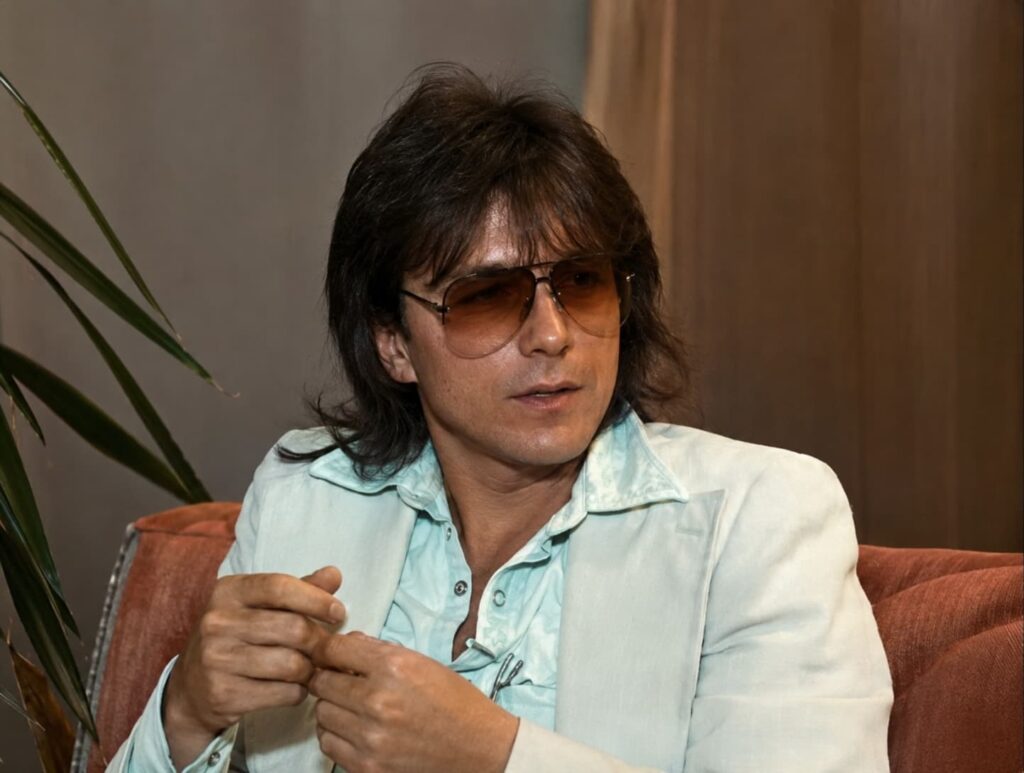
David Cassidy Reflects on the Unplanned Path That Changed His Life
In a revealing 1976 interview, David Cassidy looked back on the unlikely journey that carried him from an ordinary working life in New York to international fame through television and music. Speaking with honesty and self awareness, Cassidy described a career that evolved through circumstance rather than careful planning, offering a rare glimpse into the realities behind one of the most recognizable faces of the early 1970s.
Before success arrived, Cassidy had returned to New York and resumed studying while supporting himself with a part time job in the textile industry. He worked in a mail room and commuted into the city each day, surrounded by office workers following routines that felt completely disconnected from his own ambitions. Reflecting on that period, he recalled questioning what he was doing and whether that life was truly meant for him.
His fortunes changed when he landed a role in a Broadway production. Although the show closed quickly and was considered a failure, it unexpectedly opened a door that would transform his future. A representative connected with CBS Films saw him perform and later encouraged him to complete a screen test. Cassidy accepted the opportunity and returned to Los Angeles, where the television pilot he worked on was eventually sold.
According to Cassidy, music was not originally part of the plan. When discussions began surrounding the project that would become the television phenomenon The Partridge Family, the focus was on acting rather than recording. The situation changed when producers decided to create music for the show. Cassidy, who had musical ability and could sing, resisted the idea of lip syncing to another performer’s voice. After expressing that concern, he was given the chance to record himself and ultimately became the lead singer associated with the group.
The success that followed was rapid and unexpected. Cassidy explained that he did not personally select the songs that were recorded. Instead, the music was chosen to serve the needs of the television production. Yet those recordings helped launch him into a level of celebrity few performers experience.
The interview also touched on one of his later recordings, “Get It Up for Love.” Cassidy noted that the song faced resistance and was banned in some regions. He suggested that part of the reaction may have stemmed from public expectations. After years of being closely identified with a particular image, audiences were surprised by the artistic direction he was pursuing. The response reflected the challenge many former teen idols faced when attempting to redefine themselves as mature artists.
What emerges from Cassidy’s recollections is not a story of a carefully engineered rise to fame, but one shaped by persistence, opportunity, and a willingness to embrace unexpected turns. His reflections remain a compelling reminder that some of the most influential careers begin with uncertainty and evolve in ways no one could have predicted.