
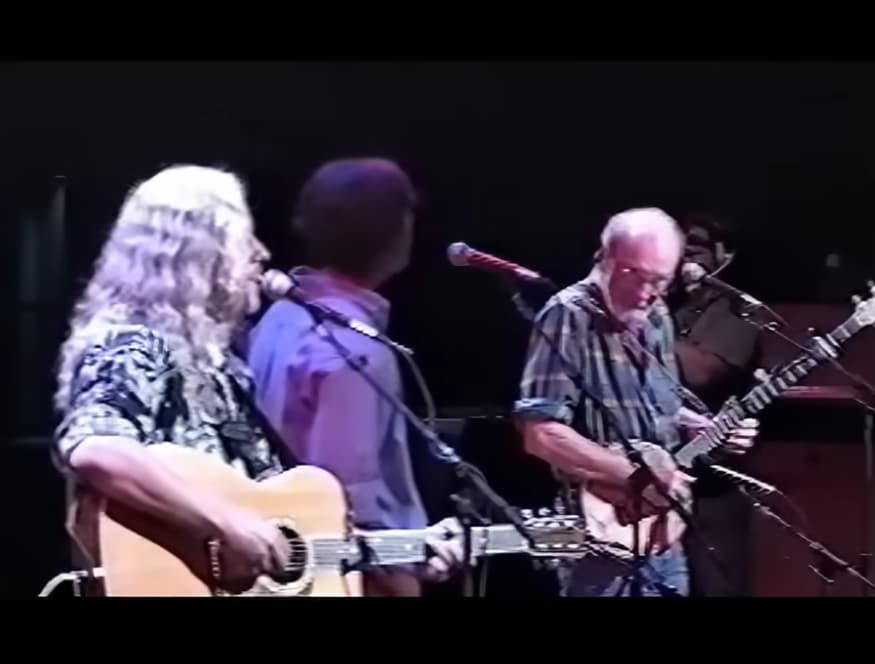
A Night of Music, Storytelling, and Folk Legacy: Arlo Guthrie and Pete Seeger Shine at Wolf Trap
A recently revisited performance from August 8, 1993, at Wolf Trap captures a memorable moment in American folk music history, bringing together two of the genre’s most beloved figures, Arlo Guthrie and Pete Seeger. The recording features Guthrie’s heartfelt rendition of “I Can’t Help Falling In Love With You,” accompanied by the warmth, humor, and storytelling that have long defined his career.
More than three decades after the concert took place, the footage continues to resonate because of its simplicity and authenticity. There are no elaborate stage effects, no technological distractions, and no attempts to overshadow the music itself. Instead, the performance is driven by genuine musicianship, human connection, and a deep respect for the folk tradition.
One of the most memorable elements of the clip is Guthrie’s storytelling. Before and during the performance, he shares an amusing tale about playing in Denmark with Pete Seeger and Tao Rodríguez Seeger. The story unfolds naturally, highlighting the easy camaraderie between the artists. The visual recording adds another layer of charm, allowing viewers to witness Seeger’s reactions as he listens to Guthrie recount the experience. The chemistry among the musicians creates an atmosphere that feels both intimate and timeless.
The performance also serves as a reminder of the important roles both Guthrie and Seeger have played in American music. Pete Seeger, one of the most influential folk musicians of the twentieth century, spent decades using music to bring people together and promote social awareness. Guthrie, following in the footsteps of his father, the legendary folk singer Woody Guthrie, developed his own distinctive voice as a songwriter, performer, and storyteller.
Their appearance together on stage represents more than a concert moment. It symbolizes a passing of traditions, values, and musical heritage that helped shape generations of folk artists. The sincerity of their performance reflects the enduring power of songs to create connection without relying on spectacle.
Today, Guthrie has stepped away from touring after health challenges, including strokes that led to his retirement from performing. His contributions to folk music, however, remain deeply appreciated. Performances such as this one offer a lasting record of an artist whose humor, humanity, and musical talent have touched audiences for decades.
The Wolf Trap recording stands as a beautiful snapshot of an era when storytelling and song shared equal importance. It is a celebration of two remarkable artists whose legacy continues to remind listeners that sometimes the most powerful performances are also the simplest.