
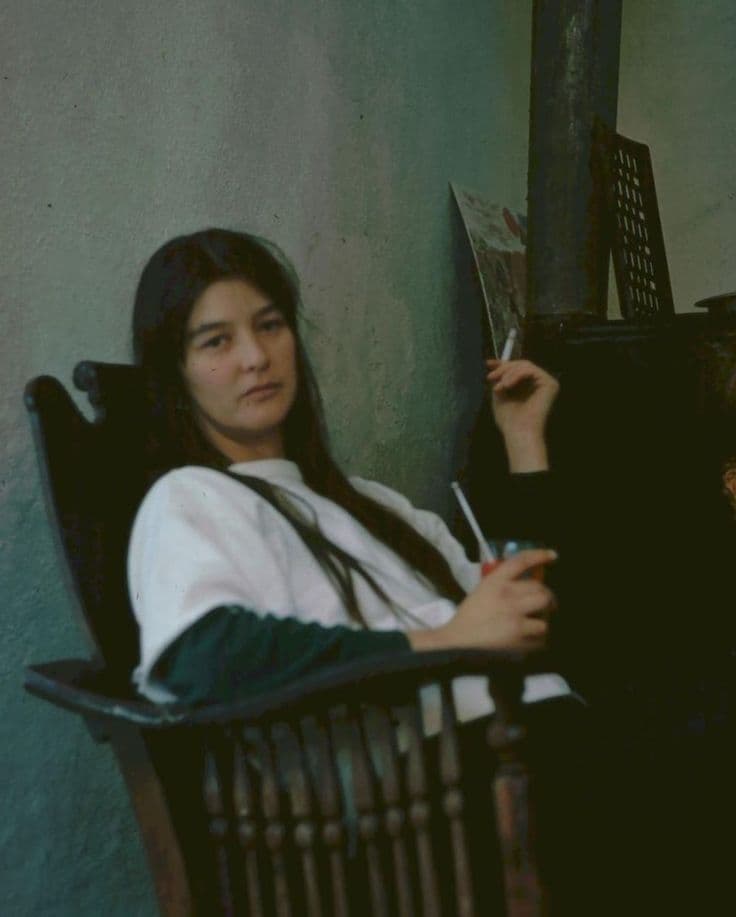
A Song That Sounds Like a Wound Remembered in Silence
“Something On Your Mind” by Karen Dalton is not merely a folk song — it is the sound of loneliness, regret, and tenderness drifting through the ruins of memory.
There are certain voices in music history that never truly belonged to the marketplace. They were too fragile, too human, too painfully honest to survive the machinery of fame. Karen Dalton was one of those voices. And among the recordings that continue to haunt listeners decades later, “Something On Your Mind” remains perhaps the most devastatingly beautiful.
Originally written by singer-songwriter Dino Valenti — under the pseudonym Chester Powers — the song first appeared during the turbulent folk era of the 1960s. But it was Karen Dalton’s interpretation, released on her landmark 1971 album In My Own Time, that transformed the composition into something almost spiritual. Unlike commercial hits of the period, the song never climbed the major Billboard charts when it was released. There were no gold records, no triumphant television appearances, no glamorous spotlight waiting for Dalton. Yet over time, the song became something far more enduring: a hidden treasure passed quietly from one listener to another, like an old photograph tucked inside a drawer.
Today, “Something On Your Mind” is widely regarded as one of the defining performances of the American folk tradition. Many musicians — from indie singers to country traditionalists — have cited Dalton as an influence, enchanted by the emotional nakedness in her voice. Listening to her sing feels less like hearing a performance and more like overhearing someone confess the deepest sorrow they have spent years trying to bury.
What makes the song unforgettable is not technical perfection. In fact, Dalton’s singing often sounds weathered, trembling, almost exhausted. But that is precisely why it cuts so deeply. Her phrasing lingers behind the beat as though she is carrying emotional weight too heavy to move quickly. Every line feels lived-in. Every pause sounds like memory itself.
“Yesterday is just a memory…”
In her hands, that lyric becomes more than poetry. It becomes resignation.
The tragedy surrounding Karen Dalton only deepens the emotional power of the recording. Born in Oklahoma and later immersed in the Greenwich Village folk scene alongside figures like Bob Dylan and Fred Neil, Dalton possessed a voice many contemporaries considered extraordinary. Dylan himself once reportedly admired her deeply, saying her voice reminded him of Billie Holiday. Yet Dalton struggled intensely with the pressures of the music industry. She disliked recording studios, avoided publicity, and battled personal demons for much of her life.
That contradiction — immense talent existing alongside profound vulnerability — seems embedded into every second of “Something On Your Mind.”
The arrangement on In My Own Time is sparse yet hypnotic. Gentle acoustic instrumentation drifts beneath Dalton’s voice like fog rolling through an empty street at midnight. There is restraint everywhere. No dramatic orchestration. No attempt to force emotion. The song trusts silence as much as melody. That restraint allows the listener’s own memories to enter the space.
And perhaps that is why the song has survived across generations.
For many listeners, “Something On Your Mind” does not simply remind them of a particular person. It reminds them of a feeling — the quiet realization that time changes everything, that love fades unevenly, that some conversations never truly end inside us. Few songs capture emotional distance with such aching gentleness.
Over the decades, the recording slowly grew into a cult classic. Long after its original release passed almost unnoticed by mainstream audiences, younger musicians and collectors rediscovered Dalton’s work. Her albums became revered among lovers of folk, Americana, and alternative country music. What once felt forgotten eventually became timeless.
There is something almost cinematic about hearing this song late at night. The room becomes quieter. Old memories seem to surface uninvited. Faces long absent return for a moment. That is the rare power of Karen Dalton: she never sang to impress listeners. She sang as though she were trying to survive her own emotions.
And maybe that is why the performance still feels so alive today.
In an era when many recordings chased perfection, “Something On Your Mind” embraced imperfection completely. The cracks in Dalton’s voice became part of the truth. The weariness became beauty. The sadness became unforgettable.
Some songs entertain us. Some songs accompany periods of our lives.
But a song like “Something On Your Mind” stays with people much longer than that. It becomes part of the emotional furniture of memory itself — quiet, permanent, and impossible to throw away.