
A Song of Urban Loneliness and Quiet Hope Beneath the City Lights
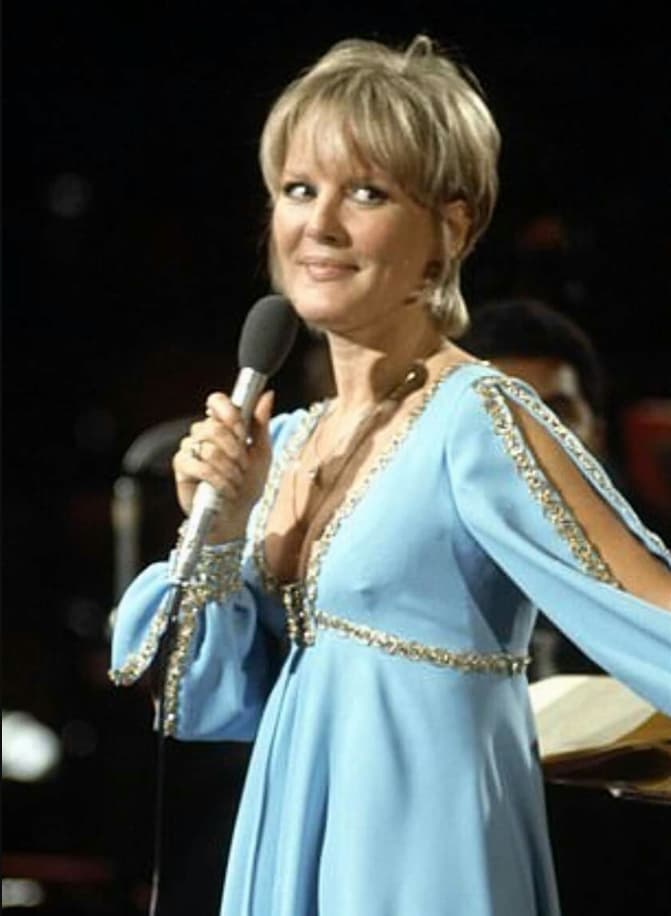
When Petula Clark released “Downtown” in late 1964, few could have predicted that this elegant, gently orchestrated pop song would become one of the defining anthems of its era. Written and produced by the visionary Tony Hatch, the track was more than just a commercial success—it was a cultural moment. By January 1965, “Downtown” had reached No. 1 on the Billboard Hot 100 in the United States, making Petula Clark the first British female artist to achieve that feat during the height of the British Invasion. It also climbed to No. 2 in the UK Singles Chart, further cementing its transatlantic appeal.
The story behind “Downtown” is as evocative as the song itself. Tony Hatch reportedly found inspiration while staying in New York City, gazing out over the bustling streets of Manhattan. The hum of traffic, the glow of neon lights, and the anonymous comfort of the crowd all seeped into his imagination. In that moment, he envisioned a song that would capture the paradox of city life—its loneliness and its strange ability to soothe. When he later played the melody to Petula Clark, she immediately recognized its emotional depth and insisted on recording it, even though Hatch initially had doubts about whether it suited her style.
Musically, “Downtown” is a masterclass in understated sophistication. The arrangement blends orchestral flourishes with a steady, almost hypnotic rhythm, allowing Clark’s warm and reassuring voice to take center stage. Her delivery is neither overly dramatic nor detached; instead, it carries a quiet empathy, as if she is speaking directly to someone who feels lost or overwhelmed. The famous opening lines—“When you’re alone and life is making you lonely…”—set the tone for a song that feels less like a performance and more like a gentle conversation.
At its core, “Downtown” is about escape—not in the grand, escapist sense, but in the small, human way. It suggests that solace can be found not in isolation, but in movement, in stepping outside oneself and into the shared rhythm of the world. The “downtown” of the song is not just a physical place; it is a state of mind, a refuge where worries dissolve into the anonymity of the crowd. This idea resonated deeply in the mid-1960s, a time when cities were rapidly expanding and modern life was becoming increasingly complex. Yet, even today, the message feels timeless.
There is also something quietly empowering in the song’s perspective. Rather than dwelling on sadness, it offers a solution—simple, accessible, and deeply human. Go downtown. Walk among the lights. Let the noise of the world carry you for a while. In that sense, Petula Clark delivers not just a song, but a piece of advice, wrapped in melody and memory.
Looking back, “Downtown” stands as a testament to a unique moment in popular music, when elegance and emotional sincerity could still dominate the charts. It remains one of the standout tracks from Clark’s album Downtown (1965), and its influence can be heard in countless songs that followed. More importantly, it endures because it speaks to something universal—the quiet search for comfort in a restless world.
Even now, decades later, when the first notes begin to play, they carry with them the glow of streetlights, the echo of footsteps on pavement, and the comforting promise that somewhere, just beyond the noise, there is a place where everything feels a little lighter.