
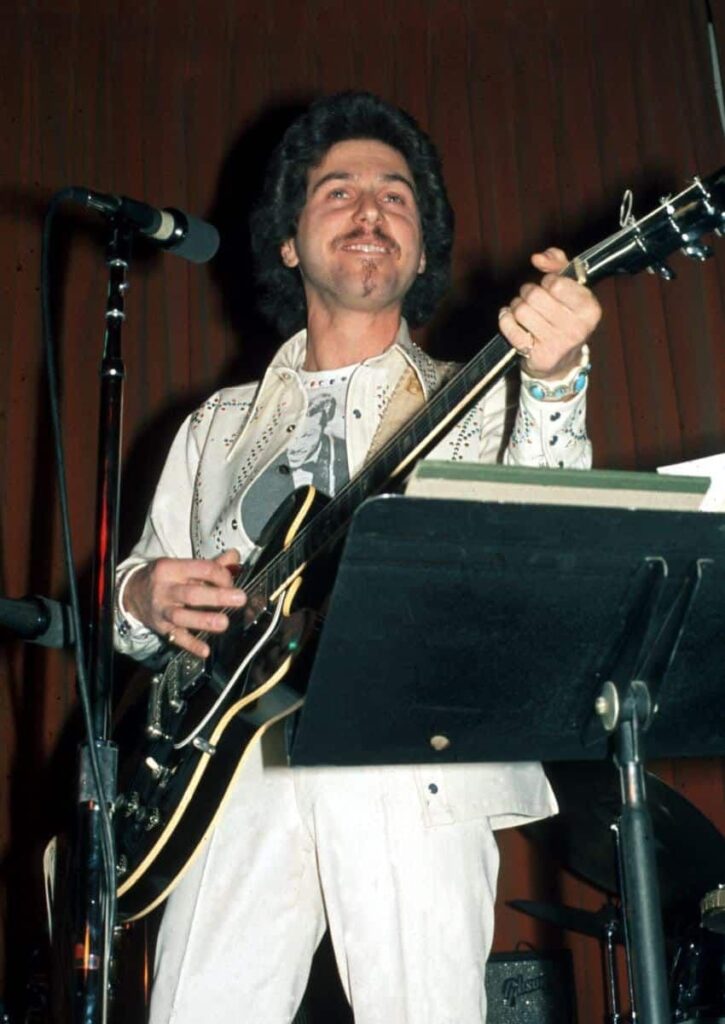
A timeless dance between youth, longing, and the echo of early rock ’n’ roll innocence
“Do You Wanna Dance” captures the fragile, beautiful moment when rhythm and romance first meet—where a simple invitation becomes a memory that never quite fades.
In the mid-1960s, when American popular music was still balancing between the raw edges of early rock ’n’ roll and the polished rise of pop production, Johnny Rivers offered a version of “Do You Wanna Dance” that felt both familiar and newly electrified. Originally written and first recorded in 1958 by Bobby Freeman, the song had already proven itself as a dance-floor standard—simple in structure, yet emotionally direct in its plea for connection. Freeman’s original carried the unmistakable innocence of late-1950s rhythm and blues, where dancing was not just entertainment but a social language of youthful discovery.
When Rivers approached the song, he did not attempt to reinvent its emotional core. Instead, he brought it into the atmosphere of his own world—the smoky, energetic live sound shaped by his legendary performances at the Whisky à Go Go in Los Angeles. His rendition, later associated with the live album Meanwhile Back at the Whisky à Go Go, transforms the song into something more immediate, almost breathless. The arrangement leans into the electricity of a live audience, where applause, echo, and rhythm blend into a single living pulse. In doing so, Rivers preserves the innocence of the original while amplifying its urgency.
By the time his version reached radio audiences in 1965–1966, it had become one of his early nationally recognized hits, charting within the Top 20 of the Billboard Hot 100, confirming his growing status as one of the defining voices of West Coast rock. This was a period when Rivers was rapidly building a reputation not just as a singer, but as a curator of American rock history—reviving older songs and reintroducing them to a new generation shaped by surf rock, British Invasion energy, and the expanding California sound.
The emotional meaning of “Do You Wanna Dance” is deceptively simple. On the surface, it is an invitation to dance; beneath it lies a deeper yearning for closeness, for a moment where two lives briefly align through music. In Rivers’ interpretation, that invitation feels slightly more urgent, as if time itself is slipping through the cracks between guitar chords. The song becomes less about choreography and more about human connection—the need to be seen, touched, and understood, even if only for the length of a single record.
What makes the song endure, especially in Rivers’ version, is its ability to carry nostalgia without becoming trapped in it. It speaks to a generation that remembers dance halls, transistor radios, and the first thrilling moments of teenage independence. Yet it also remains accessible to anyone who has ever felt the quiet courage it takes to ask another person for a shared moment.
In contrast to the later, more polished interpretations by groups such as The Beach Boys, Rivers’ performance retains a certain roughness—less surfboard shimmer, more nightclub sweat and amplifier warmth. That difference is essential. It reminds listeners that early rock ’n’ roll was never just about sound; it was about presence. About standing in a room full of strangers and believing, for three minutes, that music could turn them into something like a community.
Today, “Do You Wanna Dance” survives not as a relic, but as a living echo of that era when popular music still felt physically close—when it came from stage speakers instead of screens, and when a single question could open the door to an entire emotional world.