
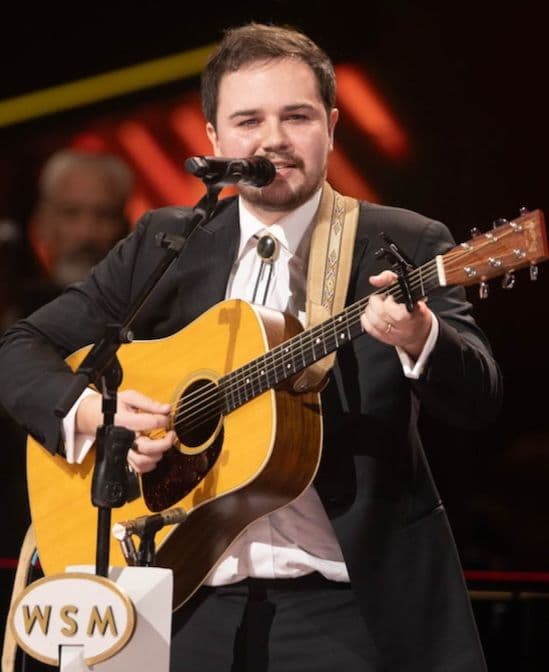
“Paradise” — a tender lament for lost lands, lost livelihoods, and the enduring echo of home that refuses to fade.
In approaching Tommy Prine w/ Arlo McKinley – “Paradise”, we have to understand that this recording is not just a song — it’s a bridge between generations, between a legendary narrative voice and the young singer-songwriter who carries that heritage forward. Tommy Prine, the son of the iconic American folk and country poet John Prine, brings his own sensibility to one of his father’s most revered compositions. Paradise was originally written and recorded by John Prine in 1971 for his self‑titled debut album, which helped establish his voice as one of the 20th century’s most affecting chroniclers of small‑town America and the working class.
John’s Paradise — the song that Tommy and Arlo revisit here — had deep roots in his own family history: it was a lament rooted in the removal of his parents’ home in Paradise, Kentucky, a real coal‑mining town sacrificed to industry, its people uprooted and its landscape scarred. In its original form, the song captured that loss with such simplicity and clarity that it became one of the enduring American folk anthems of the 20th century, speaking as much to environmental and corporate exploitation as to the ache of remembering what once felt sacred.
Although there aren’t formal Billboard ranking records for Tommy Prine’s newer collaborative version with Arlo McKinley available in public charts (it’s more of a roots/Americana folk release outside mainstream pop/rock charts), the original Paradise represents the essential lineage of this music. John Prine’s debut album itself has reverberated through decades of Americana, and Paradise remains one of his most powerful and enduringly covered songs.
Arlo McKinley, who lends his voice and artistic weight to this version alongside Tommy, is an Ohio‑born country singer who was the last artist signed to John Prine’s independent label, Oh Boy Records. Before releasing his own albums, McKinley spent years developing his craft in small clubs, fusing country, soul, and personal truth into songs that speak directly to the heart. His own musical journey – marked by personal trials, loss, and resilience – mirrors the emotional landscape of Paradise: songs born of memory, hardship, and a longing for something pure and sustaining.
In listening to this collaborative Paradise, what strikes you first is how it feels like a conversation across time: Tommy Prine isn’t merely covering his father’s work — he’s stepping into its emotional shadow while bringing his own vulnerability and voice to the fore. Arlo McKinley’s contributions are not just accompaniment; they’re an empathetic counterpoint — a voice carved from lived experience, shaped by the same American landscapes of labor, love, loss, and steadfast remembrance that fueled John Prine’s songwriting.
For many listeners, especially those who first encountered the original Paradise in the quiet streets of hometowns long changed or abandoned, this new rendition not only rekindles the old ache but also offers a sense of continuity — that even when places we love are gone or altered beyond recognition, the songs we carry in our hearts hold them close. To hear Tommy and Arlo together is to witness the living tradition of folk music: old stories retold through new voices, but with the same profound respect for the soil they come from.
This version also serves as a reminder of how deeply music can connect us to our own histories — not just the chart positions or release dates, but the moments in life when a particular lyric or melody seemed to capture something we couldn’t quite say ourselves. For many listeners who came of age alongside John Prine’s music, Paradise was a companion to long drives home, quiet evenings on porches, and the bittersweet understanding that some places we yearn for exist only in memory. Bringing Tommy’s tender voice and Arlo’s rich emotional timbre to such a song is not simply revisiting it — it’s inviting a new generation to feel its power, and to reflect again on what we mean when we sing of Paradise.
In that sense, Paradise — in any form we encounter it today — remains a testament to the enduring power of song to hold a place in our hearts long after the world around us has changed. And for listeners who grew up with the original, hearing it anew can feel like walking back down a familiar country road bathed in late‑day sunlight — familiar, timeless, and profoundly moving.