
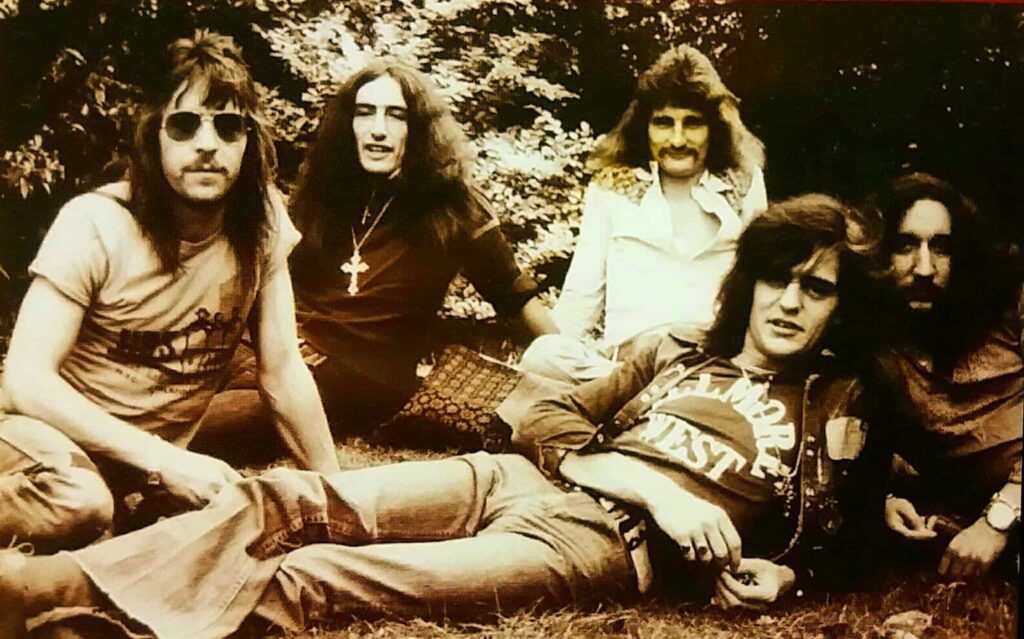
A Timeless Anthem of Hope and Renewal
Ah, “July Morning” by the inimitable Uriah Heep… just the title itself conjures images of hazy summer dawns and a sense of boundless possibility. Released in the summer of 1971, this epic track, a cornerstone of their seminal album “Look at Yourself,” wasn’t just a song; it was an experience. While it didn’t necessarily conquer the very top of the charts upon its initial release, it steadily climbed and resonated deeply with audiences worldwide, particularly in Europe, solidifying its place as a classic and a staple of progressive rock radio for decades to come. Its enduring popularity speaks volumes more than any fleeting chart position ever could.
The story behind “July Morning” is as captivating as the music itself. Penned primarily by the band’s keyboard wizard, the late and greatly missed Ken Hensley, along with vocalist David Byron, the song reportedly blossomed from a simple, evocative phrase Hensley had jotted down. It wasn’t conceived as a grand, sprawling epic initially, but rather evolved organically in the studio, each band member contributing their unique flair to its unfolding narrative. The addition of Manfred Mann’s Earth Band’s frontman, Manfred Mann, on Moog synthesizer added an ethereal and futuristic layer to the soundscape, a touch that was quite innovative for the time and further elevated the song’s sonic tapestry.
Lyrically, “July Morning” transcends a simple love song. It delves into themes of hope, new beginnings, and the transformative power of love. The imagery is rich and poetic, painting a picture of a dawn that washes away the darkness and heralds a brighter future. Lines like “July morning, sunrise of my lifetime” and “With you beside me, there’s no more cloudy days” speak to a profound sense of optimism and the joy found in connection with another soul. It’s a sentiment that resonates across generations, reminding us of the simple yet profound beauty of shared moments and the promise that each new day holds.
The musical arrangement of “July Morning” is what truly elevates it to legendary status. Stretching over ten glorious minutes, it’s a masterclass in dynamic shifts and progressive rock sensibilities. It begins with a gentle, almost pastoral feel, with acoustic guitars and Byron’s emotive vocals setting a tender scene. Gradually, the intensity builds, layer upon layer, with Mick Box’s soaring guitar melodies, Lee Kerslake’s powerful yet nuanced drumming, and Paul Newton’s grounding bass lines all intertwining to create a rich and immersive sonic journey. Hensley’s swirling organ and the aforementioned Moog synthesizer add atmospheric textures that transport the listener to another realm. The song’s epic instrumental passages allowed each musician to showcase their virtuosity, creating a captivating dialogue between the instruments.
For those of us who remember hearing “July Morning” for the first time, perhaps on a crackling transistor radio or a well-worn vinyl record, it evokes a particular feeling – a sense of youthful yearning, of endless summer days stretching out before us. It was a time of exploration, of discovering new sounds and new ideas, and Uriah Heep, with their blend of hard rock power and progressive ambition, were very much a part of that landscape. “July Morning” became an anthem for a generation seeking something more, something beyond the confines of traditional pop music. It was a statement that rock could be both powerful and poetic, both heavy and ethereal.
Even today, decades later, “July Morning” retains its magic. Its timeless themes of hope and love, coupled with its masterful musical execution, ensure that it continues to resonate with new listeners while holding a special place in the hearts of those of us who were there when it first graced our ears. It’s a reminder of a time when music felt expansive and full of possibility, a sonic tapestry woven with dreams and aspirations. So, let the music play, and let the memories flood back like the warm rays of a “July Morning” sun.