
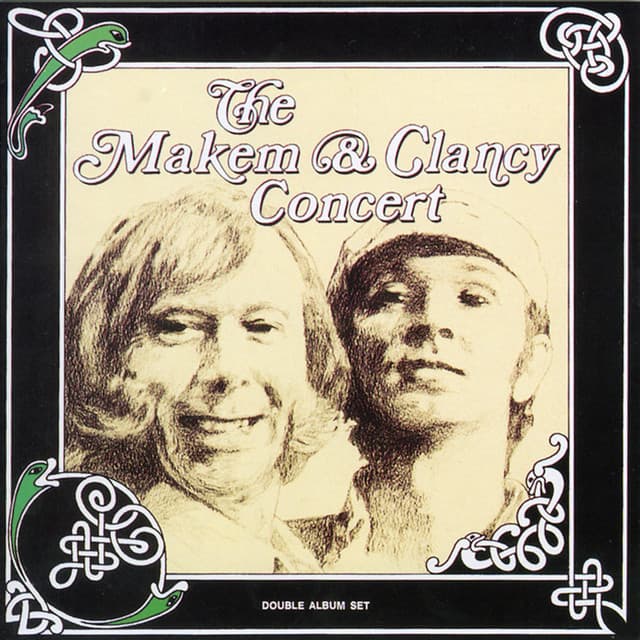
A Quiet Stage, A Timeless Story: When Liam Clancy Brought “The Dutchman” to Life in 1983
On February 6, 1983, inside the National Concert Hall, something extraordinary happened. There was no spectacle, no elaborate production, no attempt to impress through scale. Just a man, a voice, and a story that would quietly linger long after the final note faded.
That night, Liam Clancy performed “The Dutchman,” a song written by Michael Peter Smith. It was not a chart-topping hit, nor was it even included on the album associated with that performance. Yet, decades later, this version continues to resonate deeply with listeners, drawing millions back to a moment defined not by fame, but by feeling.
The Power of Simplicity
At first glance, “The Dutchman” is deceptively simple. The arrangement is minimal. The melody is gentle. There is no dramatic buildup, no soaring chorus designed to captivate a crowd.
And yet, within that simplicity lies its strength.
Liam Clancy did not perform the song. He inhabited it. His voice, weathered and grounded, carried the weight of lived experience. Every line felt less like a lyric and more like a memory being recalled in real time.
In an era where music often leaned toward polish and production, this performance stood apart. It reminded audiences that storytelling, at its core, does not need embellishment. It needs truth.
A Story That Cuts Deeper with Time
“The Dutchman” tells the story of an old man slowly losing his memory, and the woman who stays by his side as he drifts further away from the world they once shared. It is a narrative built on quiet devastation.
There are no dramatic declarations of love. No grand gestures.
Instead, the song focuses on small, intimate moments. A dance. A glance. A fragment of recognition. These are the pieces that remain when everything else begins to fade.
In 1983, this theme already carried emotional weight. But as time has passed, and as conversations around aging and memory loss have become more visible, the song has only grown more powerful.
It speaks to something universal. The fear of being forgotten. And perhaps even more painfully, the fear of forgetting.
Why This Performance Endures
There are countless versions of “The Dutchman,” but Liam Clancy’s interpretation holds a unique place.
Part of it lies in timing. The early 1980s marked a transitional period in music, where traditional folk storytelling was beginning to give way to more commercial sounds. Clancy, a figure deeply rooted in folk tradition, brought authenticity that could not be replicated.
But more importantly, it is the emotional restraint that defines this performance.
He does not over-sing. He does not dramatize.
He allows the story to breathe.
And in doing so, he invites the listener to step into it. To feel it not as an observer, but as a participant.
A Song That Was Never Meant to Be Loud
It is worth noting that this particular performance, recorded at the National Concert Hall, was not positioned as a major release. The video later associated with it was not even part of the official album tracklist.
Yet, over time, it found its audience.
More than 1.7 million views later, it stands as proof that some songs do not need industry backing to endure. They survive because they connect.
Because they understand something essential about being human.
The Legacy of “The Dutchman”
Songs like “The Dutchman” do not dominate charts. They do not define eras in the traditional sense.
But they leave marks.
They become the kind of songs people return to in quiet moments. The ones that surface unexpectedly, carrying with them a flood of emotion that feels both personal and shared.
Liam Clancy’s 1983 performance is not just a rendition. It is a preservation of that emotional truth.
A reminder that even as memory fades, feeling does not.
Final Reflection
There is a reason this performance continues to draw listeners decades later.
It is not nostalgia. It is recognition.
In the story of the Dutchman, we see something of ourselves. Our fears, our love, our fragility.
And in Liam Clancy’s voice, we hear something rare. Not perfection, but honesty.
🎧 If you listen closely, you will realize this is not just a song. It is a moment that never really ends.