
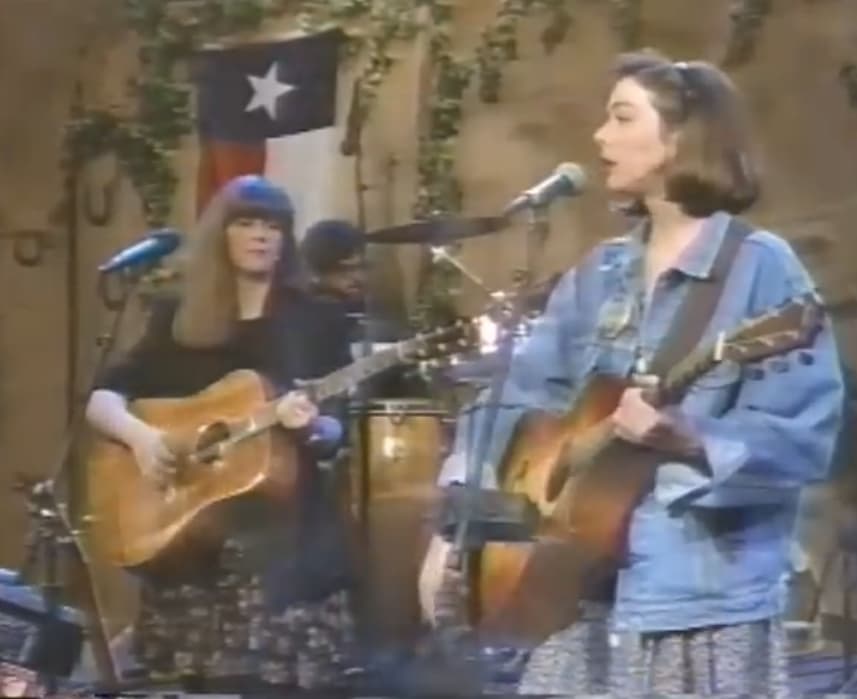
Nanci Griffith’s “It’s a Hard Life” Remains a Powerful Plea Against Hatred
Few songwriters possessed the ability to transform painful realities into timeless lessons quite like Nanci Griffith. Among the many memorable songs in her catalog, “It’s a Hard Life” stands as one of her most thoughtful and socially conscious works, carrying a message that remains strikingly relevant decades after it was written.
Griffith revealed that she wrote the song in Belfast in 1988 during one of the most turbulent periods of the conflict in Northern Ireland. The inspiration came from a journey along Falls Road with a driver named Seamus. As she traveled through a community marked by division, violence, and uncertainty, she was deeply affected by the sight of children growing up surrounded by barbed wire and the consequences of long standing hatred.
Those experiences shaped the emotional core of “It’s a Hard Life,” a song that looks beyond politics and focuses on the human cost of conflict. Rather than offering simple answers, Griffith reflected on the burden passed from one generation to the next and the importance of breaking cycles of resentment before they become permanent.
One lyric in particular has continued to resonate with listeners over the years: “If we poison our children with hatred, then the hard life is all that they’ll know.” The line is often regarded as one of the most profound statements Griffith ever wrote. Its message extends far beyond the circumstances that inspired the song, speaking to universal concerns about tolerance, compassion, and the responsibility adults have in shaping the future.
The enduring power of “It’s a Hard Life” lies in its honesty. Griffith did not write from a position of judgment but from a place of empathy and concern. Her words acknowledge suffering while quietly urging a different path forward.
More than three decades after its creation, the song continues to evoke reflection, sadness, and hope. It serves as a reminder of Griffith’s remarkable gift for storytelling and her ability to capture complex human emotions with grace and clarity. As many admirers of her work have expressed over the years, it is difficult to imagine times like these without the songs that Nanci Griffith wrote.