
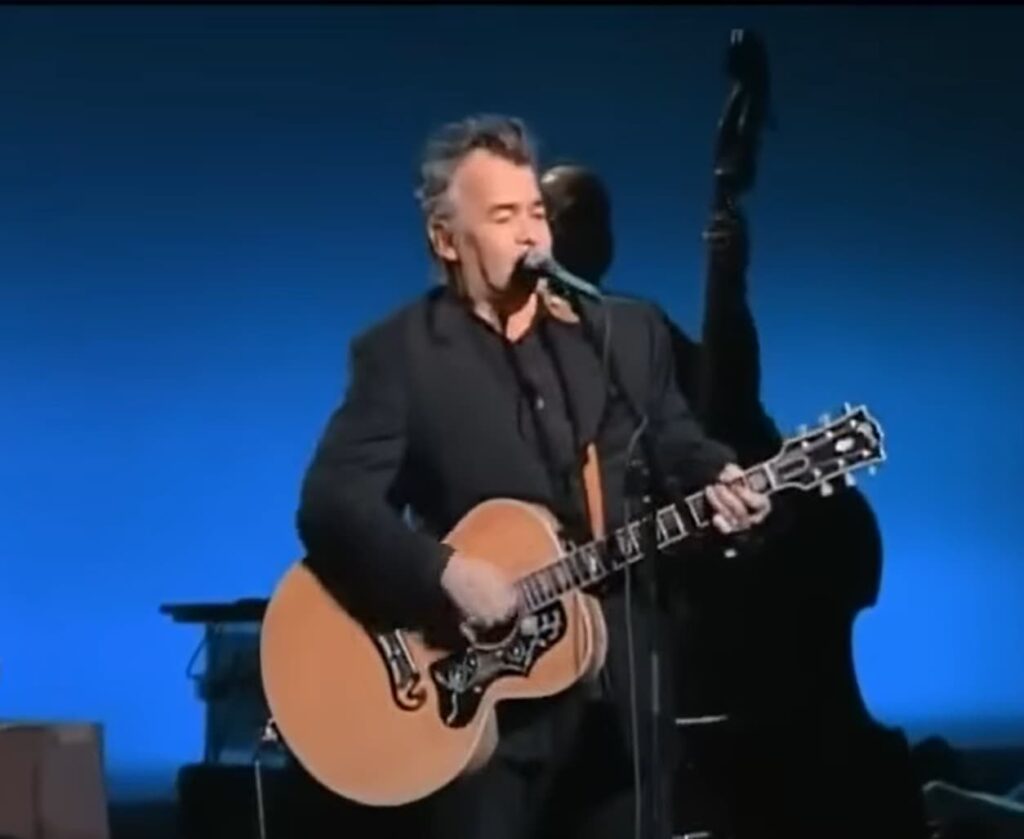
John Prine’s Heartfelt Tribute Turns a Country Classic Into a Story About Friendship, Humor and Legacy
At the Old Town School of Folk Music, during a tribute dedicated to his lifelong friend and songwriting partner Steve Goodman, John Prine delivered far more than a live performance of “You Never Even Call Me By My Name.” The evening became a deeply human reflection on friendship, memory, and the kind of storytelling that made both Prine and Goodman beloved figures in American music.
Before singing the song, Prine shared the now legendary story behind its creation, transporting the audience back to the summer of 1971 at the Hotel Roosevelt in New York City. With his signature dry humor and relaxed charm, he described moments of youthful chaos and imagination, including a scene where he jumped on a bed pretending to play an imaginary fiddle. The story unfolded naturally, filled with warmth and wit, revealing how music and friendship often grow from ordinary moments that later become unforgettable.
The performance carried an emotional weight throughout. Even while laughter moved through the room, there was a strong undercurrent of loss and remembrance. Steve Goodman’s absence could be felt in every memory Prine shared. The song itself, often celebrated for its playful take on country music traditions, became something more intimate in this setting. It sounded like a conversation between old friends that somehow continued long after one of them was gone.
Prine also revisited the famous addition Steve Goodman made to the song, the verse built around what was jokingly called the “perfect country and western song.” References to mama, trains, trucks, prison, and getting drunk turned into a brilliant parody of classic country songwriting while still expressing genuine affection for the genre. The performance even included affectionate mentions of country legends such as Waylon Jennings, Merle Haggard, and Charley Pride, artists whose influence shaped the spirit of the song.
Many continue to recognize both John Prine and Steve Goodman as the true creative force behind this enduring classic, while also acknowledging how David Allan Coe helped bring the song to wider fame through his well known recording. Yet in this tribute performance, the heart of the song clearly belonged to Prine and Goodman themselves.
What remains most powerful is not only the music but the honesty behind it. John Prine’s storytelling felt as meaningful as the song itself, filled with humor, tenderness, and the unmistakable feeling that great friendships never completely disappear.