
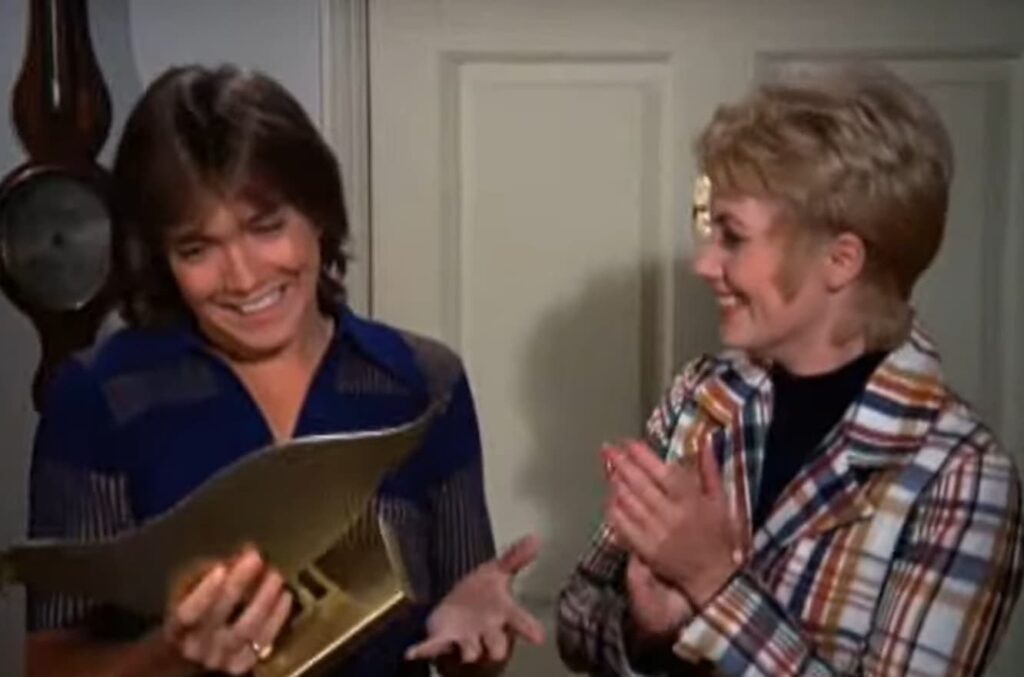
A Gentle Reflection on Youth, Tender Love, and the Quiet Longing Hidden Inside “Looking Through the Eyes of Love”
When The Partridge Family released “Looking Through the Eyes of Love” in 1972, they delivered something far more delicate than a typical television-pop single. Beneath its polished harmonies and soft orchestration was a song filled with innocence, emotional vulnerability, and the bittersweet ache of wanting love to remain pure in a world that rarely stays simple for very long.
There is something deeply touching about revisiting “Looking Through the Eyes of Love” today. Time has a way of changing how songs feel, and this particular recording seems to grow gentler, sadder, and more meaningful with every passing decade. What may once have sounded like a light pop tune from a family television phenomenon now feels like a fragile memory preserved in amber — a reminder of an era when melodies were warm, emotions were sincere, and songs often spoke quietly rather than shouting for attention.
Released as a single from the album “Shopping Bag”, the song became another successful entry in the remarkable run of hits by The Partridge Family, the musical project built around the hugely popular television series starring David Cassidy and Shirley Jones. At the time of its release, the single reached No. 39 on the Billboard Hot 100 in the United States in early 1973, while also finding strong radio support on adult contemporary stations. Though it never became as massive as “I Think I Love You” or “Doesn’t Somebody Want to Be Wanted,” the song quietly earned lasting affection among listeners who appreciated the softer and more romantic side of the group.
One reason the song continues to resonate is the emotional maturity hidden beneath its youthful surface. The lyrics speak about seeing the world through love rather than fear or disappointment. There is optimism in the words, but also vulnerability — the understanding that love changes how people see everything around them. That emotional perspective gave the song unusual warmth for early-1970s bubblegum pop.
Musically, the arrangement reflects the era beautifully. The soft piano lines, restrained rhythm section, and layered harmonies create a dreamlike atmosphere that feels almost weightless. Producers during the golden age of television pop understood how to make records sound comforting, and this recording carries that unmistakable early-70s glow — polished but never cold. The orchestration gently supports the melody instead of overwhelming it, allowing the emotional sincerity of the performance to remain at the center.
And then there is the voice of David Cassidy.
By 1972, Cassidy had become one of the most recognizable young stars in the world. Teen magazines treated him like royalty, concert crowds screamed so loudly that his singing could barely be heard, and his face became symbolic of an entire generation of pop culture innocence. Yet songs like “Looking Through the Eyes of Love” revealed another side of him — not merely the teen idol, but the emotionally expressive vocalist underneath the phenomenon.
His performance here is restrained and remarkably tender. Rather than pushing for dramatic effect, Cassidy sings with softness and sincerity, which ultimately makes the song feel far more intimate. There is a gentle melancholy in his phrasing, as though he already understood how fleeting youth and idealism could be. Listening now, knowing the complicated path his life would later take, adds another emotional layer entirely.
Behind the scenes, The Partridge Family recordings were also more sophisticated than many critics admitted at the time. Although the television image often caused music journalists to dismiss the group as manufactured entertainment, many of the session musicians involved were among the finest players in Los Angeles. Members of the legendary studio collective known as The Wrecking Crew contributed to many Partridge Family recordings, bringing professionalism and musical elegance to songs that were often underestimated because of their commercial popularity.
There is also an interesting emotional contradiction surrounding the song’s legacy. In the early 1970s, America was changing rapidly. The optimism of the 1960s had begun fading under the weight of political scandal, war fatigue, and cultural uncertainty. Against that backdrop, songs like “Looking Through the Eyes of Love” offered listeners something comforting — a softer emotional refuge from the growing cynicism of the outside world. Perhaps that is one reason the song still feels so emotionally protective today. It carries the sound of innocence trying to survive.
For many listeners, hearing The Partridge Family now is inseparable from memory itself. The music recalls afternoon television broadcasts, transistor radios, family living rooms, and a period when pop songs often carried emotional gentleness without embarrassment. That nostalgia is not simply about youth; it is about emotional atmosphere — the feeling that music once made room for tenderness.
And perhaps that is the enduring beauty of “Looking Through the Eyes of Love.” It does not demand attention in the way giant rock anthems do. Instead, it quietly stays with people across the years, waiting patiently to be rediscovered. Songs like this rarely dominate “greatest of all time” lists, yet they often become the ones listeners carry deepest in their hearts.
In the end, the song remains a delicate little time capsule from a gentler corner of popular music history — a reminder that sometimes the softest songs leave the longest echoes.