
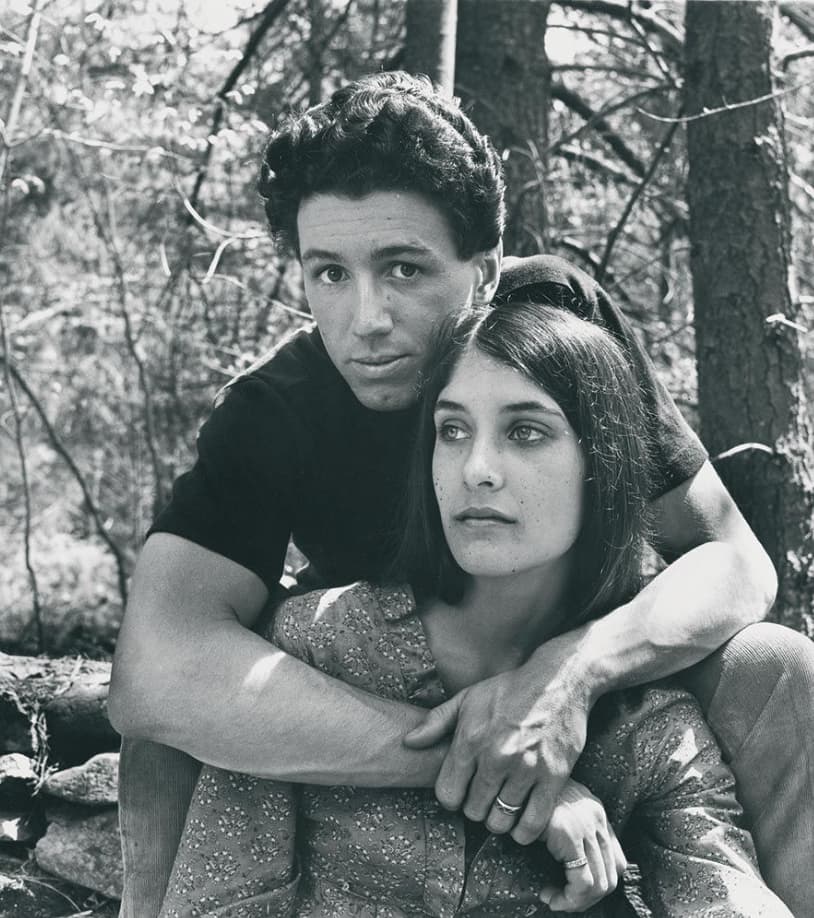
A haunting requiem for lost innocence, capturing the fragile intersection of folk tradition and the profound sorrow of a world losing its light.
The 1960s were a kaleidoscope of revolution and poetry, but few voices possessed the sharp, crystalline clarity of Richard and Mimi Fariña. Their song “Michael, Andrew and James”—released on the seminal 1965 album Celebrations for a Grey Day—remains a towering achievement of the folk revival era. It didn’t chase the fleeting heights of the Billboard Hot 100 like a pop jingle; instead, it achieved something far more permanent. It anchored itself in the conscience of a generation, peaking at #122 on the Billboard 200 as part of the album, though its cultural “charting” was measured in the silence it left in concert halls and the tears shed in smoke-filled coffeehouses from Greenwich Village to Big Sur.
To listen to this track today is to step through a mirror into a past that feels both distant and painfully immediate. Mimi Fariña, the younger sister of Joan Baez, possessed a voice that was less a polished instrument and more a direct line to the soul—vibrant, steady, yet laced with a subterranean ache. Beside her, Richard Fariña, the novelist and dulcimer virtuoso, provided the intellectual and rhythmic backbone.
The “backstory” of this piece is etched in the dark ink of American history. Written in the wake of the 1964 Mississippi Burning murders, the song serves as a lyrical monument to Michael Schwerner, Andrew Goodman, and James Chaney—three civil rights workers who were abducted and murdered by the KKK. While other protest songs of the era were often loud and accusatory, Richard Fariña chose the path of the elegiac. He didn’t just write a political statement; he wrote a ghost story.
The lyrics do not scream. They whisper. Through metaphors of “the willow tree” and “the changing of the leaves,” the song evokes the cyclical nature of loss. When Mimi sings of the boys who went down to the river and never returned, the listener is transported back to those sweltering Southern summers where hope was a dangerous currency. There is a specific, tactile nostalgia here—the sound of the hammered dulcimer mimics the flickering of a candle or the spinning of a bicycle wheel, small domestic images that contrast sharply with the enormity of the tragedy.
For those of us who remember the crackle of the needle hitting the vinyl of a Vanguard Records release, this song represents a bridge. It connects the ancient traditions of the British ballad with the urgent, bleeding heart of the American 20th century. The meaning of “Michael, Andrew and James” transcends its specific historical subjects. It is a meditation on the heavy price of conviction. It asks us: What is the cost of a conscience? It reflects on the vulnerability of youth and the way time eventually gathers all our heroes into the fold of the earth.
There is a profound, meditative quality to the arrangement. It lacks the slick production of modern tracks, relying instead on the raw synergy between husband and wife. Every time I hear that dulcimer ring out, I am reminded of the fragility of that era. Richard Fariña would pass away in a motorcycle accident just a year after the album’s release, on the very day his novel was published. This layer of personal tragedy adds a ghostly resonance to the recording. When you hear them harmonize on the names—Michael, Andrew, and James—you aren’t just hearing a history lesson. You are hearing a prayer for a world that might one day be kind enough to keep its dreamers alive. It is a song for the quiet hours, for the moments when the sun dips low and the shadows grow long, reminding us that while the singers fall silent, the song remains a steady flame against the encroaching dark.