
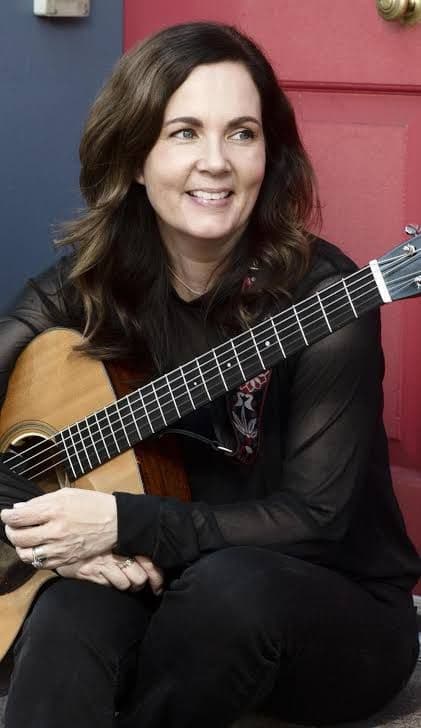
A quiet truth wrapped in melody — how time changes us all, gently and without permission
When “People Get Old” by Lori McKenna first found its audience in 2018, it didn’t arrive with the thunder of chart-topping ambition. Instead, it settled softly into listeners’ lives through the album “The Tree”, a record that would go on to earn widespread critical admiration and a nomination for Best Americana Album at the Grammy Awards. Unlike many songs that chase positions on the Billboard Hot 100, this one was never about climbing rankings—it was about something far more enduring: recognition, reflection, and truth.
“People Get Old” did not chart in the traditional commercial sense, but its quiet impact within the Americana and folk community has proven far more lasting than numbers alone could measure. This is often the case with Lori McKenna, whose songwriting has long existed in that sacred space between the personal and the universal. Known for penning deeply human songs for artists like Tim McGraw and Faith Hill, McKenna has built a career on telling stories that feel lived-in, not manufactured.
The story behind “People Get Old” is not one of grand events or dramatic turning points. It is, fittingly, about the small, inevitable passage of time. McKenna has often drawn inspiration from her own life—raising a family, watching children grow, seeing relationships evolve—and this song feels like a quiet moment of realization, perhaps written in the stillness after everyone else has gone to sleep. It carries the weight of observation: that life does not change all at once, but rather in subtle shifts that only become clear when we pause long enough to notice.
There is something profoundly disarming in the way the song unfolds. The lyrics do not attempt to resist aging, nor do they romanticize it. Instead, they accept it with a kind of gentle honesty: people grow apart, priorities shift, dreams adjust themselves to reality. And yet, there is no bitterness here—only understanding. That is the rare strength of McKenna’s writing. She does not tell you what to feel; she simply shows you what is.
Musically, “People Get Old” is as understated as its message. The arrangement leans on acoustic textures, allowing her voice—warm, slightly weathered, and deeply expressive—to carry the emotional weight. There is no need for grand production. In fact, any embellishment would feel like an intrusion. The simplicity becomes its own kind of honesty, mirroring the song’s theme: that the most important truths in life are often the quietest.
What makes this song linger is not just its subject, but its perspective. It does not speak from a place of regret, but from awareness. It acknowledges that time changes everything—relationships, identities, even the way we remember the past—but it also suggests that there is a kind of peace in accepting that change. Not every song about growing older manages to strike that balance. Many lean toward nostalgia or sorrow. Lori McKenna chooses something more nuanced: a reflective calm.
For listeners who have followed her career, “The Tree” feels like a culmination of everything she does best. It is rooted in real life, unafraid of complexity, and delivered with a sincerity that cannot be faked. And within that album, “People Get Old” stands as one of its most quietly powerful moments—a song that does not demand attention, but rewards those who give it.
In the end, the beauty of “People Get Old” lies in its universality. It does not belong to any one generation or moment. It belongs to anyone who has ever looked back and realized that life has moved forward, whether they were ready or not. And perhaps that is why it resonates so deeply: because it tells a truth we all know, but rarely say out loud.
Some songs fade as quickly as they rise. Others, like this one, settle into the heart—and stay there, growing more meaningful with every passing year.