
A song that turns memory into motion—where every chord feels like a faded photograph coming gently back to life
When speaking of “Pictures of Matchstick Men”, one must begin with its remarkable arrival on the charts in early 1968. Credited to Status Quo, the song climbed to No. 7 on the UK Singles Chart and reached an impressive No. 12 on the Billboard Hot 100 in the United States. For a young band still searching for identity, this success was not just a breakthrough—it was a defining moment. The track would later appear on their debut album, “Picturesque Matchstickable Messages from the Status Quo”, a title as whimsical and slightly surreal as the music itself.
At the heart of the song lies Francis Rossi, who wrote it almost by accident—reportedly inspired by the simple, almost childlike paintings of L.S. Lowry, filled with “matchstick men” figures. What emerged was something far more complex than its origins might suggest. Wrapped in a haze of psychedelic effects—most notably its distinctive phasing sound—the song evokes a sense of emotional dislocation, as if one were flipping through memories that no longer sit comfortably in the present.
Musically, it stands apart from what Status Quo would later become known for. Before the denim-clad, boogie-rock identity solidified in the 1970s, this was a band experimenting with the psychedelic currents of the late ’60s. The guitar riff—circular, hypnotic, almost dreamlike—feels less like a statement and more like a question. And perhaps that is why it has endured: it doesn’t insist; it lingers.
The story behind the song’s creation is as modest as it is telling. Francis Rossi once admitted he wrote it quickly, even reluctantly, under pressure to produce something commercial. Yet in that moment of urgency, he tapped into something quietly universal. The lyrics, though sparse and somewhat abstract, suggest longing, confusion, and the uneasy distance between perception and reality. The “pictures” are not just visual—they are emotional imprints, snapshots of relationships and moments that seem fixed, yet feel increasingly unreachable.
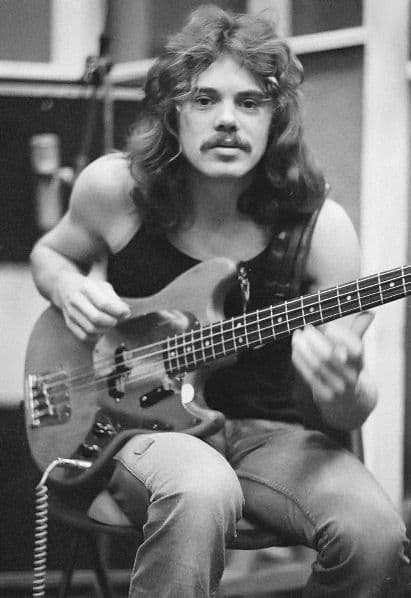
Years later, the legacy of the song would echo in unexpected ways. Alan Lancaster, a founding member of the band, carried that early spirit into his later project, The Bombers. When audiences heard versions of “Pictures” performed in different contexts, it was as though the song had taken on a second life—no longer bound to a single era, but traveling through time alongside those who remembered it first.
What gives “Pictures of Matchstick Men” its lasting resonance is not just its chart success or its place in rock history, but its emotional texture. It captures that peculiar feeling of looking back—not with clarity, but with a kind of soft distortion. The past, like the song itself, is never entirely sharp; it hums, it echoes, it drifts.
And perhaps that is why, decades later, it still finds its way into quiet moments—when a familiar melody surfaces, and for a few minutes, time folds in on itself. Not dramatically, not loudly—but gently, like a memory you didn’t realize you were still holding onto.