
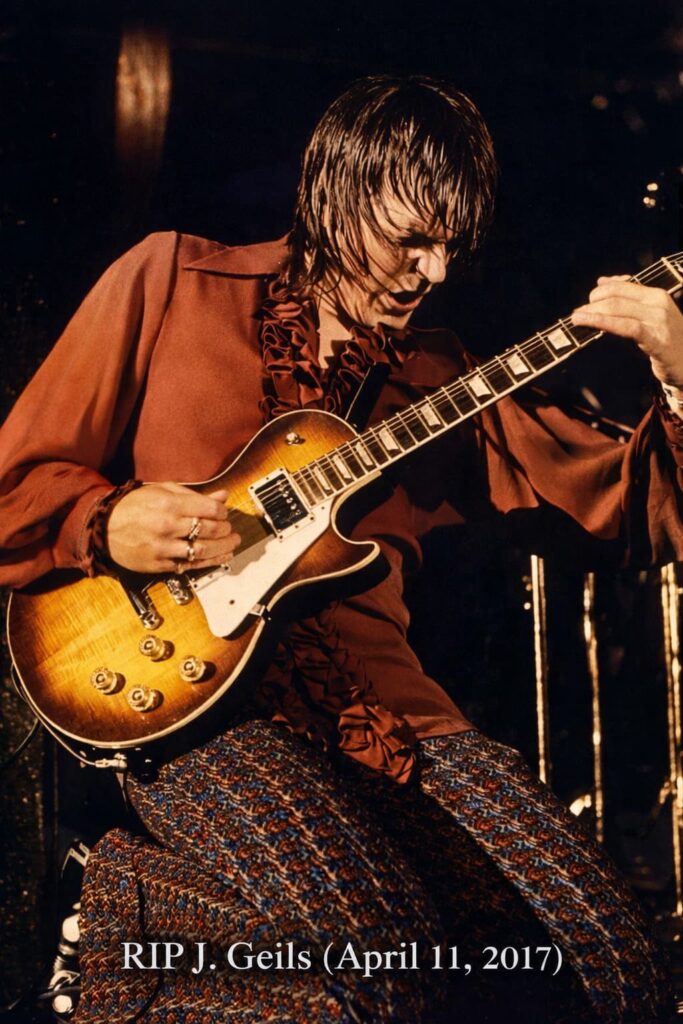
A mischievous pop-rock confession about youthful fantasy and the bittersweet shock of reality
Released in late 1981, “Centerfold” by The J. Geils Band quickly became one of the most recognizable pop-rock anthems of the early 1980s. Featured on the album Freeze-Frame (1981), the song achieved remarkable commercial success, reaching No. 1 on the Billboard Hot 100 in February 1982, where it held the top spot for six consecutive weeks. It also climbed high internationally, cementing the band’s transition from a blues-rock outfit into a polished, radio-friendly pop force. For a group that had spent over a decade building a reputation through gritty performances and modest hits, this was the moment everything aligned.
At first listen, “Centerfold” feels playful, even cheeky—driven by its infectious organ riff, handclaps, and Peter Wolf’s animated vocal delivery. Yet beneath that upbeat exterior lies a narrative that is both humorous and quietly unsettling. The story unfolds from the perspective of a man who discovers that a former high school crush—someone he once placed on a pedestal—has become a magazine centerfold model. What begins as nostalgic admiration turns into confusion, embarrassment, and a subtle sense of disillusionment. The chorus, with its unforgettable refrain, captures that emotional whiplash: the collision between idealized memory and adult reality.
The inspiration behind the song has often been discussed in terms of its cultural context. In the late 1970s and early 1980s, American society was navigating shifting attitudes toward sexuality, media, and personal identity. Peter Wolf, the band’s charismatic frontman, along with keyboardist Seth Justman, crafted a lyric that walks a delicate line—never overtly judgmental, yet clearly reflecting the narrator’s internal conflict. It is not simply about a photograph; it is about how time reshapes our perceptions of people we once knew, and how those changes can challenge our own sense of innocence.
Musically, the track marked a departure from the band’s earlier, more blues-driven sound. The production on Freeze-Frame embraced the crisp, synth-infused style that defined early MTV-era pop. The use of the Farfisa organ gave the song its distinctive bounce, while the tight rhythm section ensured it remained grounded in rock tradition. This blend of old and new was crucial to its success—it appealed both to long-time fans and to a younger audience discovering the band for the first time through radio and television.
The song’s popularity was further amplified by its music video, which received heavy rotation on MTV, a relatively new platform at the time. The video’s playful classroom setting mirrored the song’s theme of revisiting youth, reinforcing its nostalgic undertone while keeping the tone lighthearted. For many listeners, “Centerfold” became inseparable from that visual imagery—a reminder of school days, first crushes, and the sometimes awkward transition into adulthood.
What gives “Centerfold” its lasting resonance is not just its catchy melody, but its emotional ambiguity. It invites listeners to reflect on their own past—on the people they once admired, the assumptions they made, and the ways those memories have aged over time. There is a quiet poignancy in realizing that the figures we once idealized have lived lives beyond our imagination, shaped by choices and circumstances we may never fully understand.
Even decades later, the song retains its charm. It is both a time capsule of early 1980s pop culture and a universal story about memory, perception, and the passage of time. Listening to “Centerfold” today is like opening an old yearbook: the faces are familiar, the feelings come rushing back, but everything is touched by the gentle, inevitable distance of years gone by.