
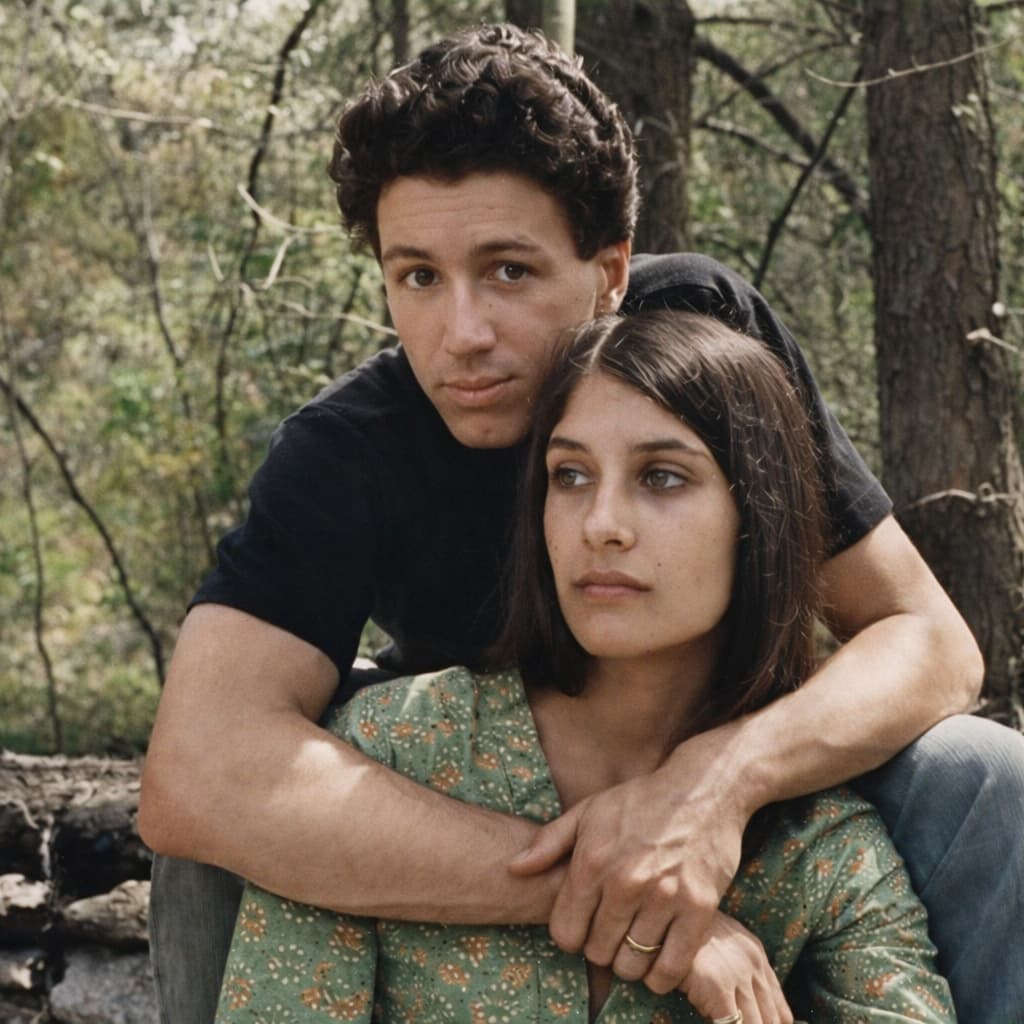
A Quiet Folk Confession of Love, Loss, and Self-Irony in the Greenwich Village Era
“Hard-Loving Loser” by Richard & Mimi Fariña is not a chart-driven anthem, nor a polished radio single crafted for commercial ascent. Instead, it exists like a whispered confession from the heart of the 1960s folk revival—intimate, fragile, and deeply human. Released on the 1965 album Celebrations for a Grey Day, the song never entered the Billboard Hot 100, and the album itself did not register a significant position on the major U.S. charts at the time. Yet its absence from commercial rankings feels almost fitting, as though the song was never meant to compete in the marketplace, but rather to linger in the quieter corners of memory.
At the center of this musical moment are Richard Fariña and Mimi Fariña, a husband-and-wife duo whose artistry was shaped within the Greenwich Village folk scene of the early 1960s. Mimi, sister of Joan Baez, brought a crystalline vocal purity to their collaborations, while Richard contributed a restless literary intelligence—more novelist than conventional songwriter, more storyteller than performer. Together, they formed a partnership that felt both tender and volatile, like two voices circling the same emotional truth from different directions.
“Hard-Loving Loser” captures that tension with striking simplicity. The title itself carries a self-aware irony: it speaks of someone who loves too deeply, too recklessly, and perhaps too imperfectly to fit into the tidy expectations of romance. The “loser” in the song is not defined by failure in the conventional sense, but by emotional excess—by the inability to love halfway, to detach cleanly, or to protect oneself from longing. In this way, the song becomes less an accusation and more an acceptance, almost a quiet surrender to human imperfection.
Musically, the track reflects the understated aesthetic of Celebrations for a Grey Day—a record shaped by acoustic textures, restrained arrangements, and a poetic sensibility that often feels closer to spoken word than mainstream folk-pop. There is a sense that every note is deliberately unadorned, as if ornamentation might dilute the emotional honesty being expressed. In that restraint lies its power: the listener is not pulled toward spectacle, but drawn inward toward reflection.
The story behind the music is inseparable from the lives of its creators. The early 1960s folk revival was a time when young musicians in New York were reimagining traditional American songcraft through a lens of literary depth and political awareness. Within that environment, Richard Fariña stood out for his intellectual restlessness, while Mimi Fariña embodied a quieter, almost ethereal presence that softened the edges of their collaboration. Their marriage, both artistic and personal, infused their music with a sense of intimacy that listeners could feel even when the lyrics were abstract or elusive.
“Hard-Loving Loser” can be heard as a reflection of that shared emotional world. It suggests the exhaustion of loving too intensely in a world that does not always reward emotional openness. Yet it also carries warmth—a recognition that such vulnerability is not weakness, but a form of courage. The song does not resolve its emotional contradictions; instead, it allows them to coexist, much like memory itself, where joy and regret often occupy the same quiet space.
In hindsight, the absence of chart recognition feels almost symbolic. This is not a song built for mass consumption or radio repetition. It belongs instead to listeners who return to it slowly, perhaps decades later, finding in its gentle melancholy something that feels unexpectedly personal. In that sense, “Hard-Loving Loser” endures not through numbers or rankings, but through emotional resonance—an echo from a particular moment in folk history when music was as much about truth-telling as it was about melody.
And so it remains: a soft-spoken piece of the 1960s folk landscape, carried forward not by commercial success, but by the quiet persistence of memory and feeling.