
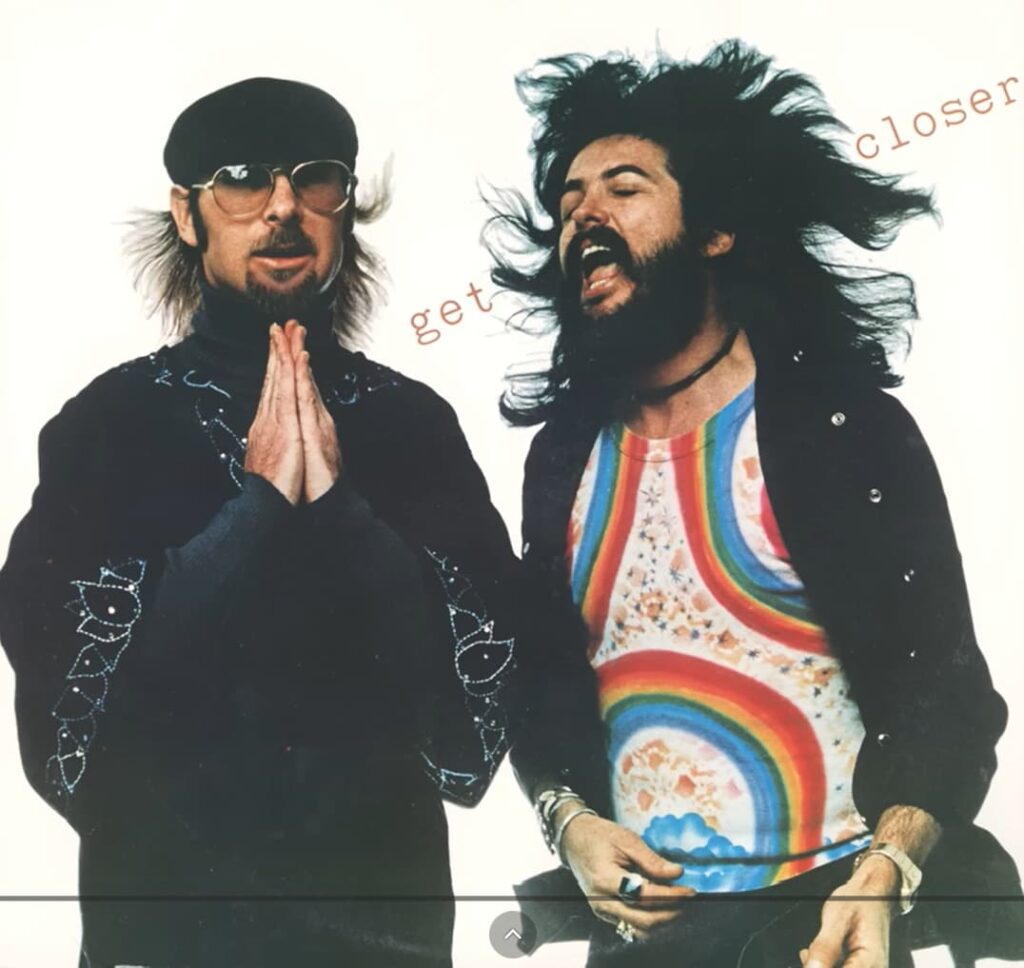
A gentle invitation to love and harmony, “Get Closer” captures the quiet yearning for connection in a restless world
When “Get Closer” was released in 1976 by Seals & Crofts, it arrived at a time when soft rock had matured into something more introspective, more human. The song, featuring the tender lead vocals of Carolyn Willis alongside Dash Crofts, quickly found its way into the hearts of listeners. It climbed to No. 6 on the Billboard Hot 100, marking one of the duo’s final major hits in a decade that had already seen them leave a lasting imprint with songs like “Summer Breeze” and “Diamond Girl.” The track also appeared on the album Get Closer, released the same year, a record that quietly signaled both artistic continuity and an approaching turning point in their career.
There is something disarmingly sincere about “Get Closer”. Unlike many of the era’s grand, orchestral love songs, this one speaks in a softer voice—almost conversational, yet deeply felt. Written by Jim Seals and Dash Crofts, the song reflects the duo’s long-standing fascination with themes of unity, emotional honesty, and spiritual connection, ideas often influenced by their adherence to the Baháʼí Faith. Rather than presenting love as dramatic or overwhelming, the song invites closeness as a gentle, mutual choice—something that grows quietly between two people willing to meet each other halfway.
The inclusion of Carolyn Willis was more than a musical decision; it gave the song a narrative dimension. Her voice does not merely accompany Crofts—it responds, intertwines, and occasionally leads, creating the sense of a dialogue rather than a monologue. This interplay mirrors the song’s central message: connection is never one-sided. It is built on listening as much as speaking, on vulnerability as much as reassurance. In that sense, “Get Closer” feels less like a performance and more like a private moment shared in melody.
Behind the scenes, the mid-1970s were a period of subtle transition for Seals & Crofts. The music landscape was shifting, with disco rising and rock becoming more fragmented. Yet instead of chasing trends, they remained faithful to their signature sound—clean harmonies, understated instrumentation, and lyrics that leaned toward reflection rather than rebellion. “Get Closer” stands as a testament to that choice. Its success on the charts suggests that even in times of change, there remained a deep audience for sincerity and calm expression.
Listening to the song today, one cannot help but notice how it resists the urgency that defines so much modern music. It unfolds patiently, allowing each note and each line to breathe. The melody feels like a slow walk rather than a hurried journey, and perhaps that is why it endures. It reminds us of a time when songs were not only heard but lived with—played on quiet evenings, carried in memory, and returned to like an old letter.
More than four decades later, “Get Closer” still resonates because its message has not aged. The desire to bridge distance—emotional or otherwise—is timeless. In its unassuming way, the song offers a kind of reassurance: that closeness, once found, does not need grand gestures to survive. Sometimes, it only needs a voice reaching out, and another willing to answer.
And that, perhaps, is the quiet legacy of Dash Crofts and his musical partner—a reminder that even in a noisy world, the softest songs often speak the loudest.