
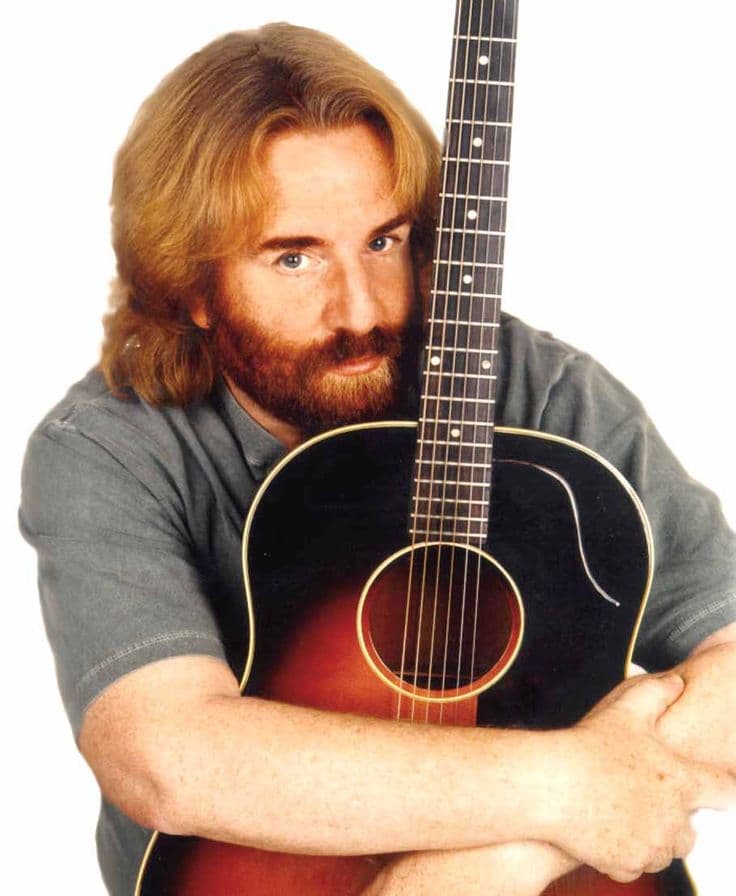
A playful Halloween tune that hides a deeper charm about childhood fear, humor, and the timeless joy of being just a little scared together
When people speak of Andrew Gold, they often recall the warmth and melodic craftsmanship of songs like “Lonely Boy” or “Thank You for Being a Friend.” Yet tucked away in his remarkably diverse catalog is a song that followed a very different path to immortality: “Spooky, Scary Skeletons.” At first glance, it feels like a novelty—light, mischievous, almost cartoonish. But its story, its meaning, and its unlikely afterlife reveal much about both Andrew Gold as a songwriter and the strange ways music can outlive its own era.
“Spooky, Scary Skeletons” was written and recorded by Andrew Gold in 1996 for the seasonal compilation album Halloween Howls: Fun & Scary Music. At the time of its release, the song did not enter major music charts such as the Billboard Hot 100, nor was it promoted as a commercial single. It was intended simply as part of a themed project—music for children, families, and festive moments rather than radio dominance. This is an important fact to place at the very beginning, because the song’s legacy is not built on chart positions, but on something far more unpredictable: memory, repetition, and rediscovery.
Musically, the song is deceptively simple. Built around a jaunty rhythm, bouncy horns, and playful vocal delivery, “Spooky, Scary Skeletons” draws from the tradition of novelty songs that once thrived in mid-20th-century American pop culture. There is a clear lineage here, echoing the spirit of songs like “Monster Mash” by Bobby “Boris” Pickett. Yet Andrew Gold, a seasoned craftsman, avoids cheap gimmicks. The arrangement is tight, the melody instantly memorable, and the humor gentle rather than loud. It feels handmade—carefully shaped by someone who understood structure, pacing, and the value of restraint.
Lyrically, the song speaks in images that are familiar to anyone who remembers childhood Halloween nights: skeletons, shivers, unexpected scares, and laughter that follows fear. The skeletons are “spooky” and “scary,” yes—but they are also oddly polite, merely sending “shivers down your spine.” There is no real danger here. The song plays with fear without embracing it fully, reminding the listener that fear can be theatrical, even comforting, when shared and contained within music. In this sense, the song becomes a metaphor for aging itself: the things that once frightened us soften over time, turning into stories we smile at rather than flee from.
What makes “Spooky, Scary Skeletons” especially fascinating is its second life. For nearly two decades, it remained a seasonal curiosity, known mainly to parents, teachers, and those who owned the compilation album. Then, in the late 2010s, the song resurfaced through internet culture—short videos, animations, and remixes transformed it into a viral phenomenon. Suddenly, a song recorded in 1996 by a songwriter associated with 1970s soft rock was echoing through modern speakers worldwide. This revival did not change its original chart history—it still never charted upon release—but it dramatically expanded its cultural footprint.
There is something quietly poetic about this trajectory. Andrew Gold, who passed away in 2011, never witnessed the full scope of the song’s renaissance. Yet in many ways, the song reflects his spirit: versatile, unpretentious, and deeply musical even when playful. It reminds us that not every lasting song announces itself with awards or rankings. Some wait patiently, resting in the background of our lives until the world is ready to hear them again.
Today, “Spooky, Scary Skeletons” stands as a reminder that music does not age in a straight line. It bends, loops, and returns. What once seemed small can become enduring. And sometimes, a lighthearted Halloween tune can carry decades of memory, laughter, and gentle nostalgia—rattling its bones just softly enough to be heard across generations.